
Biomass forced air
Biomass forced air systems
Warm, dry, clean air for your barns
An air-to-air heat exchanger heats barn air with a biomass fire, so you heat with wood chips, straw or even your own poultry litter instead of propane, and nothing from the fire gets into the barn.
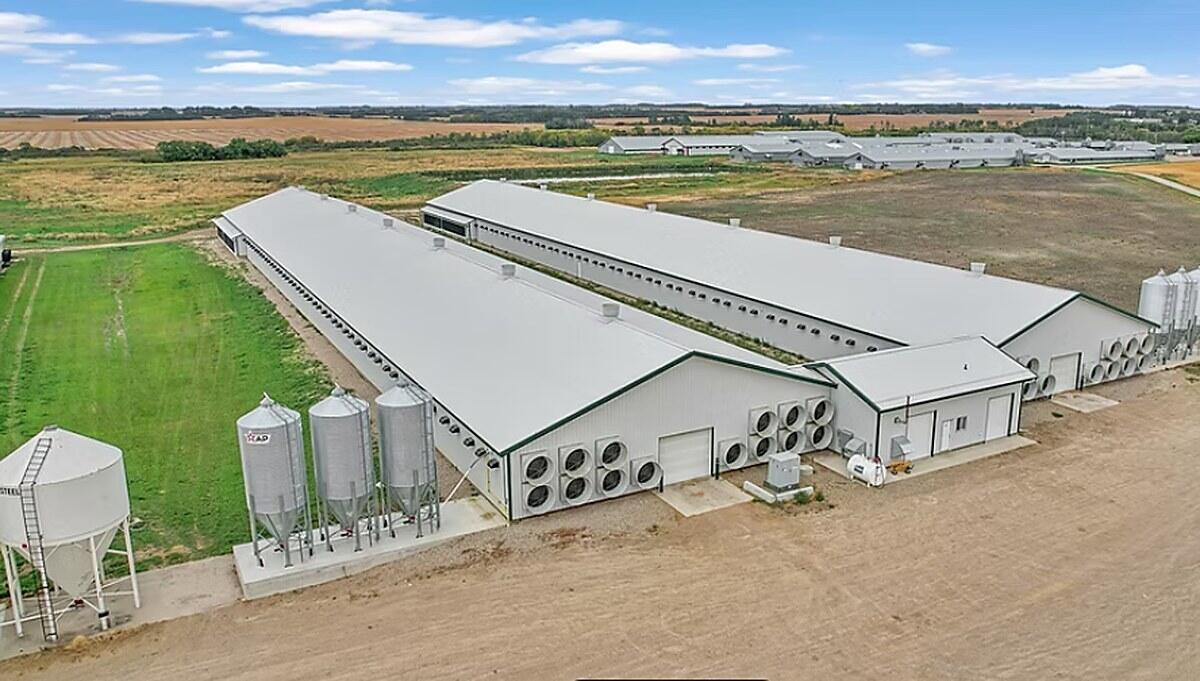
Poultry barns at a customer farm.
200+
biomass systems running across North America
25+ years
building biomass heat, formerly BlueFlame Stokers
500,000 to 27M
BTU, 15 standard models
Headingley, MB
built in our shop, serviced from it
Sneak peek
A new air-to-air model is on the way
We’re finishing a new forced air system for hog barns, poultry barns and grain drying. Talk to us now to get on the list and get a quote in time for next heating season.
Pre-production design render. The finished unit may change.
ON THIS PAGE: HOW IT WORKS · WHY BARNS · BURN YOUR LITTER · AIR OR WATER? · GRAIN DRYING · GET ON THE LIST · QUESTIONS
How it works
Clean heat from a biomass fire
Two separate air paths. The fire’s hot gas runs inside steel tubes. Barn air is blown across the outside of the tubes, picks up the heat and goes back to the barn. The two never mix, so the air your animals breathe stays clean.
Drawing: how an air-to-air system works. The new model will look different.
1Fuel in. Wood chips, pellets, straw or hulls are fed in by an auger from a bin or walking floor.
2Chain grate fire. Our chain grate stoker burns the fuel evenly and carries the ash out on its own.
3Heat exchanger. Hot gas from the fire runs up inside the tubes and heats them.
4Fan. A fan pulls air back from the barn and pushes it across the outside of the hot tubes.
5Warm, clean air. The heated air goes back to the barn through a duct. No smoke, no fumes, no added moisture.
6Out the stack. The exhaust goes through a multi-cyclone to drop the fly ash, then up the stack.
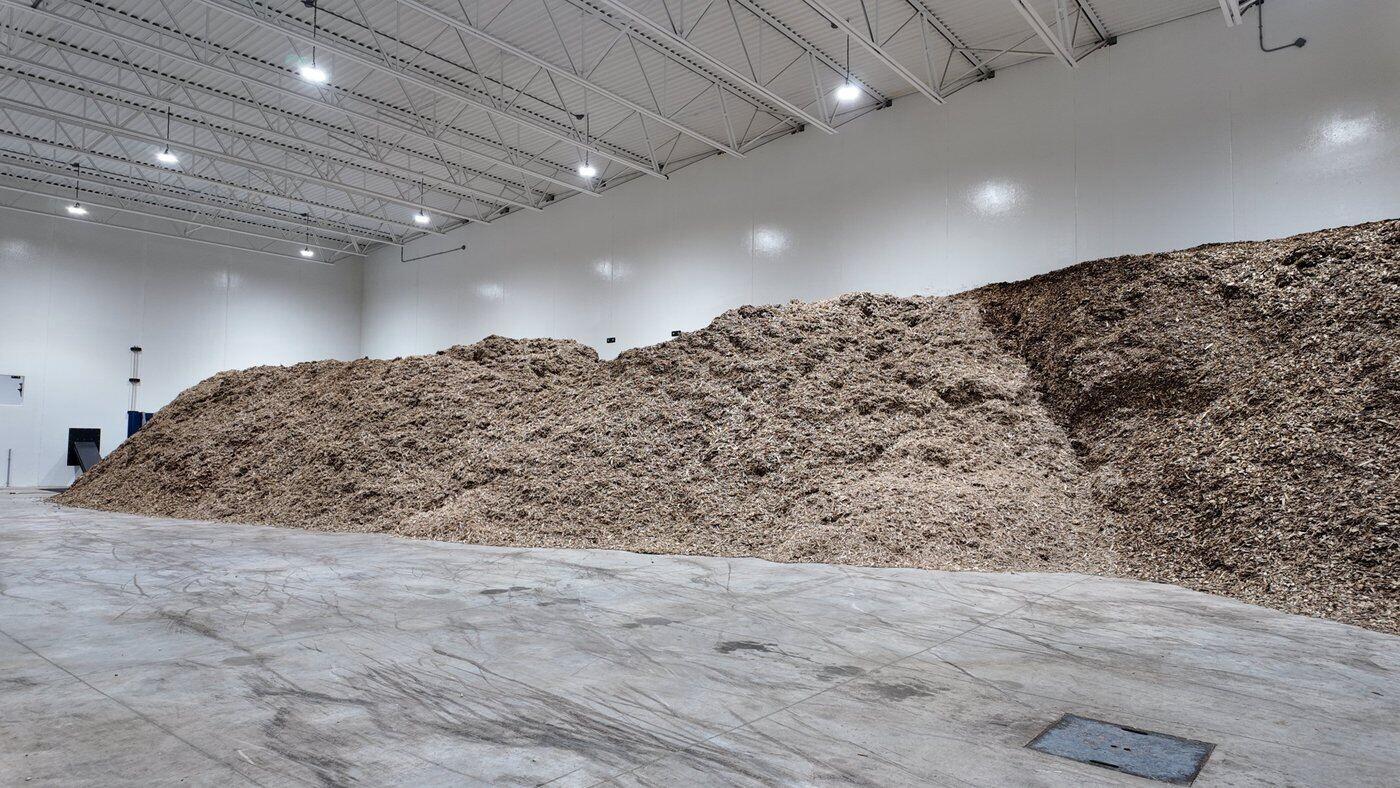
Wood chips stored indoors, ready to burn.
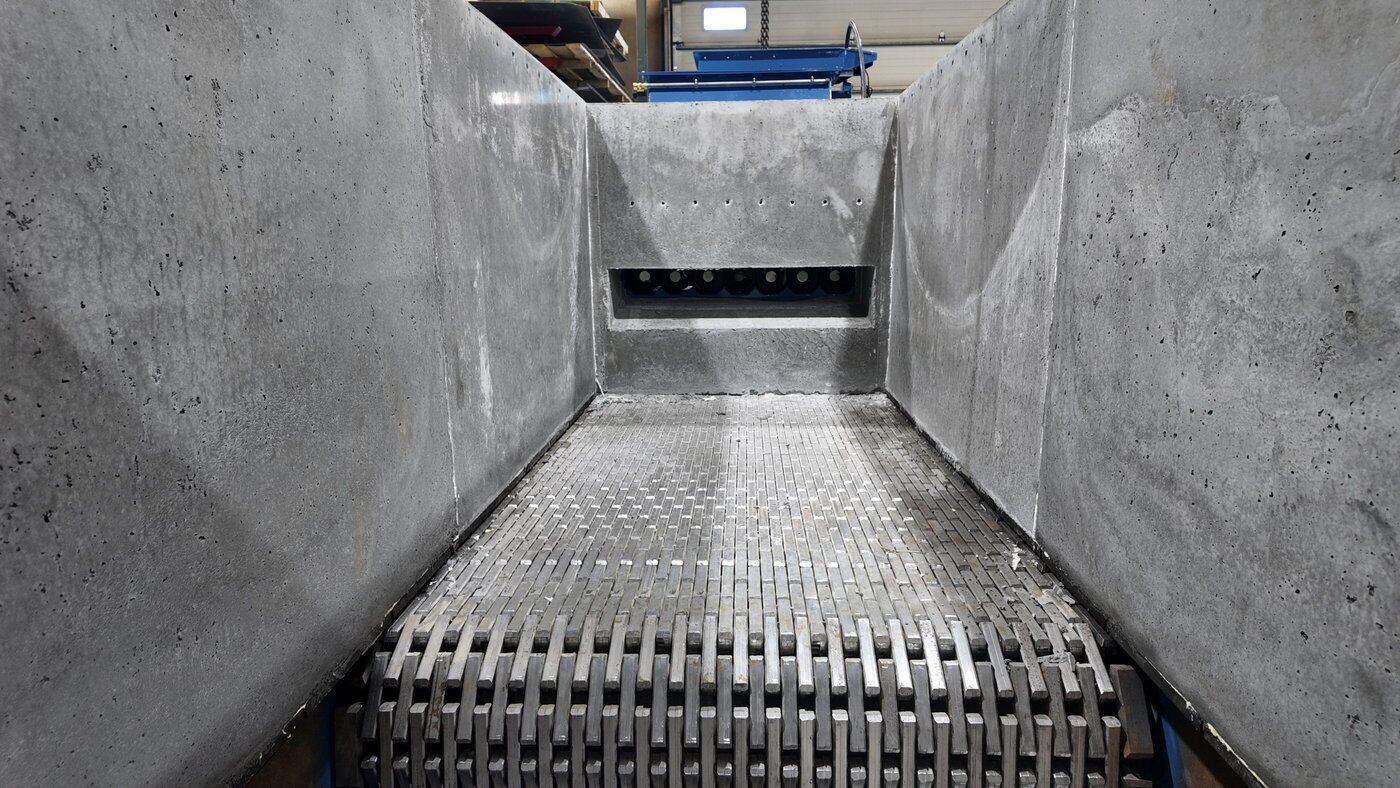
Our chain grate: it moves the fire along and carries the ash out on its own.
Hog and poultry barns
Why barns heat better with dry air
Barn heat isn’t just about temperature. What the heater puts into the air matters just as much for the birds and the pigs.
One barn, one year
What propane heaters put into a broiler barn
A typical broiler barn burns about 5,000 gallons of propane a year. With heaters that burn inside the barn, here’s what goes into the air your birds breathe:
5,000 gal
propane burned in one barn in a year
4,000 gal
of water put into the barn air
540,000 ft³
of CO₂ put into the barn air
And heating fuel is the biggest bill on most broiler farms: 30 to 46% of yearly cash expenses in a University of Tennessee study. Burn your fuel outside the barn, and you go after both at once: the wet air and the fuel bill.
Try it with your barns
How much water are your heaters putting in the air?
16,000
US gallons of water into your barn air every year
58
full 275-gallon (1,000 L) totes of water
2.2 million
cubic feet of CO₂ into your barn air
For heaters that burn inside the barn. Based on 0.8 gallons of water and 108 cubic feet of CO₂ per gallon of propane burned (University of Arkansas). A biomass air-to-air system burns outside the barn, so none of this goes into the barn air.
By the numbers
0.8 gallons
of water for every gallon of propane burned, plus 108 cubic feet of CO₂. In an unvented heater, all of it goes into the barn.
84%
of the moisture in a winter broiler house on day one came from burning propane, not the chicks. Over the first week it was about a quarter.
2,480 → 1,420 ppm
CO₂ in a hog farrowing room dropped by about 1,000 ppm when unvented heaters were swapped for ones that vent outside.
Over 1,500 ppm
CO₂ in swine barns is linked to more respiratory disease and lower productivity.
Wet litter and ammonia are what cause footpad burns (“ammonia burns”) in broilers. An Irish study of commercial broiler houses found indirect heat kept CO₂ lower in the first 10 days of a flock, with flock performance just as good as direct-fired heat.
Drier air
The fire is outside the barn, so it adds no water. Drier air means drier pens and litter.
Cleaner air
No combustion gases in the barn, so less CO₂, and drier litter gives off less ammonia.
Healthier birds and pigs
Dry litter and clean air mean fewer footpad burns and less stress on lungs.
Less ventilation to heat
You don’t have to blow out the fire’s water and CO₂, so less cold air comes in that you have to heat.
Watched from your phone
Same touch screen controls and remote monitoring as our boilers. It texts you if something needs attention.
Your fuel, not propane
Our customers typically cut their heating fuel cost about in half.
Burn your own litter
Turn your poultry litter into heat
Broiler litter is a fuel. University research found that a broiler farm makes enough litter, in theory, to replace the propane it buys for space heat. Our chain grate stoker is built for high-ash fuel and carries the ash out on its own.
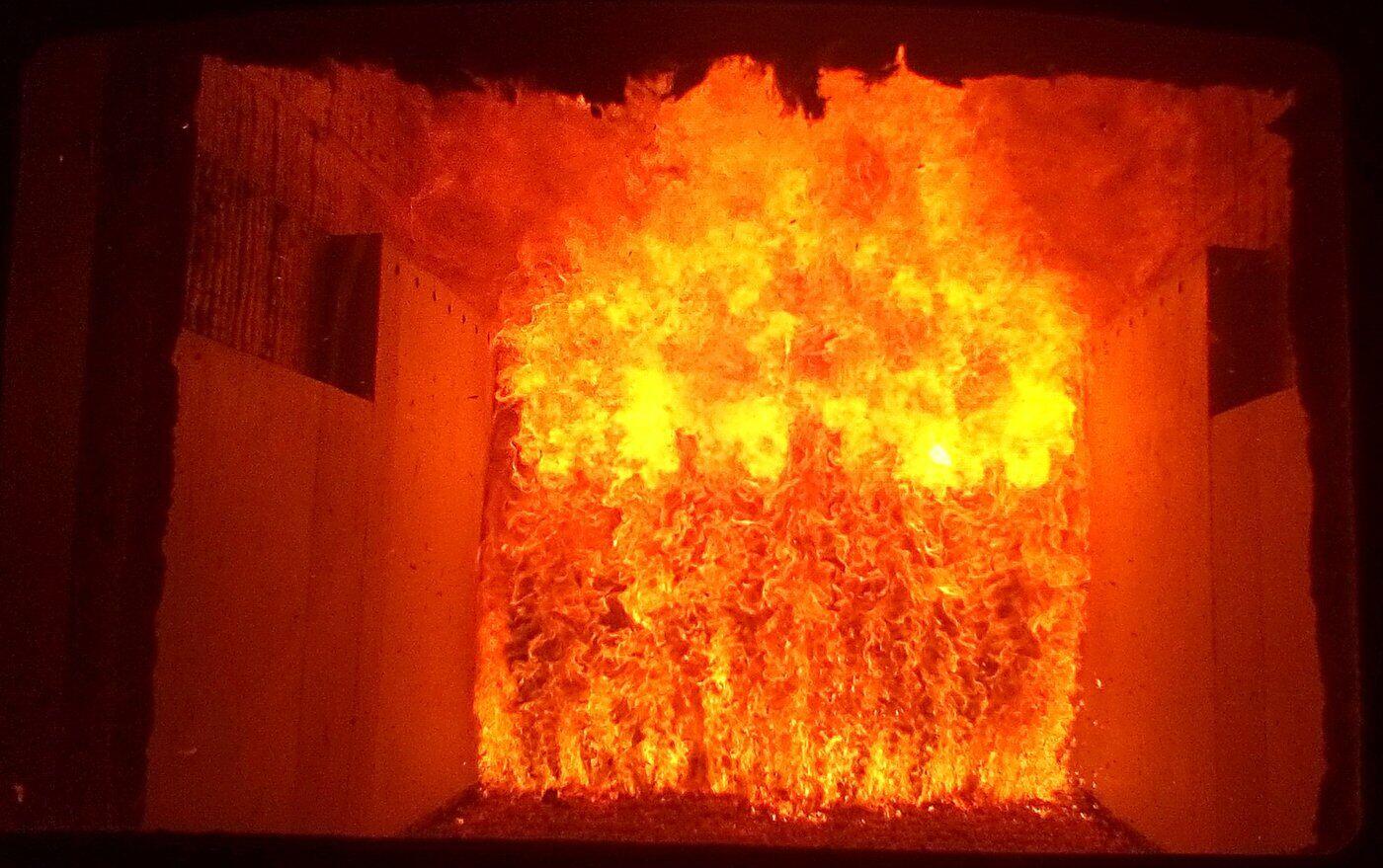
Fire on our chain grate, seen through the sight glass.
About 6,200 BTU per dry pound
That’s about 14 MJ/kg. Wetter litter gives less, so storing it dry matters.
About 25% ash
Litter leaves a lot of ash. A chain grate moves it out of the fire without stopping.
The ash is fertilizer
The phosphorus and potash stay in the ash, in a much smaller, easier-to-haul load.
Fuel you already have
It’s made on your farm every flock. Burning it on site means less litter to haul and less propane to buy.
Burning litter usually needs an air permit, and the litter has to be dry enough to burn well. Tell us about your litter and we’ll tell you straight if it fits.
Sources: Mississippi State Extension, Broiler House Ventilation During Cold Weather · The Poultry Site, How Much Moisture Do Brooders Add to Poultry Houses? · CDC/NIOSH, Improving Air Quality in Swine Barns · National Pork Board, Safety in Swine Production Systems (toxic gases) · Teagasc, direct vs indirect heating in broiler units (Smith et al., 2016) · Clemson, Using Broiler Litter as an Energy Source (Chastain et al., 2012) · University of Arkansas, Avian Advice: Heating the Broiler House · University of Tennessee / USDA NRCS, On-Farm Biofuel Heating at Broiler Farms. Checked November 2026.
Bio-Air · available now
Bio-Air sizes you can order today
The new air-to-air model is still on the way. Our Bio-Air systems are built and shipping now: an SCW chain grate stoker with the Bio-Air top, controls and duct connections, in five sizes from 5 to 20 million BTU.
Every Bio-Air package comes with
- SCW chain grate stoker with automatic ash removal
- Multi-screw fuel feed with a fire suppression system
- Bio-Air extension top
- Control panel with touch screen
- 12 ft of chimney with an electric damper, rain cap and SCW spark arrestor
- Diverter duct and transition duct
- Air intake damper with electric controller
Add what your site needs
- Shelter or a full building for the unit
- Walking floor fuel hopper, 25 ft or 40 ft
- Pellet feeder
- Bale feeder and bale feed conveyor
- 10 in × 20 ft fuel feed U-trough
- Incline ash removal auger and a 2 or 4 yard ash dumper
- Air ducting, 36 to 60 in
Sizes are the Bio-Air package rating and the most it puts out. We size the unit to your barns or dryer, so send us your heating bills or the dryer's burner size.
Get a Bio-Air quoteAir or water?
Forced air or a hot water boiler?
We build both. Here’s how to tell which fits your barns.
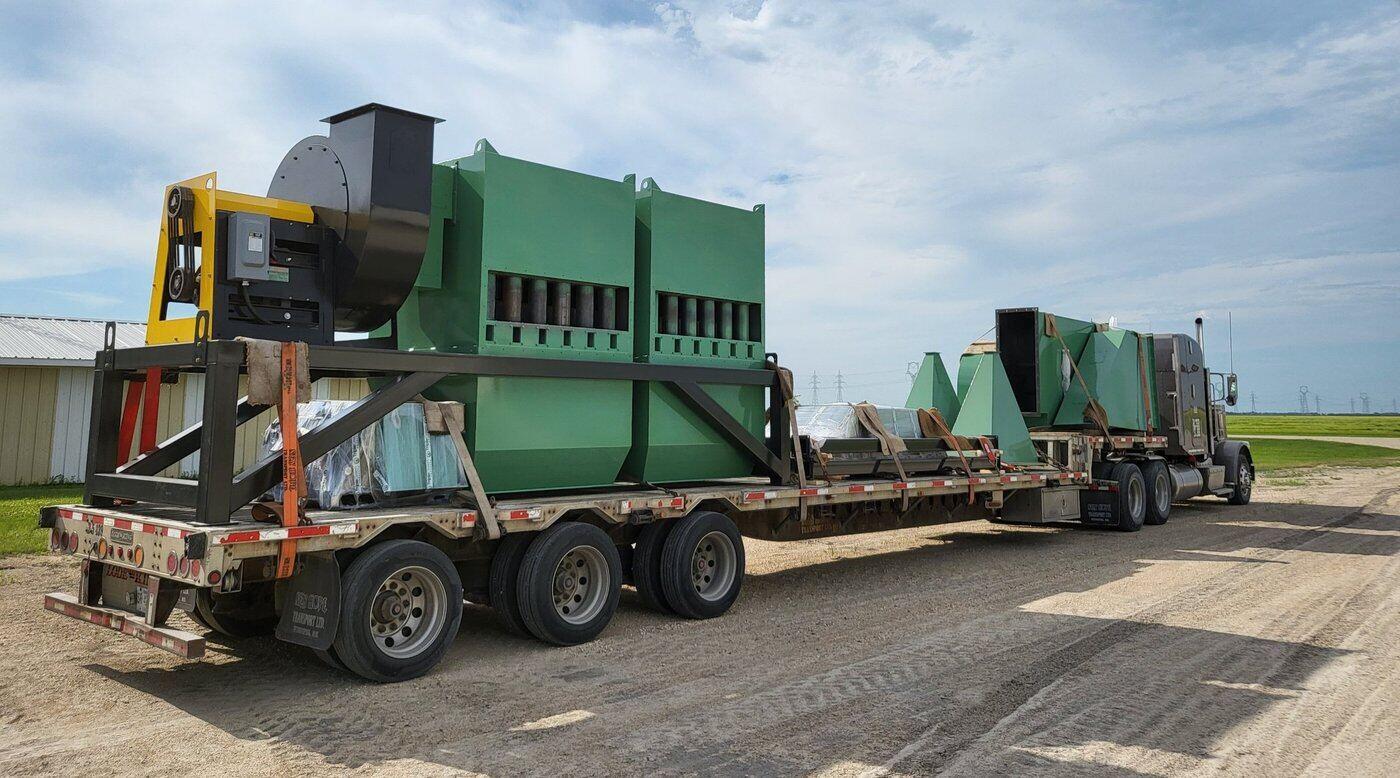
Built in our shop: a multi-cyclone collector and fan heading to a job.
| Forced air (air-to-air) | Hot water boiler | |
|---|---|---|
| Heat goes in as | Warm air through a duct | Hot water through pipes to heaters or floor heat |
| Best for | One barn, or barns close together | Many buildings, or buildings spread around the yard |
| Freezing | No water lines to freeze | Pipes and heaters need antifreeze or care in a shutdown |
| In the barn | Duct and diffusers | Unit heaters, radiant tube or in-floor heat |
| Install | Simpler: unit, duct and power | More piping and pumps, more flexible |
| A real example | New model coming soon | Sturgeon Creek Colony: hog and poultry barns on hot water |
Not sure? Send us your barn sizes and a year of fuel bills. We’ll tell you which one fits, even if the answer is our hot water boiler.
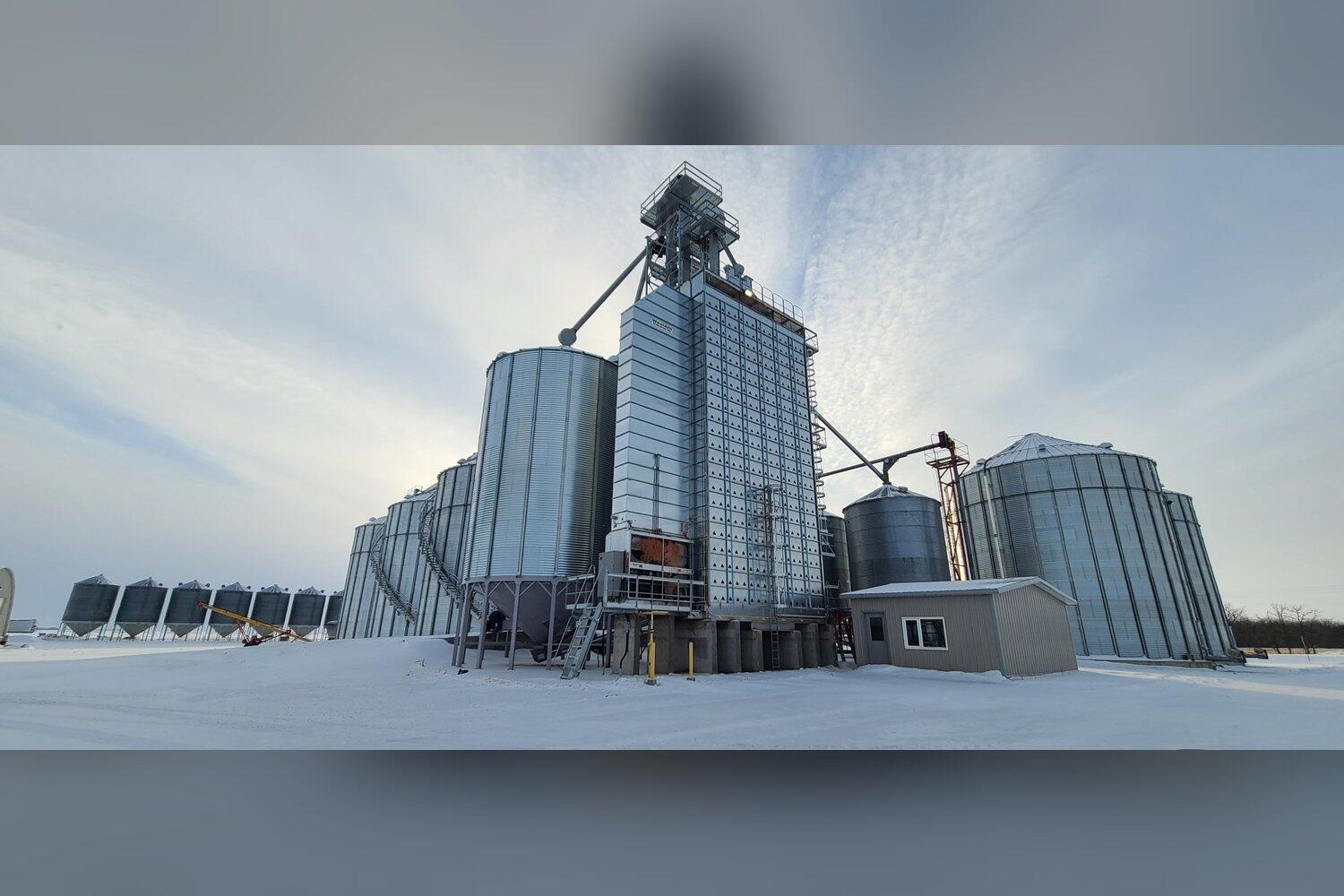
Grain drying
The same clean heat for your grain dryer
For grain drying we build a heat source that sends clean hot air into the dryer you already have, through a heat exchanger like this one. It runs on wood chips, pellets, straw or hulls instead of propane.
About half of our systems are sold with a grant or tax credit
Most programs need approval before you order equipment, so ask us early. We’ll tell you which programs fit your province or state.
Get on the list
Be first in line for the new model
Send us these and we’ll call you with a quote as soon as the new model is ready.
What to send us
- ✓What you’re heating: hog barn, poultry barn or grain dryer
- ✓How many barns, and their sizes
- ✓What you heat with now, and about how much you use in a year
- ✓What fuel you could get: wood chips, pellets, straw or hulls
- ✓A few photos of the barns and the yard
Questions
What producers ask us
Something else? Call us at (204) 694-2398. You’ll talk to someone who builds these.
When will the new model be ready?
Soon. We’re finishing it now. Get on the list and we’ll call you as soon as we can quote it, in time for next heating season.
How is this different from the propane heaters in my barn?
Propane heaters burn inside the barn and add water and combustion gases to the air. This system burns outside the barn and only sends clean, warm air in.
Can one unit heat more than one barn?
If the barns are close together, yes, with ducting. For buildings spread around the yard, a hot water boiler is usually the better fit.
Do I still need ventilation?
Yes. Animals still make moisture and the barn still needs fresh air. Dry heat just makes it easier and cheaper to ventilate.
Can I keep my propane heaters?
Yes. Many producers keep them as backup.
Can it burn chicken litter?
Litter is a fuel our chain grate is built for: high ash, carried out on its own. It usually needs an air permit and has to be dry enough to burn well. Send us a sample description and we’ll tell you straight.
What fuel does it burn?
Wood chips, pellets, sawmill waste, straw and hulls. Our chain grate handles wet and mixed fuel.
Are there grants?
About half of our systems are sold with a grant or tax credit. Most programs need approval before you order, so ask us early.
Get on the list for the new forced air system
Tell us about your barns or your dryer. We’ll call you with a quote as soon as the new model is ready.
The marks your engineer will ask for.
Need another mark for your project? We build to it.
Talk to a person who knows the system.
Service, parts and remote monitoring come straight from the people who built it.