

One biomass plant to heat every building
One boiler and one fuel building send hot water through a buried loop to every barn, shop, school and home. It replaces coal, natural gas or propane, and it runs at Manitoba colonies today.
Put your buildings on one loop
Tick the buildings you would connect, type in a year of fuel from your bills, and say when new buildings are coming. The drawing, the wood chips and the boiler size change as you go.
Heat needed as you grow
Add your prices to compare yearly fuel cost
Type the prices you pay. Leave a box empty if you don't use that fuel.
Your buildings
Example numbers to start. Change them to a year from your bills.
Rule of thumb: 1,000 L propane ≈ 3 t green chips. 1,000 m³ natural gas ≈ 4 t. 1,000 L oil ≈ 4 t. 1 t coal ≈ 2.3 t. Boiler size assumes about 2,000 full-power hours a year. We size every plant from your real bills, buildings and site.
One plant vs a furnace in every building
These counts follow the yard you set up above. No dollar figures here, just what you would look after.
Your own people run it. We keep an eye on it too.
No one has to babysit a fire. The controls hold the water temperature, and the feed screw slows down or speeds up to match what the buildings need.
The SCW control screen. The same screen opens on your phone.
Check the screen on the touch panel or your phone.
Trucks dump chips in the fuel building. The walking floor and augers do the rest. At our own colony, with a four-wing walking floor, a load comes in every day.
Not a daily job. Ash leaves the grate on its own and collects in a bin. The system texts you at 80% full. At our colony that is about every 3 months at 30% firing.
The system sends a text if something needs a look. With your OK, we can log in from our shop.
Parts on the shelf in Headingley and service on site. After-sale service
How the hot water gets to every building
Hot water leaves the boiler house, goes out to each building and comes back cooler to be heated again. Here is how the loop went in at Sturgeon Creek Colony.
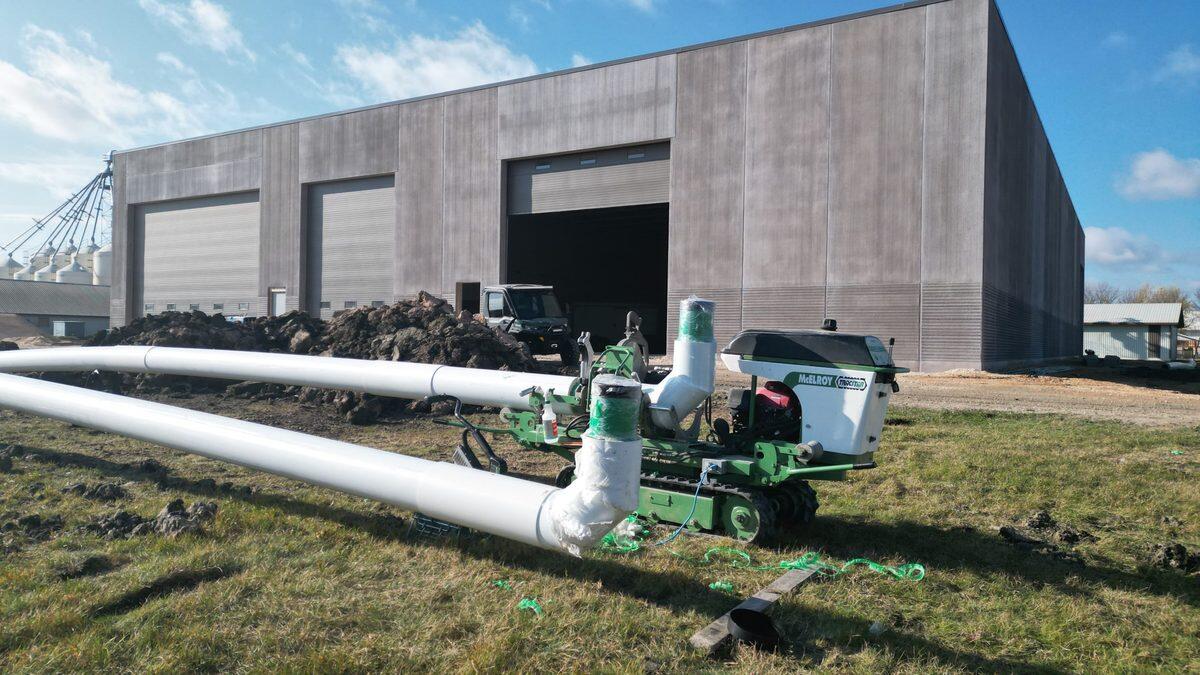
An 8 inch pre-insulated main
The pipe is fused on site beside the fuel building. One supply, one return.
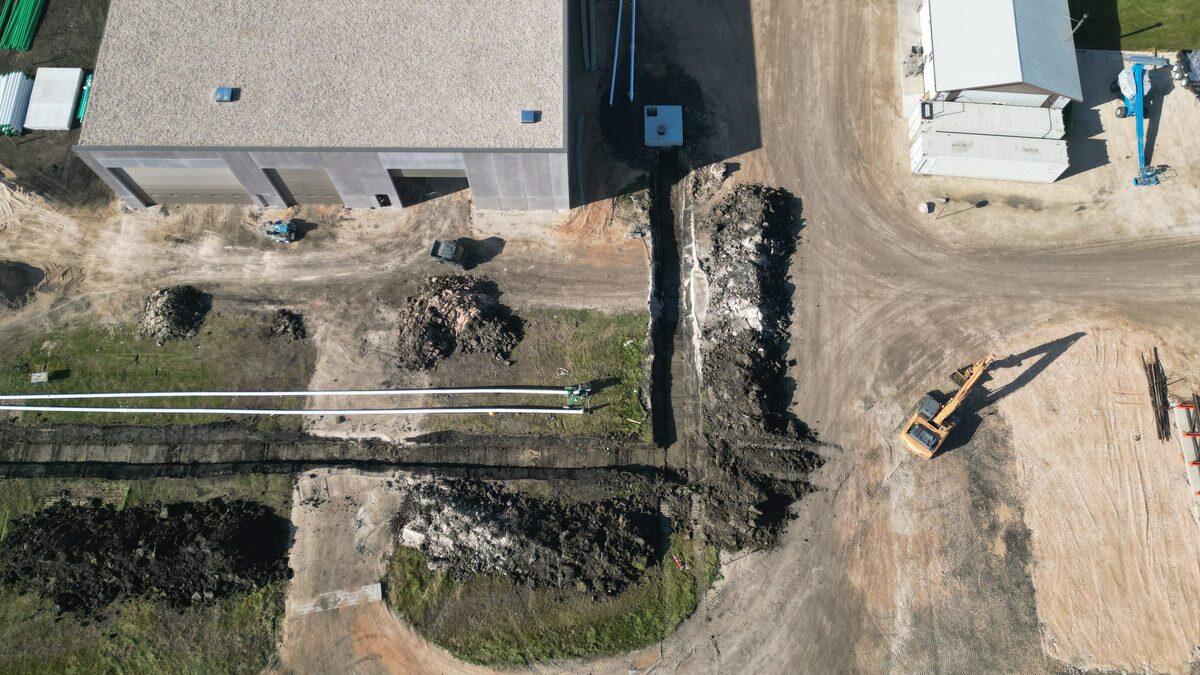
Buried below frost to a central vault
The main runs underground to a pipe vault in the middle of the yard.
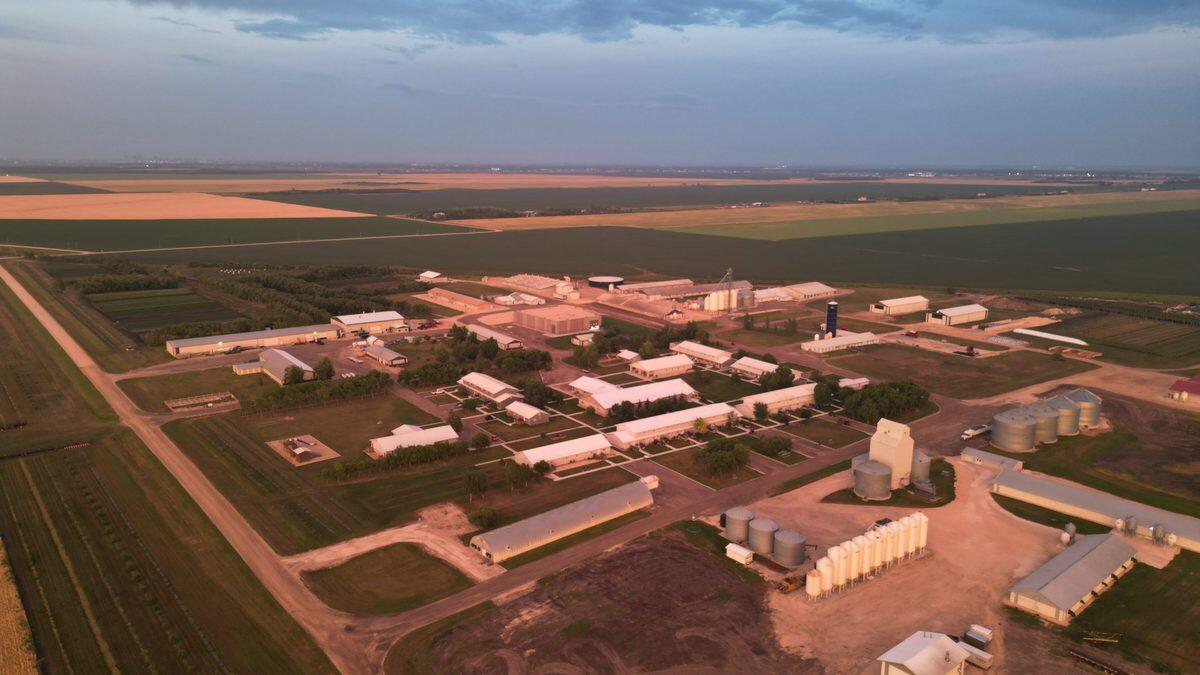
Smaller lines to each building
From the vault, smaller lines branch out to the barns, the greenhouse, the shops and the homes.
The loop is Aquaplus PP-R pipe. We stock it in Headingley, just west of Winnipeg, from 1/2 inch to 8 inch, with fusion tools for rent, so the plant and the loop can come from one place.
See Aquaplus pipeDig the loop before freeze-up
A typical year for a plant that should be heating by fall. Your dates depend on size, grants and your contractor.
In blue: the ground is usually frozen from November to March across most of the Prairies. Plan the dig for the open months.
The equipment, built in Headingley
We build the firebox, chain grate stoker and controls in our own shop. The boiler vessel is certified, and the stoker carries the Intertek mark.
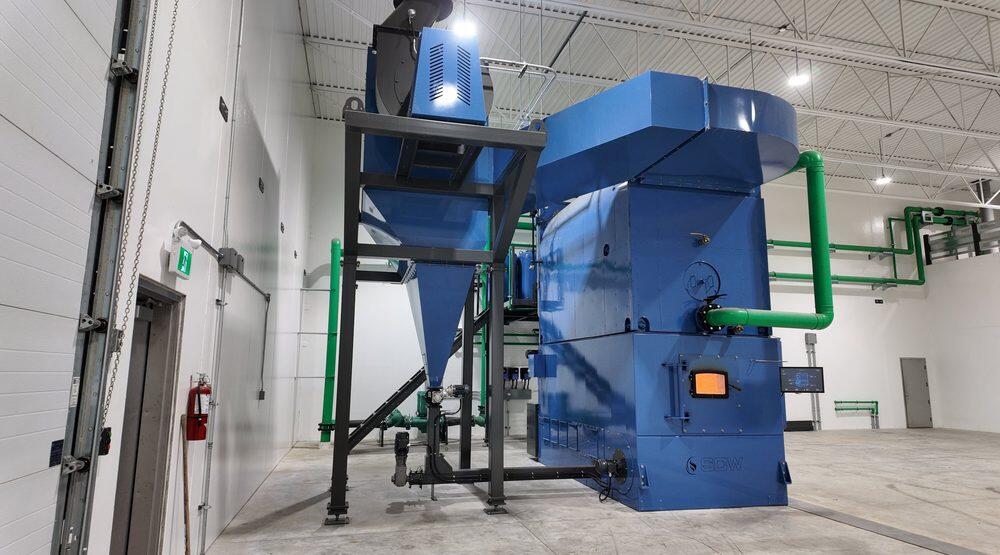
Hot water boiler
15 standard models from 1 to 20 million BTU, custom sizes from 500,000 to 27 million BTU per boiler.
See hot water boilers →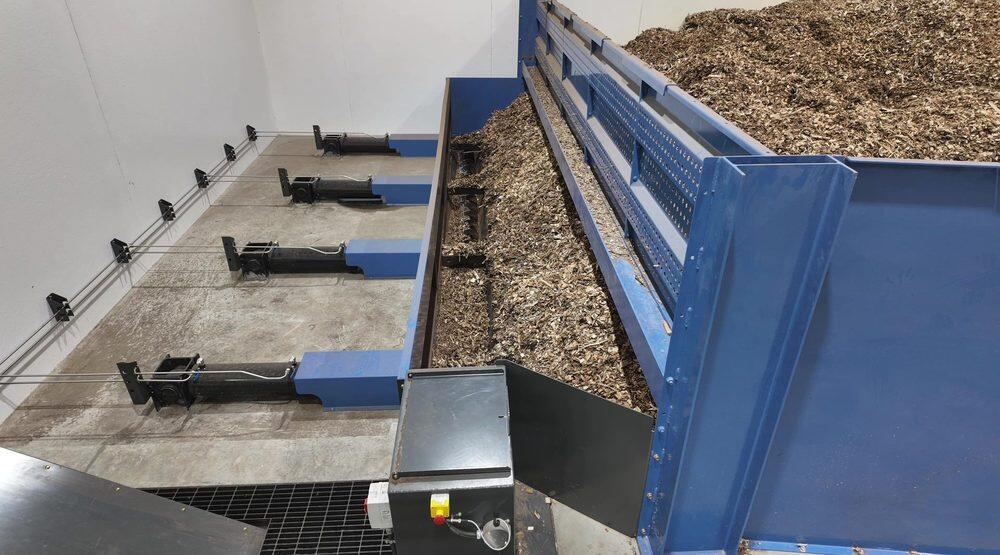
Walking floor fuel building
Trucks dump inside. The floor and augers keep the boiler fed.
See fuel handling →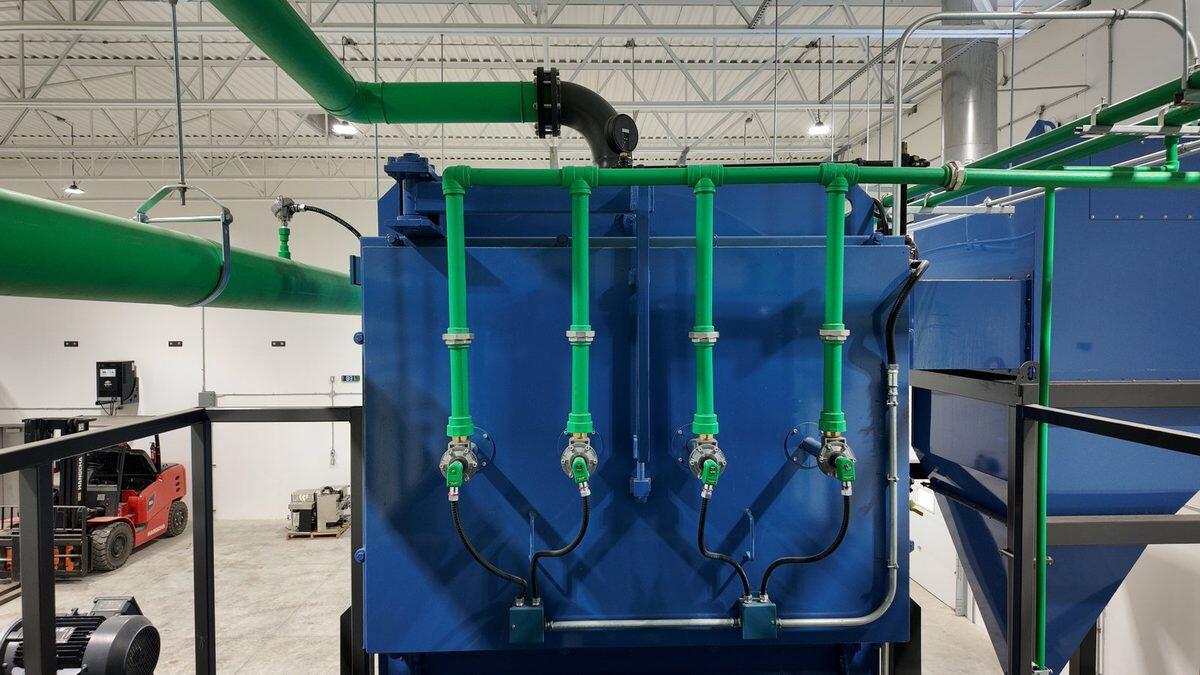
Fly ash removal
A multi-cyclone catches fly ash before it reaches the stack.
See fly ash removal →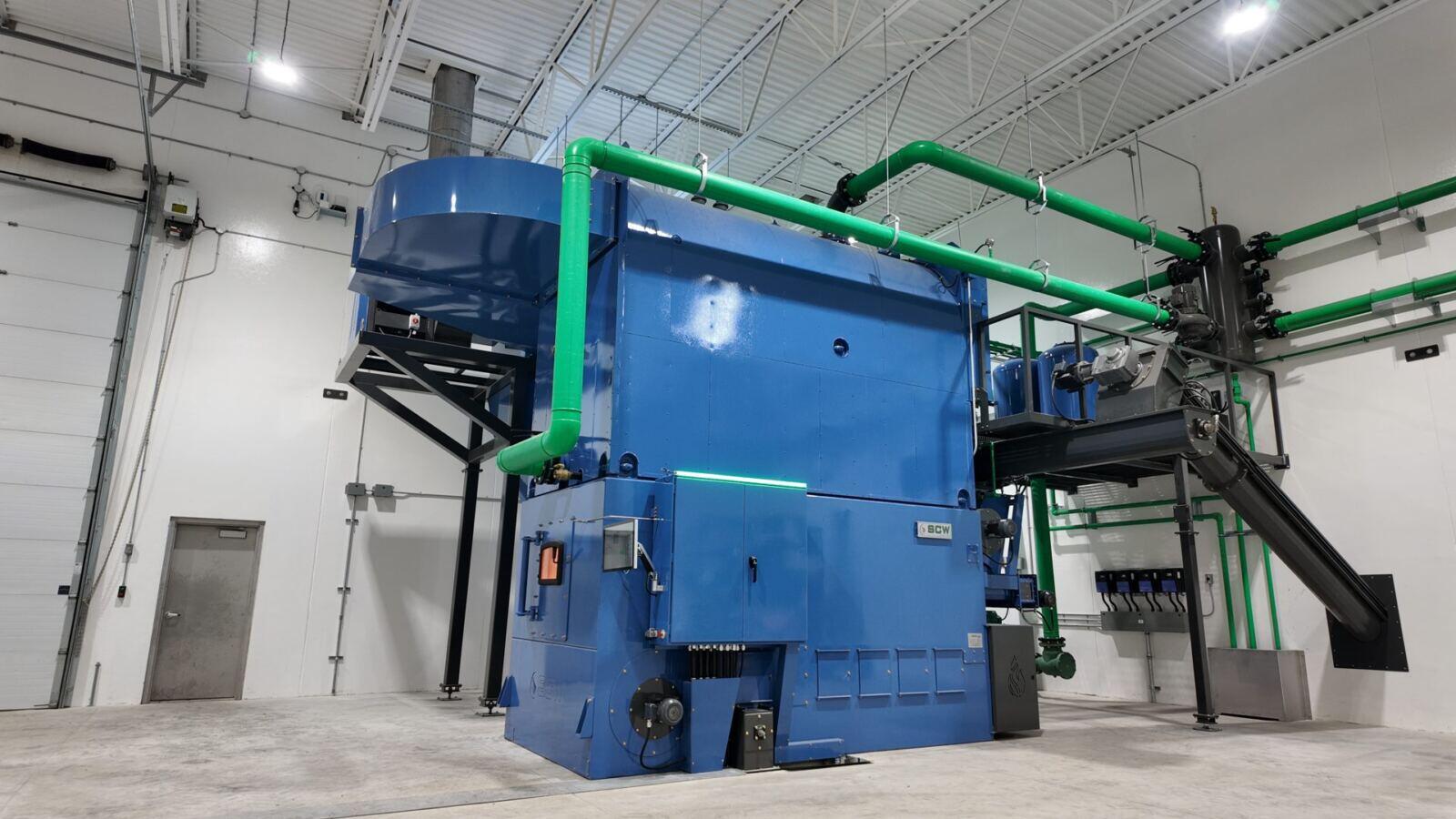
How it works
Fuel in, chain grate burn, ash out, hot water to the loop.
See how it works →Proven at two Manitoba colonies
“The chips go in the fuel building and the system does the rest. We check the screen, take deliveries and empty the ash bin. Our heating bill is about half what we paid for gas.”
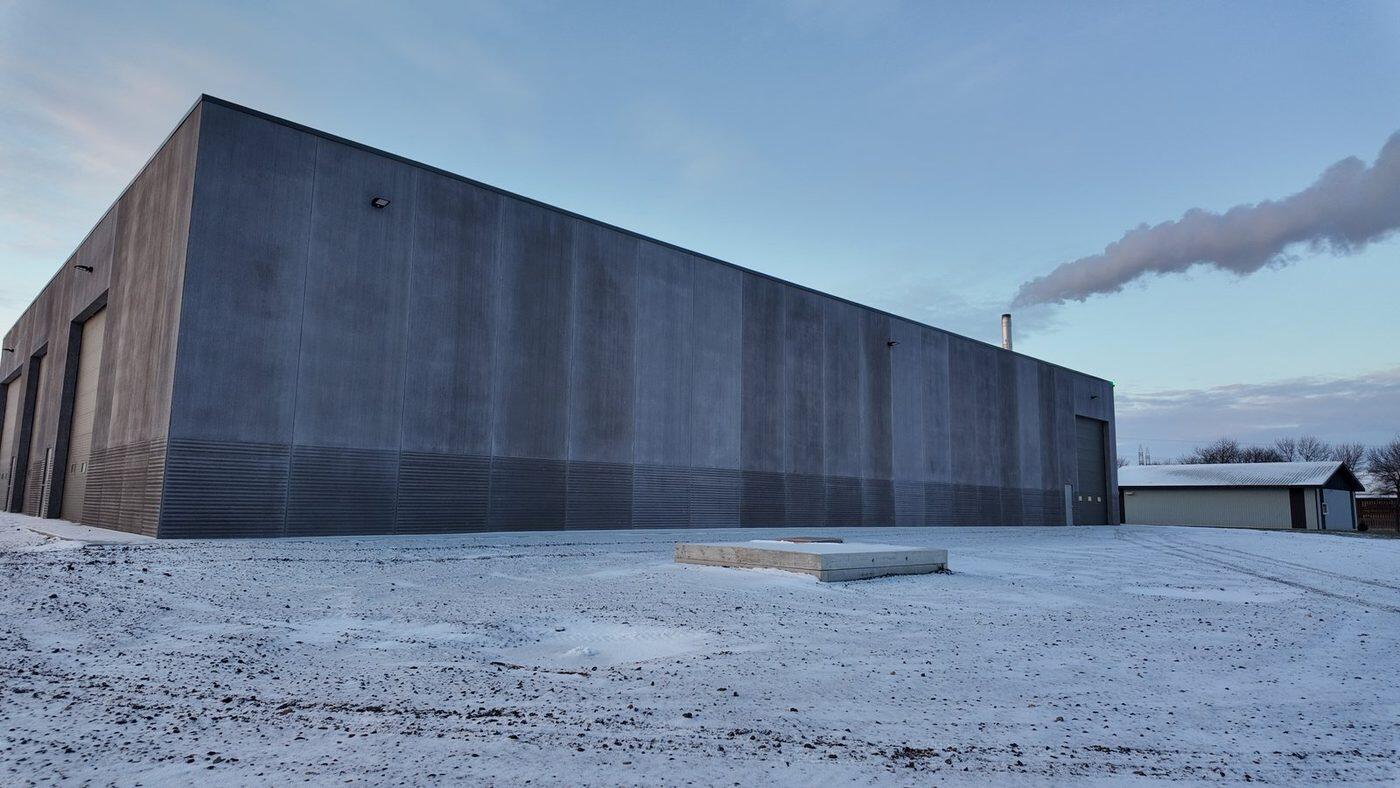
Sturgeon Creek Colony owns SCW. It heats hog barns, poultry barns, a greenhouse, shops and homes from one plant.
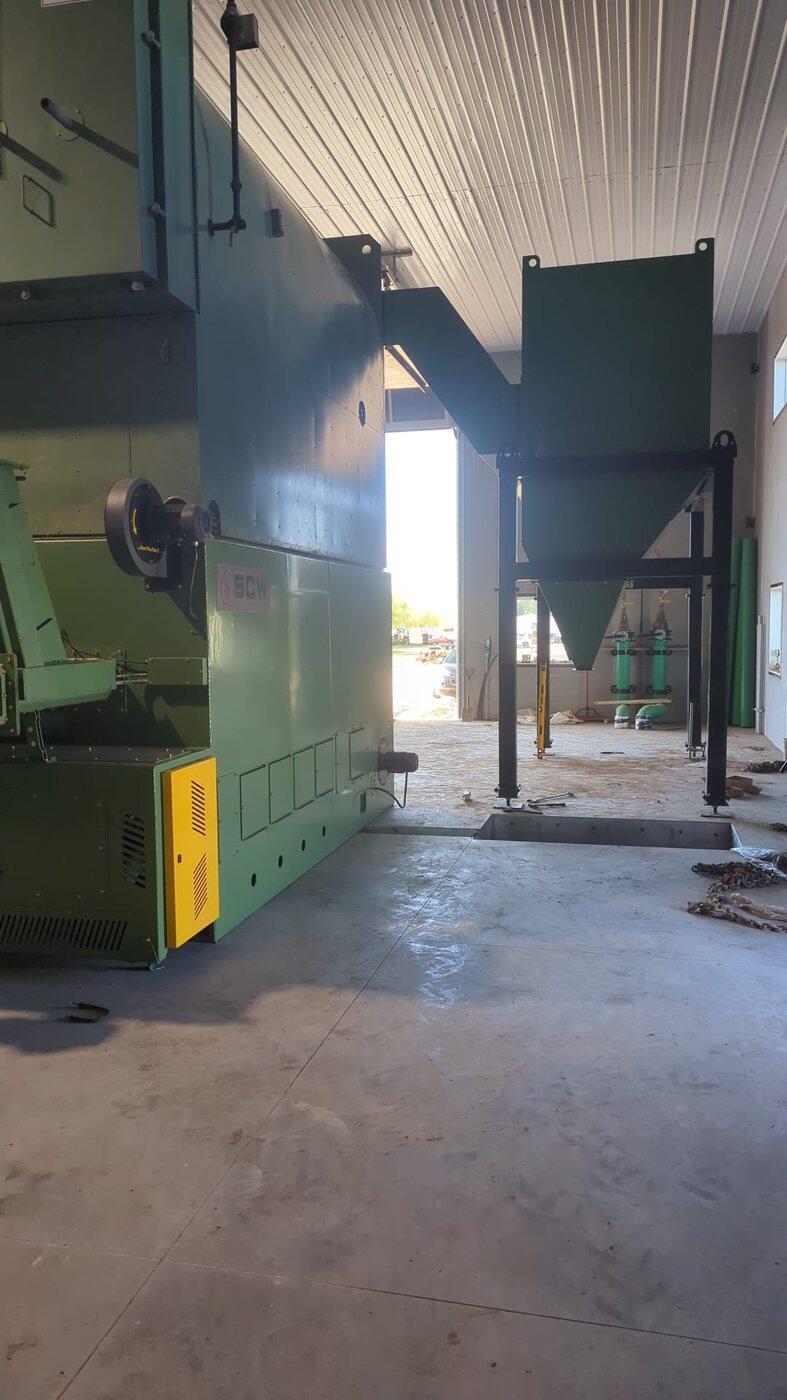
Willow Creek Colony, Manitoba
We switched from coal to wood chips, and our heating cost is about half what it was. The walking floor keeps it fed.Read the story →
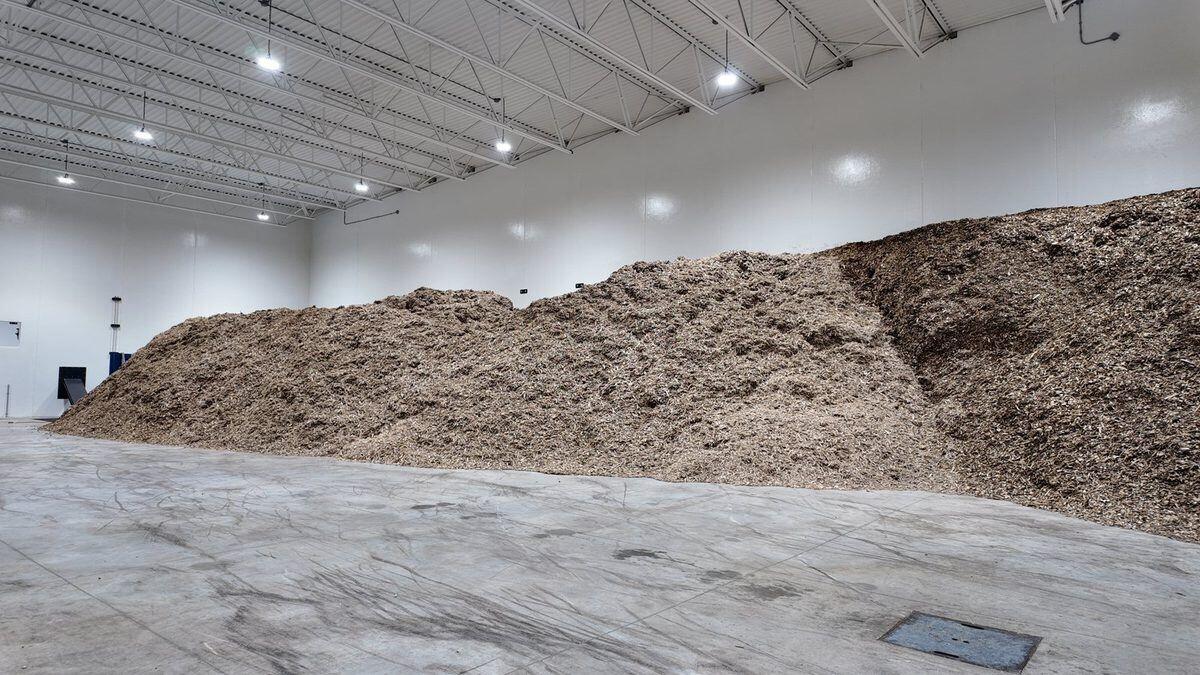
Laid out for a second boiler
Trucks dump inside and a walking floor feeds the boiler. The boiler house and fuel floor are laid out so a second boiler can go in when the colony grows.
See fuel handling →Is one central plant right for your community?
Tick what's true. We'll give you a straight first answer.
Tick what fits your place
Start with the first line. Distance between buildings matters most for a loop.
Colonies
Barns, shops, kitchen, greenhouse and homes on one loop. Run by your own people.
Small towns
Town office, school, arena, fire hall or seniors' housing on one loop. Run by your public works crew.
First Nations communities
School, band office, health centre and homes. Run by operators from the community, trained by us.
Campuses
Classrooms, residences and the gym from one plant. Run by your facilities staff.
About half of our systems are sold with a grant or tax credit
A central plant is a big job, and programs can cover part of it. Check the current rules before you apply.
Clean Technology Investment Tax Credit
Up to 30%, refundable. Waste biomass heating equipment was added. Check who can claim.
Green Energy Equipment Tax Credit
15% on biomass equipment used in a business.
ÉcoPerformance
Up to 75%. Oil or propane to bioenergy: 75% up to $100,000 per measure in the simplified stream.
USDA REAP
Grants up to $500,000 for rural businesses and farms. The system must be running before you apply.
Apply first. Most programs need approval before you order the equipment.
See grant programsWhat to send us
- A year of fuel bills, building by building if you have them
- A site map or aerial photo with the buildings marked
- How each building is heated now
- Buildings you plan to add in the next 10 years
- What fuel you can get close to home
We'll tell you what size plant fits, how the loop could run, and whether biomass makes sense for your community. If it doesn't, we'll say so.
Get a quoteOr call (204) 694-2398. Road 63 North, Headingley, MB.
Before you call
Who runs it day to day?
Your own people. Check the screen and take fuel deliveries. Empty the ash bin when the system says it's full, which is not often. The system texts you if something needs a look, and with your OK we can log in from our shop.
Can we add buildings later?
Yes, if you plan for it. Size the main pipe and the plant for where you're going. Sturgeon Creek Colony's boiler house and fuel floor are laid out for a second boiler.
We burn coal now. What changes?
No more coal to shovel or haul. Wood chips go in a fuel building, a walking floor and augers feed the boiler, and the ash leaves the grate by auger. Willow Creek Colony made that switch.
Can our old boilers or furnaces stay?
Yes. Most communities keep them in place as backup.
What happens if the power goes out?
The fans and fuel feed stop, the fire burns down in the firebox, and the boiler's safeties take care of the heat that's left. The loop pumps stop too, so a backup generator for pumps and controls is a good idea. When the power comes back, the system starts up again.
How does it run on mild days?
The system modulates. The feed screw slows down to match what the buildings need, and the controls hold the water temperature.
What fuel can it burn?
Wood chips, sawmill waste like sawdust, shavings and bark, pellets and hulls. Straw and stover work with a bale feeder. The chain grate handles wet, dirty and mixed fuel without jamming.
Do you supply the pipe for the loop?
We can. We stock Aquaplus PP-R pipe in Winnipeg from 1/2 inch to 8 inch, with fusion tools for rent. Who lays the loop depends on the job, and we tell you at quote time what's in our scope.
How long from order to heat?
About 1 to 3 months to build the plant, depending on size. Install is by our crew or a local contractor with our support. Plan the loop work before freeze-up.
The marks your engineer will ask for.
Need another mark for your project? We build to it.
Talk to a person who knows the system.
Service, parts and remote monitoring come straight from the people who built it.