
Biomass heat for barns and the whole farm yard
One SCW system can heat the hog barns, the poultry barns, the shop and the house on wood chips, sawmill waste or straw. The farms on this page now pay about half what they paid for propane, coal or gas.
Or turn your propane bill into truckloads of chips →
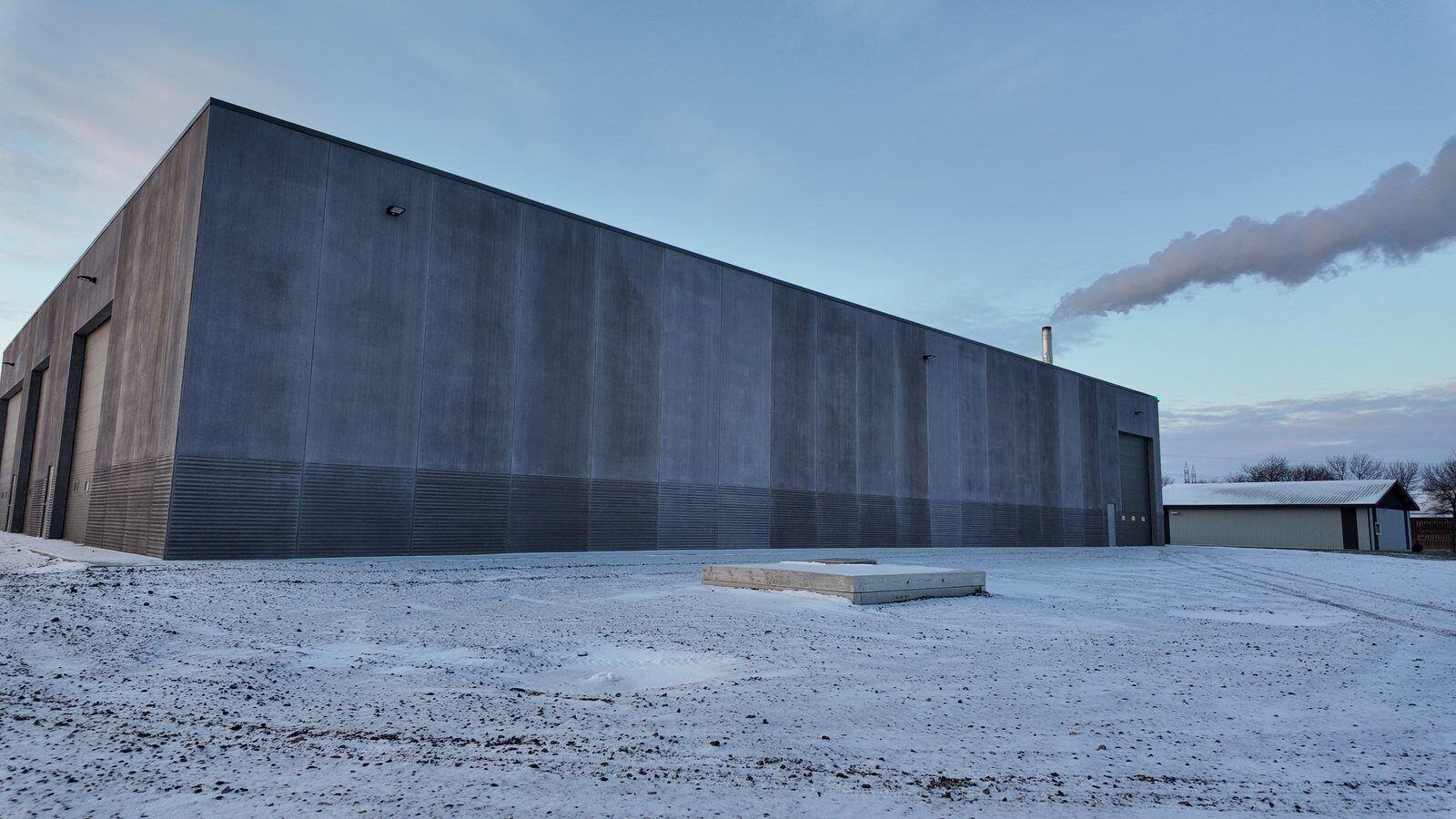
Tap what's on your yard. See what fits.
Pick the buildings you want to heat and how you'd store fuel. The drawing and the advice change with you.
Forced air, hot water, or heat for the dryer
Three ways to put biomass heat to work on a farm. Most of the choice comes down to how many buildings you heat and how far apart they are.
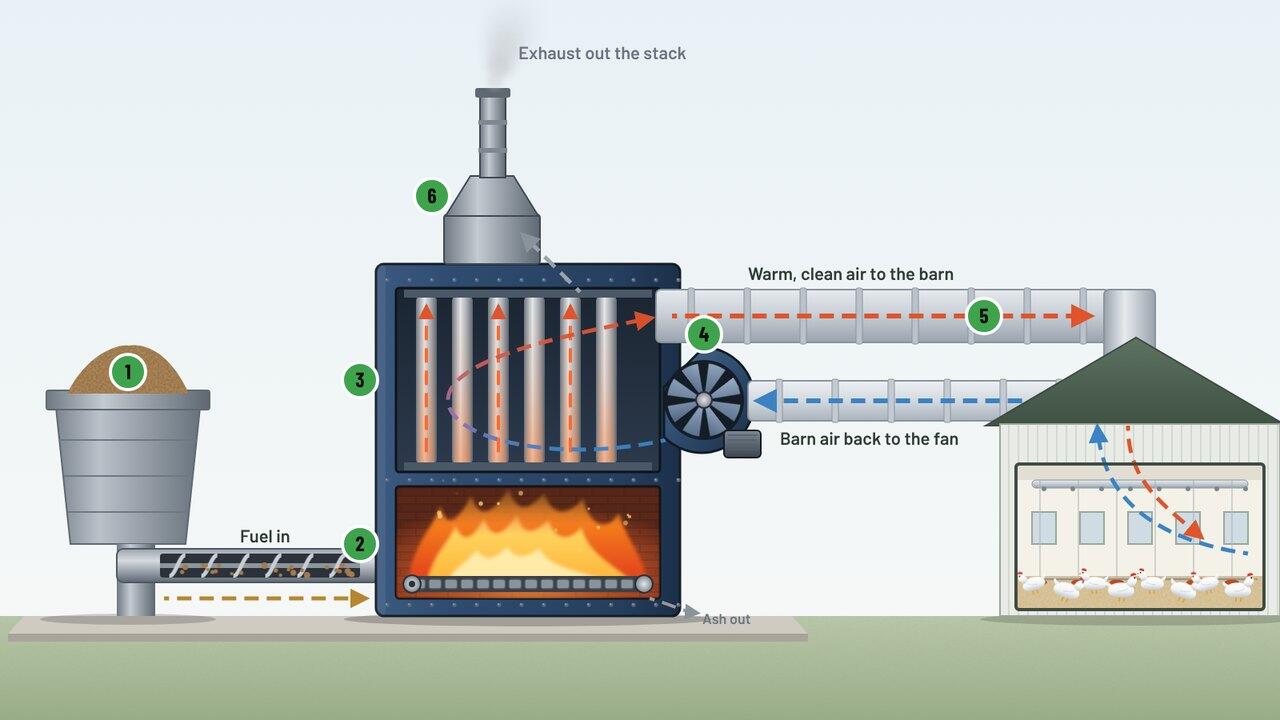
Forced air system
Sets down beside the barn and blows warm, dry air straight in. The fire stays outside. No water lines to bury.
Pick it when
- You heat one barn, or two side by side
- You don't want a boiler room or pipe in the ground
- You want to start with one barn and add later
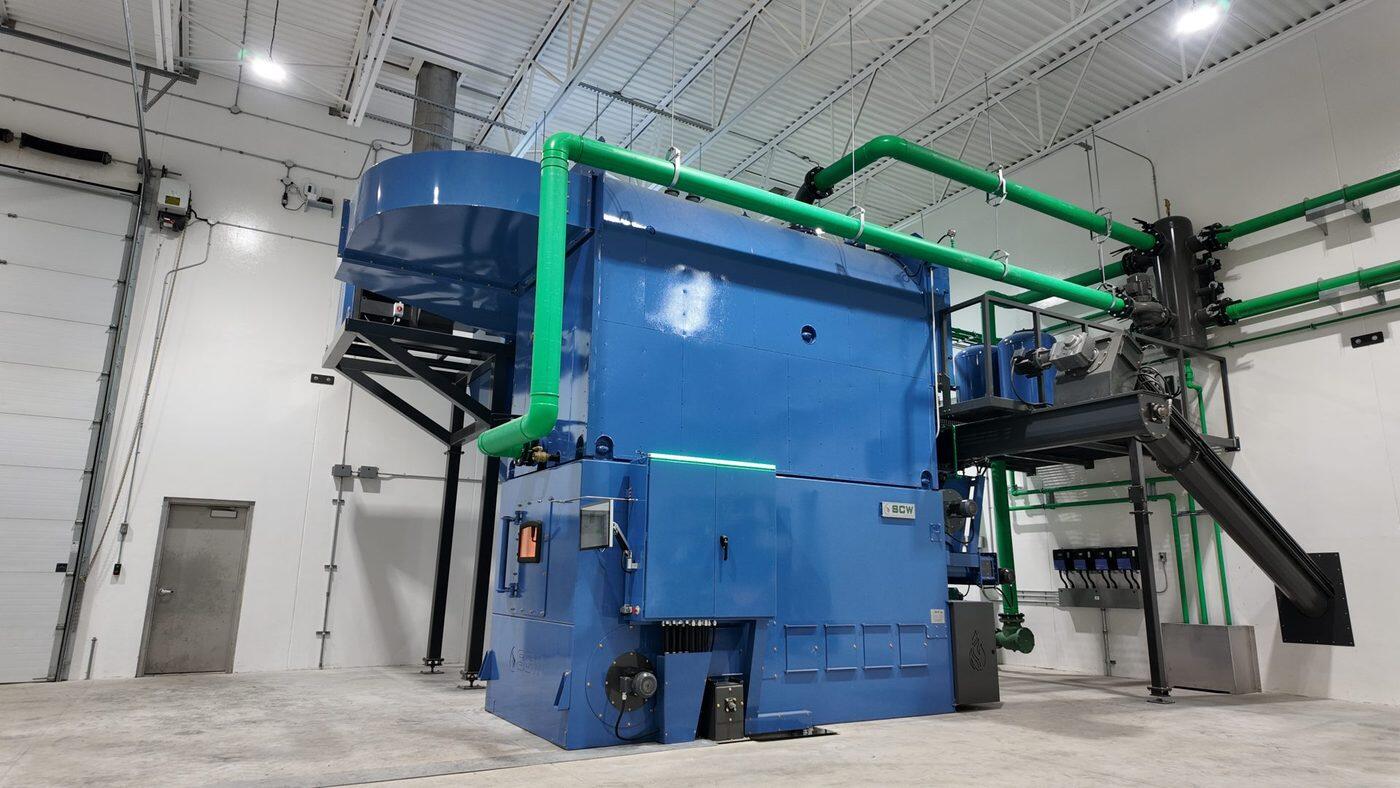
Hot water boiler and buried loop
One boiler heats water. Insulated pipe buried below frost carries it to each barn, the shop and the house, and brings it back.
Pick it when
- You heat three or more buildings, or they're spread out
- Barns need steady heat for farrowing, nursery or brooding
- You want one fuel pile and one place to check
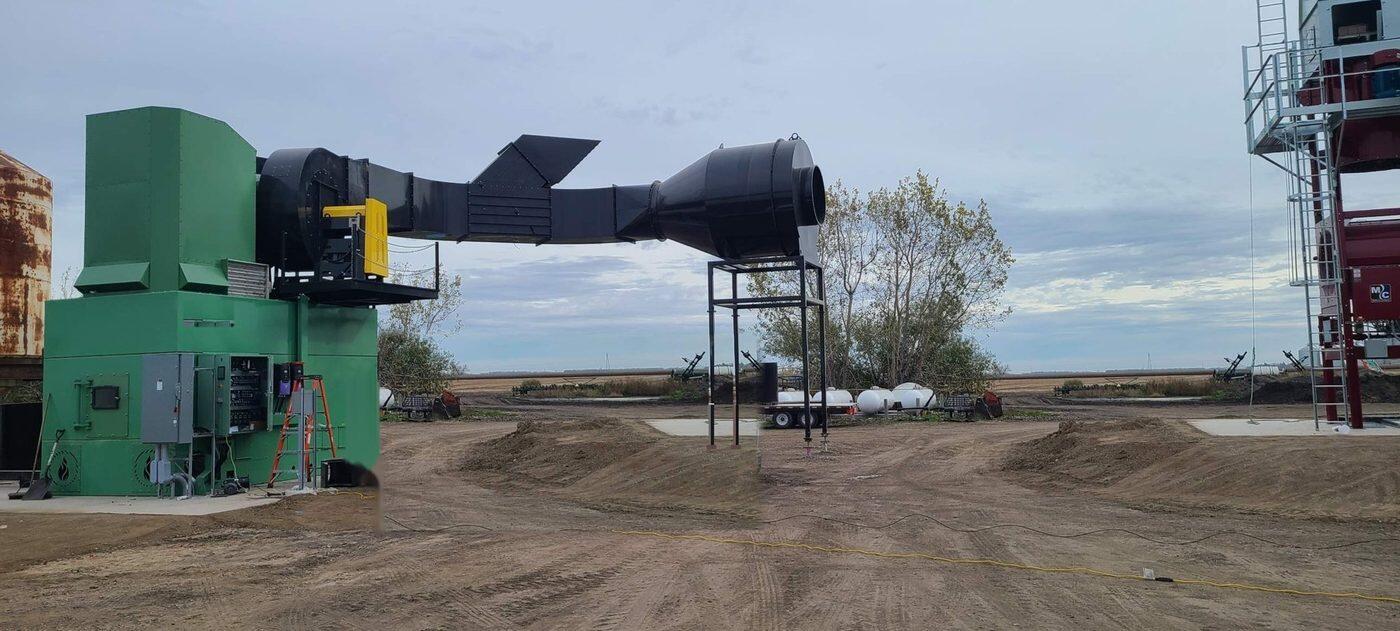
Grain dryer heat source
A heat source beside your dryer, ducted into the burner housing. Your dryer stays. It can share a fuel floor with a barn boiler.
Pick it when
- Drying burns a lot of propane every fall
- You already have, or plan, chips or straw on the yard
- You want to cut drying fuel cost by up to 80%
What a propane heater puts into the barn
Burning propane makes water and CO₂. With heaters hung inside the barn, both go straight into the air your animals breathe, and your fans have to push it back out in January.
With an SCW system, the fire is outside the barn
Forced air passes clean air through a heat exchanger. Hot water runs through pipe or heaters. Either way, nothing burns in the barn, so no combustion water and no CO₂ go in.
What we won't promise
- The animals still make most of the moisture once they're past the first few weeks. Heaters matter most with a young flock or a fresh nursery room.
- You still need minimum ventilation. Drier air can mean less of it on cold days, but your barn controller decides that.
- We don't promise better feed conversion or lower mortality. We'll tell you what our farm customers see: steady heat and drier air.
Hog barns
Farrowing and nursery rooms need steady warmth day and night. The boiler holds the water hot; your room controllers call for it.
Poultry barns
Brooding is when heat demand and litter moisture both peak. That's where drier heat helps most.
Your propane bill, in trucks of wood chips
Put in last year's fuel from your bills. Prices are optional. Type your own to see dollars. Nothing is sent anywhere.
Rules of thumb from our installs. 1,000 L of propane is about 3 t of green chips. We size every real system from your bills.
Deliveries
Storage for the coldest two weeks
What that points to
Fuel cost, if you typed prices
Want a full report with grants? Our savings calculator takes your local prices and emails it to you.
What running it actually looks like
Minus 34 overnight, barns full. Here's the work, start to finish, at a farm with a fuel building and a hot water loop.
- 6:00 am
Check the screen
Water temperature, fire, fuel level and alarms, on the touch screen in the boiler room or the same screen on your phone.
- 7:00 am
Chores. The barns call for heat.
Barn controllers keep doing their job. When rooms call for more heat, the feed screw speeds up to keep the water hot. When they settle, it slows down.
- 10:30 am
Take a chip delivery
The semi backs in and unloads onto the walking floor. At our colony, with a four-wing walking floor, a load comes in every day. For the numbers above, that's about one load every few days in January.
- 2:00 pm
Ash bin: not today
Ash leaves the grate by auger into a bin. It is not a daily job. The system texts you when the bin is 80% full. At our colony that is about every 3 months at 30% firing.
- 7:00 pm
Wind picks up
The system follows the load on its own. Nobody has to go out and turn anything up.
- 2:00 am
A text, if something needs a look
Alarms come to your phone. With your OK, we can log in from our shop in Headingley and see what you see. Parts are on our shelf.
- If the power goes out
It stops safe and restarts
Fans and fuel feed stop, the fire burns down in the firebox and the boiler's safeties handle the leftover heat. It restarts when power is back. A backup generator for pumps and controls is a good idea, and most farms keep the old propane heaters as backup.
The same screen, on your phone
Water out, stack temperature, fan speeds, feed screw and firing rate. You see it, and with your OK, so do we.
Off coal, propane and gas, about half the cost
Real farms, real equipment. Tap through the stories.
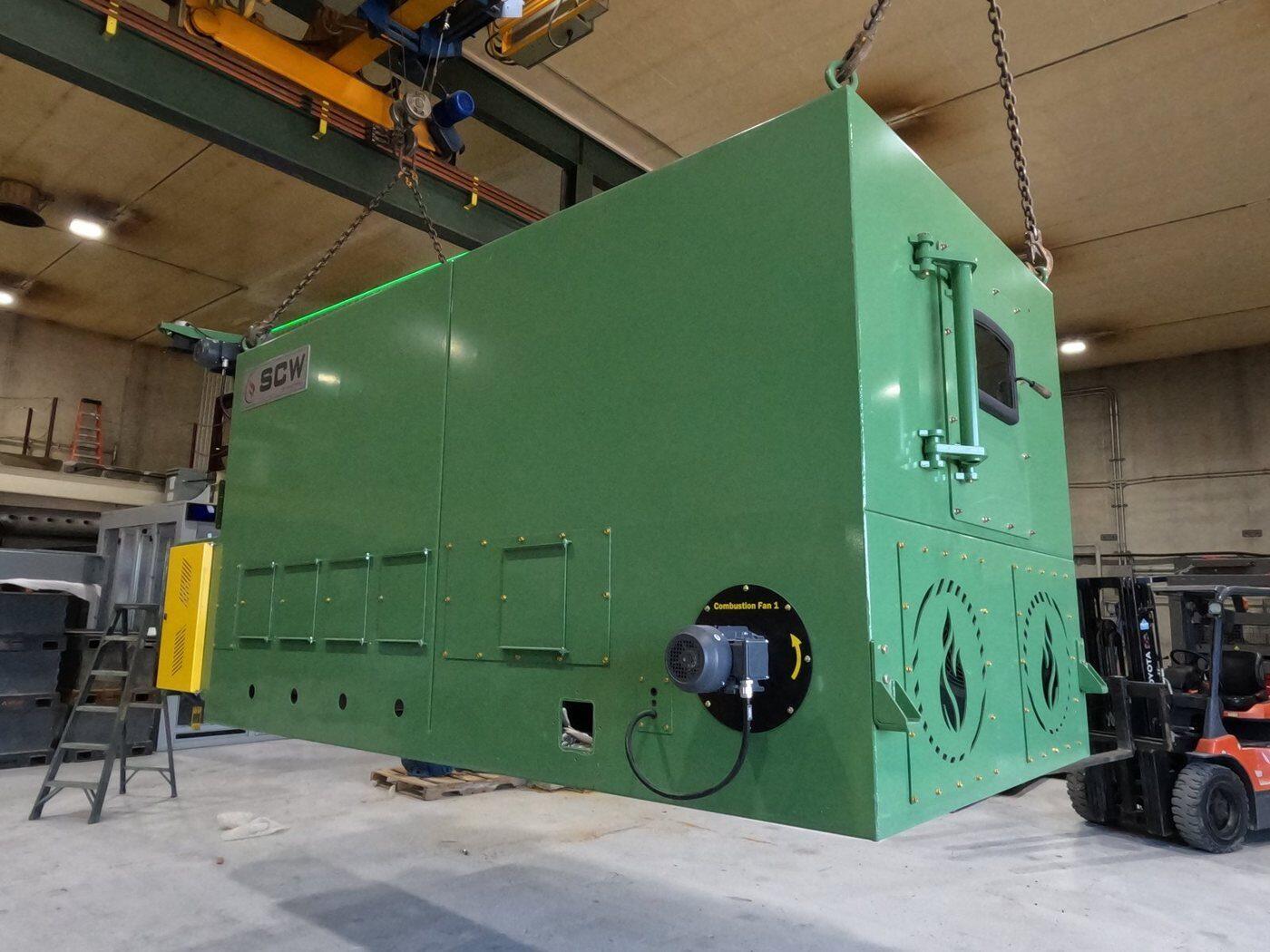
We switched from coal to wood chips, and our heating cost is about half what it was. The walking floor keeps it fed.Willow Creek Colony, Manitoba
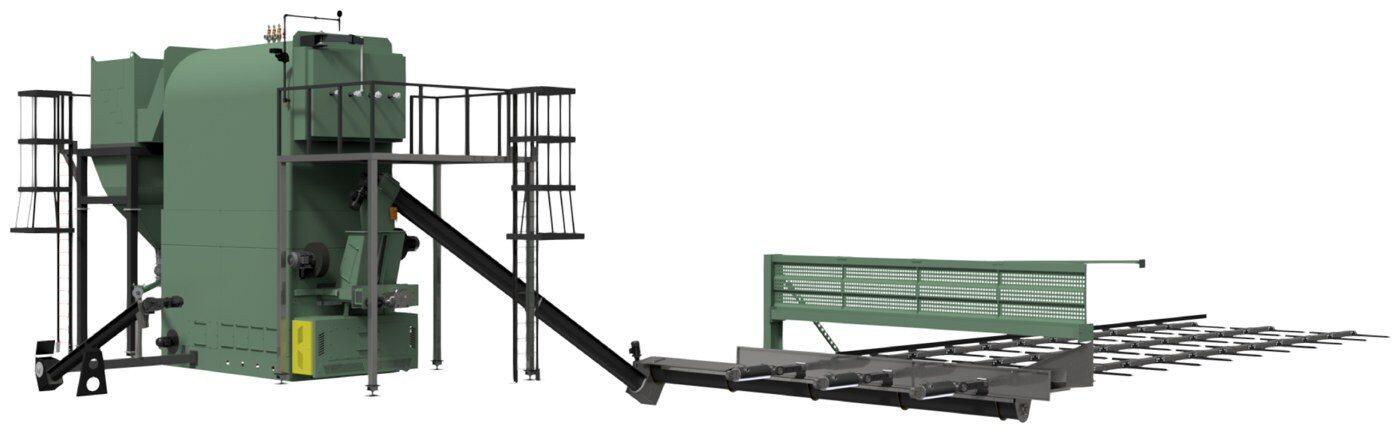
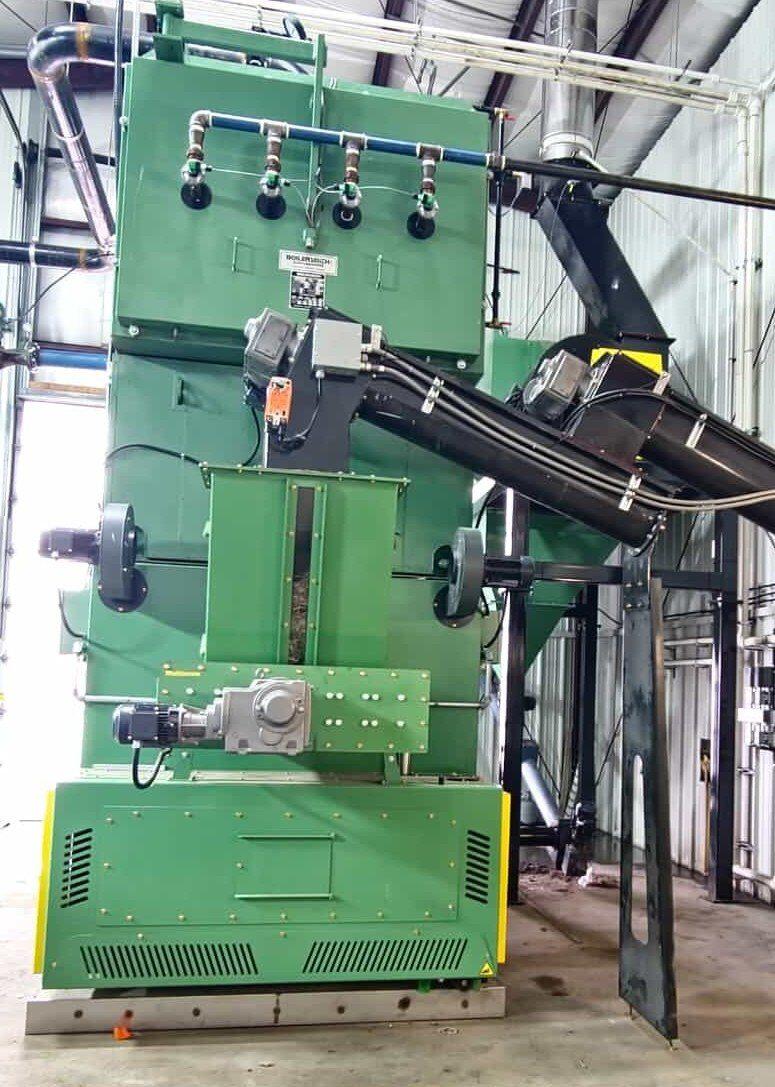
A hog farm in Manitoba
- Boiler
- 13M BTU hot water
- Fuel
- Wood chips
- Replaced
- Propane
- Fuel feed
- Walking floor → auger → boiler
- Result
- About half the heating bill
Our barns stay warm all winter and our heating bill is about half what we paid for propane.
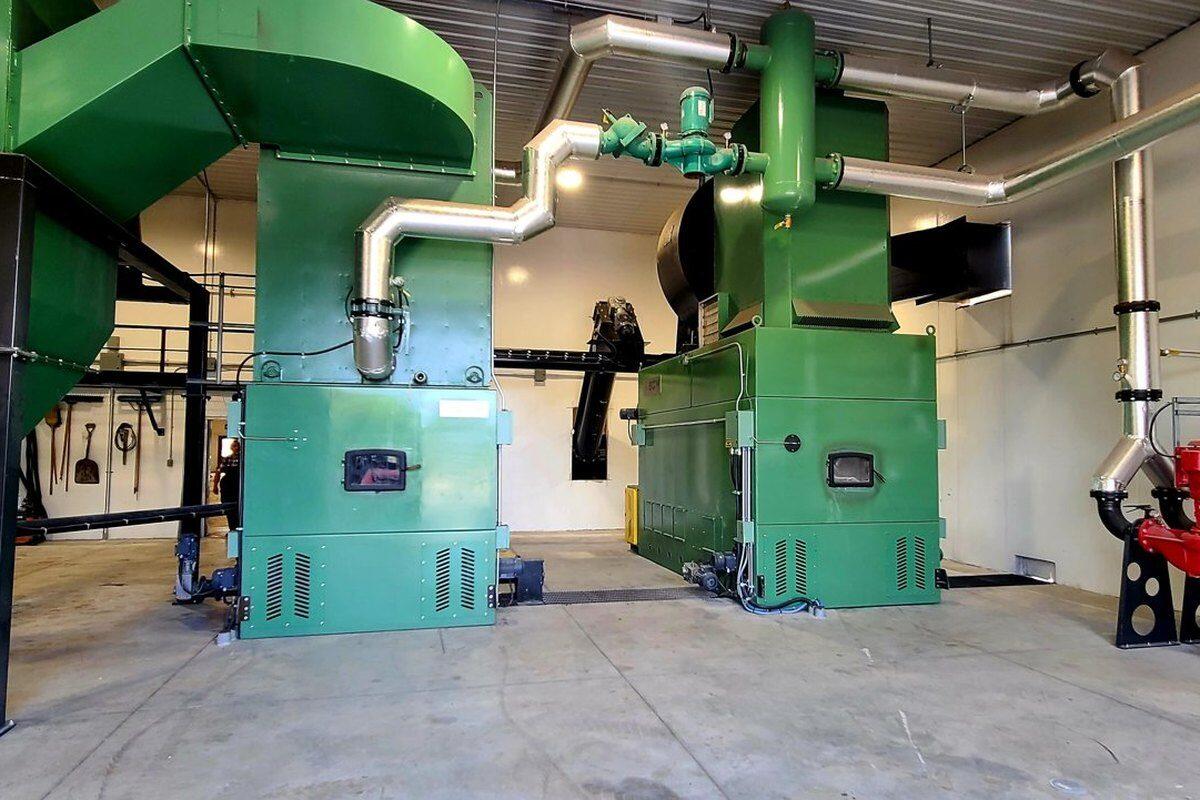
Barns and a grain dryer on one fuel floor
- Units
- Two SCW units side by side
- Barns
- 13M BTU hot water boiler
- Grain
- 13M BTU grain dryer heat source
- Fuel
- Wood chips, one walking floor feeds both
The barn boiler runs all winter. At harvest the second unit heats the dryer from the same chip floor. One delivery point, one place to check.
Read the story →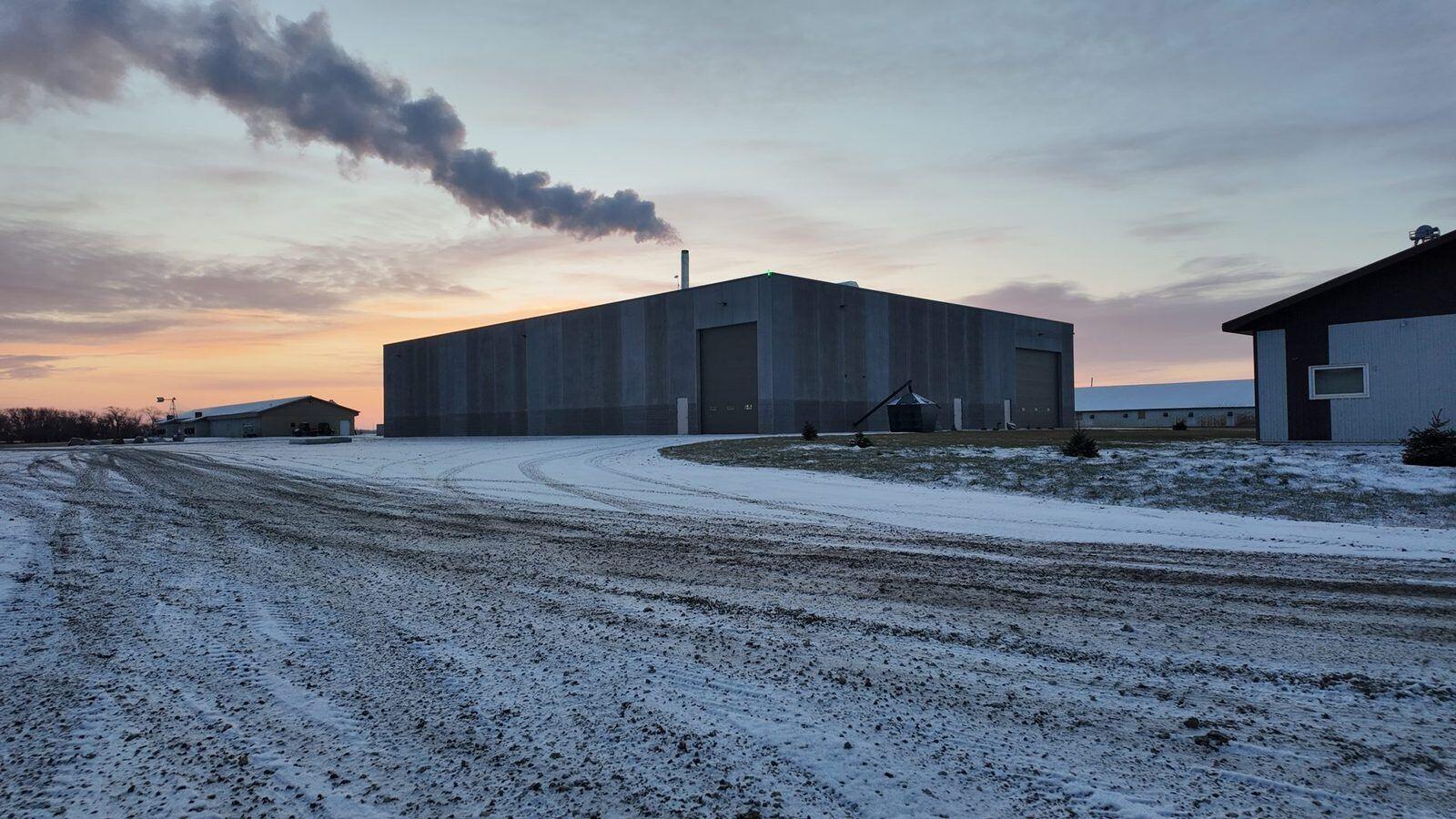
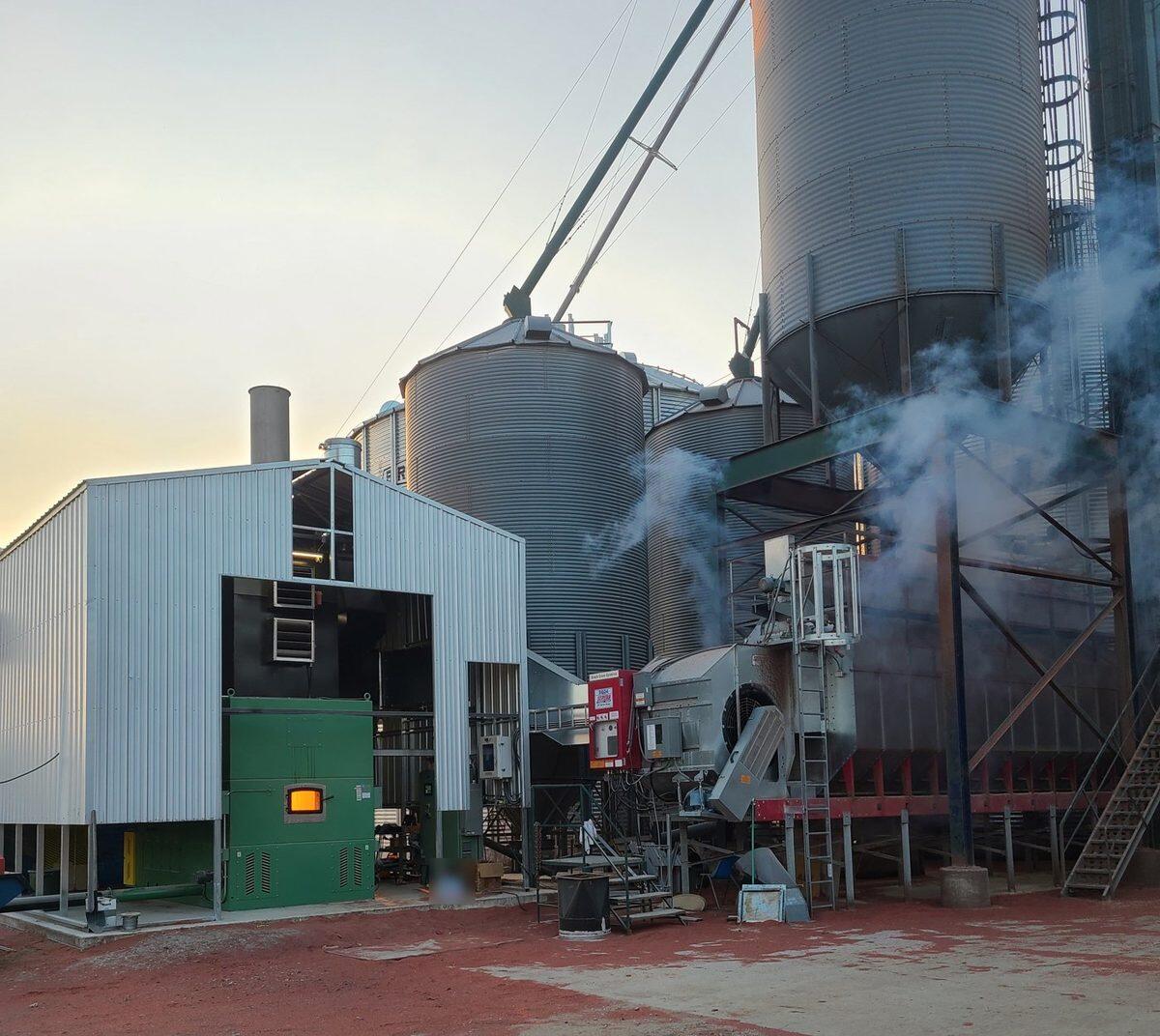
Sturgeon Creek Colony, Manitoba
- Boiler
- 15M BTU hot water
- Fuel
- Wood chips, indoor fuel building with walking floor
- Replaced
- Natural gas
- Loop
- 8" pre-insulated Aquaplus PP-R main to an underground vault, smaller lines to each building
- Room to grow
- Laid out for a second boiler
The chips go in the fuel building and the system does the rest. We check the screen, take deliveries and empty the ash bin. Our heating bill is about half what we paid for gas.
A farm in Ontario
- Unit
- 10M BTU grain dryer heat source
- Fuel
- Wood pellets
- Replaced
- Propane
- Result
- About half the drying fuel cost
The existing dryer stayed. The heat source sits beside it and ducts warm air into the burner housing.
Read the story →A straight answer before you call
Biomass isn't for every farm. Here's how we'd judge it if it were ours.
Usually a good fit
- Barns that need heat all winter, especially farrowing, nursery or brooding
- A big yearly propane, oil or coal bill, or several buildings each with their own heaters
- Chips, sawmill waste or straw you can get within a reasonable haul, or grow yourself
- Room on the yard for a fuel building, a portable walking floor or a bale line
- Someone on the farm who can take deliveries and empty an ash bin
Think twice if
- You heat one small shop a few weeks a year. The fuel savings won't carry it.
- There's no steady fuel source near you
- You want no chores at all. It's low work, not no work.
- You need heat before the next cold season and haven't ordered. Plan 1 to 3 months to build, plus grant approval time.
About half our systems are sold with a grant or tax credit
In Canada, most programs want approval before you order: apply first, then buy. In the US, REAP currently works the other way: the system must be running before you apply. Rules change, so check each program before you apply.
See grant programsHow it goes
Send us your bills
A year of fuel bills, what you raise, a yard photo. We tell you if it makes sense.
Size and quote
System size, fuel storage and the loop or ducting, from your real numbers.
Grant approval
If a program fits, apply now. Most need approval before the order.
Build
Firebox, chain grate stoker and controls built in our shop in Headingley. 1 to 3 months by size.
Install and first fire
Our crew, or your local contractor with our support. We start it up and show you the screen.
Six things that get you a real answer
- A year of propane, gas, oil or coal bills
- What you raise, and how many barns and rooms
- How the barns are heated now
- Rough distances between buildings
- What fuel you can get close to home
- A few photos of the yard
We'll tell you which system fits, what size, and whether biomass makes sense for your farm. If it doesn't, we'll say so.
Or call us: (204) 694-2398, Road 63 North, Headingley, MB.
Get a quoteThe marks your engineer will ask for.
Need another mark for your project? We build to it.
Talk to a person who knows the system.
Service, parts and remote monitoring come straight from the people who built it.