
Walking floors, augers and silos
Biomass fuel handling
Fuel that moves to the fire on its own
We design and build the whole fuel system: indoor and portable walking floors, augers, metering bins and silo feeds. With an SCW boiler, or to feed the boiler you already have.
200+
biomass systems running across North America
25+ years
building biomass heat, formerly BlueFlame Stokers
500,000 to 27M
BTU, 15 standard models
Headingley, MB
built in our shop, serviced from it
ON THIS PAGE: PICK A SYSTEM · THE FOUR SYSTEMS · PORTABLE FLOORS · METERING · A REAL SYSTEM · FUEL GUIDE · STORAGE · SIZING · QUESTIONS
Pick a system
Which fuel system fits you?
Most fuel handling problems start with the wrong storage for the fuel. Start with how your fuel arrives and how much you burn. This table gets you close.
| If this sounds like you | Look at | Why |
|---|---|---|
| Chips or sawmill waste come in by the truckload. You burn a lot and want days of fuel inside. | Indoor walking floor | Trucks dump inside the fuel building. A loader pushes the pile onto the floor, and the floor feeds the boiler by itself. |
| Smaller site, no fuel building yet, or you want something you can move later. | Portable walking floor | A BioStore bin on its own legs: single-wide 35, 42 or 45 ft with a roof, or open-top with 2 to 5 wings. Fill it with a loader or a dump trailer and it feeds the boiler. |
| Dry, free-flowing fuel: pellets, hulls, sawdust or shavings. | Silo or hopper bin | The fuel flows down to a screw feed under the bin. Fill it from a truck, blower or auger. |
| You already have fuel storage, or just need to get fuel the last stretch to the fire. | Augers and a metering bin | We pick up from your storage and carry the fuel to the stoker, metered to the heat you need. |
Wet, stringy or mixed chips don’t flow out of a silo on their own. That’s what walking floors are for.
The four systems
What we build
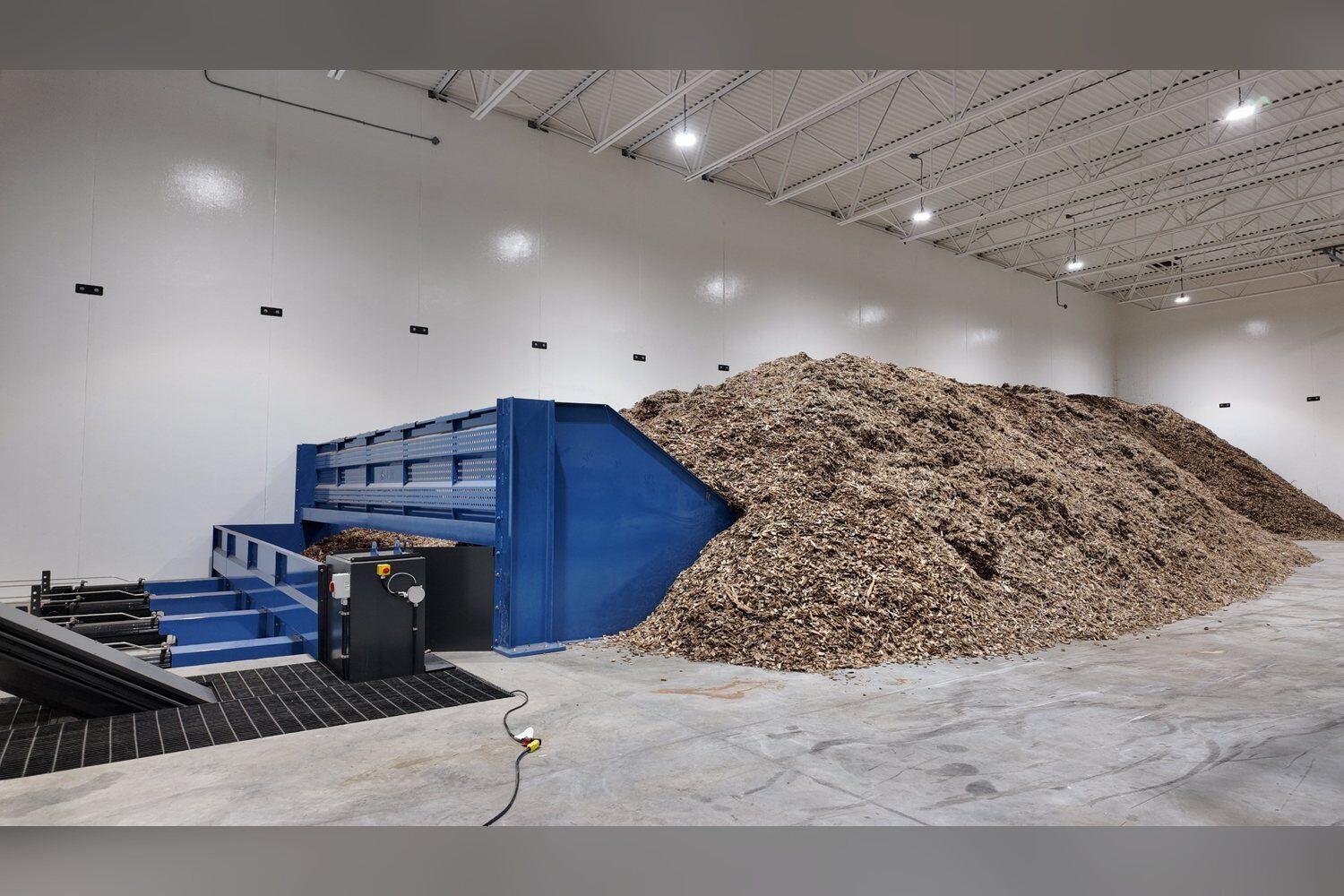
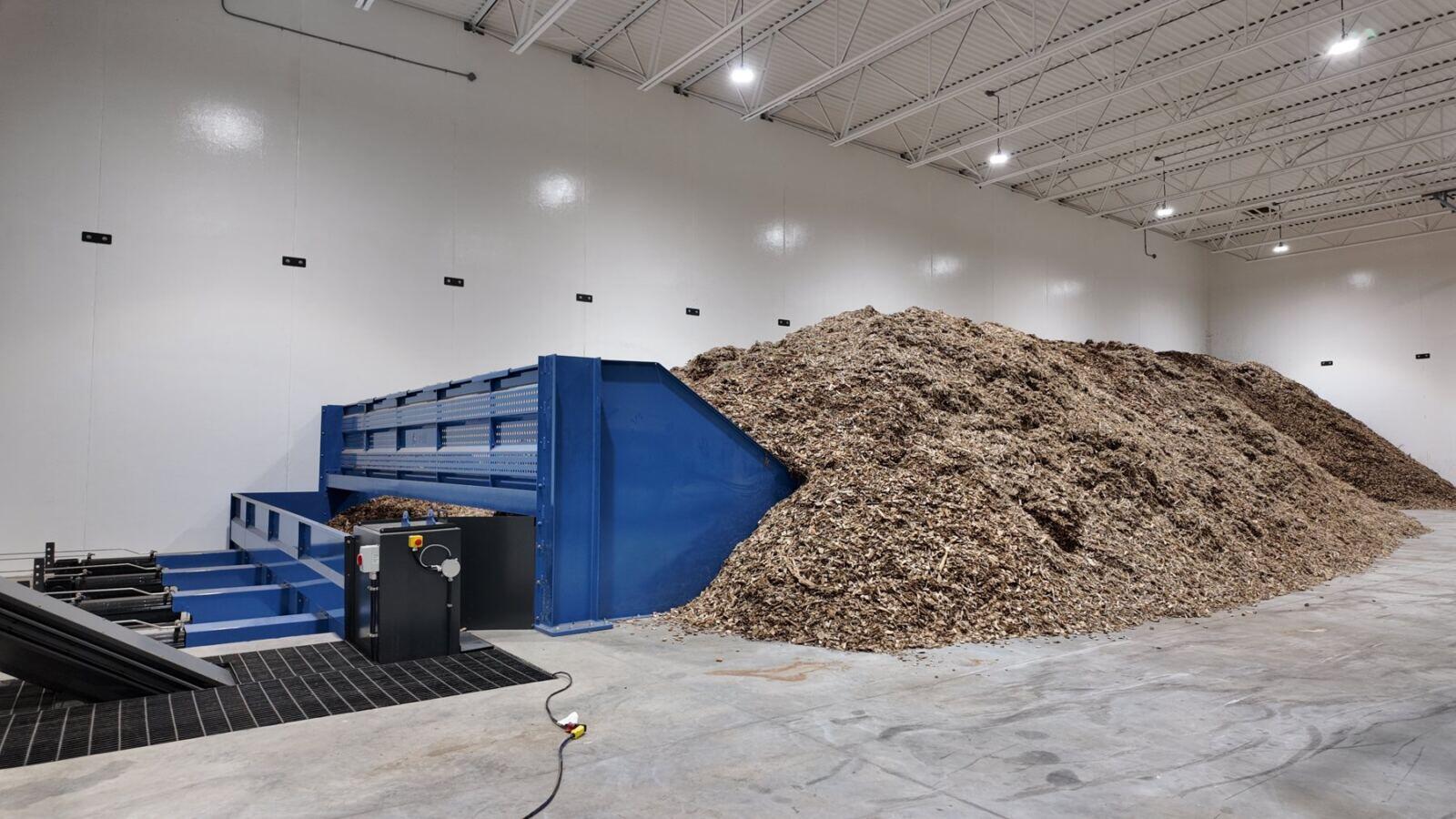
An indoor walking floor at Sturgeon Creek Colony.
Indoor walking floor
Hydraulic cylinders slide the floor sections back and forth, and the pile creeps toward a cross auger at the end. No one has to push fuel by hand.
- ✓Holds the most fuel: days to weeks
- ✓Takes wet, mixed and stringy chips
- ✓Built into your fuel building, sized to it
- ✓Room to add a 2nd boiler off the same floor
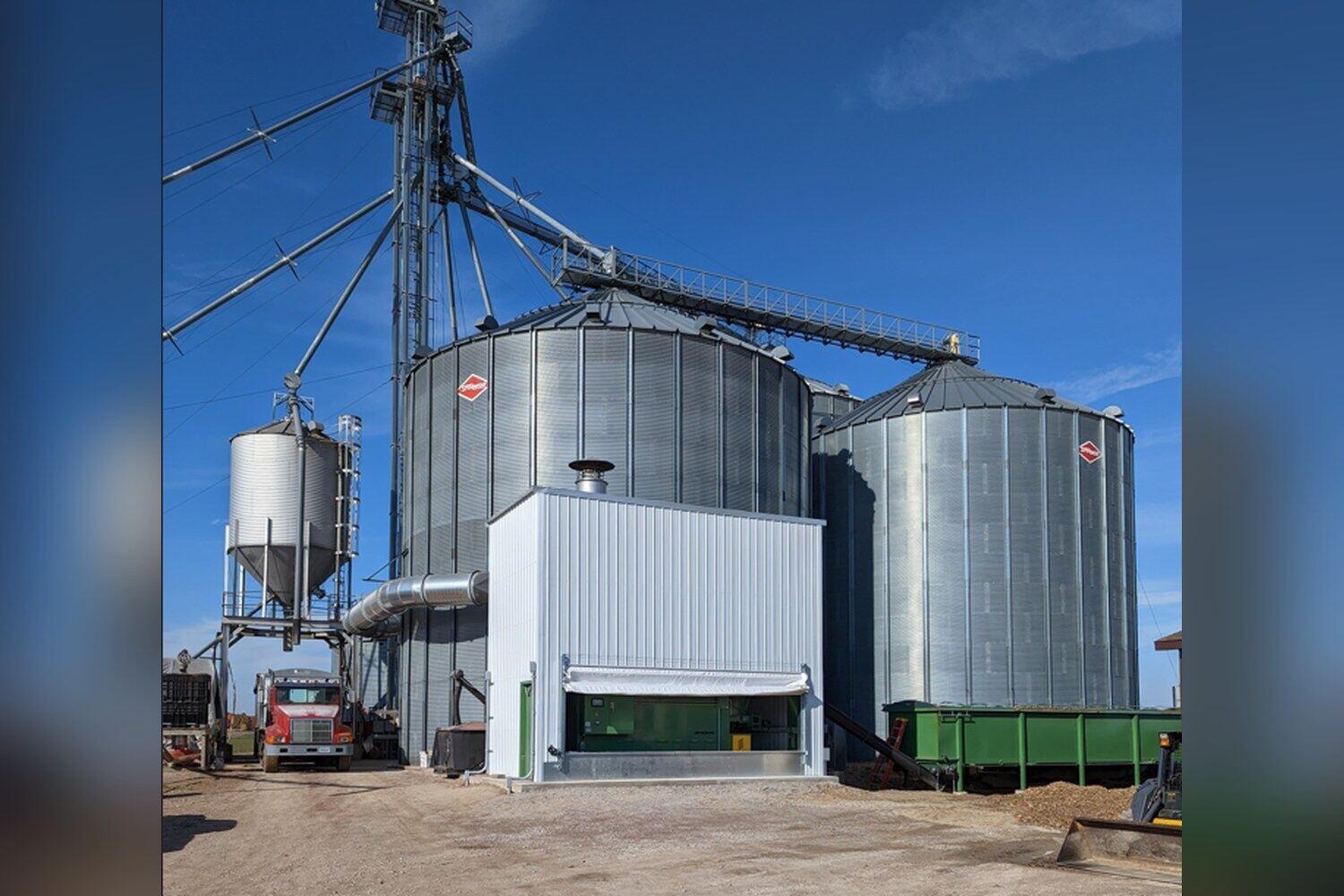
A portable walking floor (green, right) feeding one of our units on a grain farm.
Portable walking floor
The same walking floor in a bin on its own legs: the BioStore. Set it beside the boiler building, fill it, and it feeds the boiler.
- ✓BioStore 46, 56 and 60: single-wide, 35, 42 and 45 ft
- ✓BioStore 140 to 350: open-top, 2 to 5 wings
- ✓Tarp, hinged steel lid or hydraulic flip roof
- ✓No fuel building needed
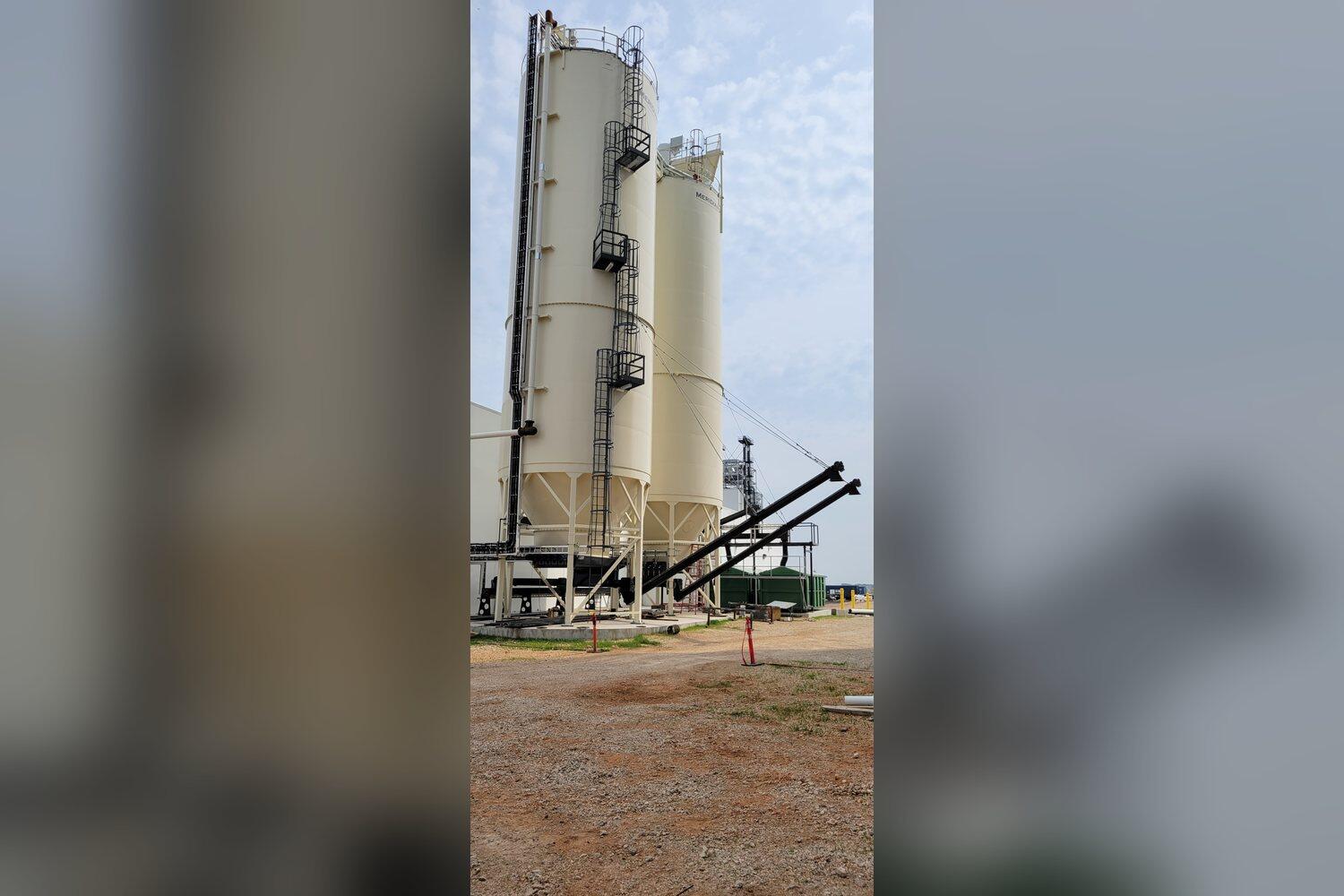
Two hull silos at a Manitoba plant. We built the screw feed under them.
Silos and hopper bins
For fuel that flows. The fuel drops to a screw feed under the bin, which meters it out to the augers that carry it to the stoker.
- ✓Pellets, hulls, sawdust, shavings
- ✓Fills from a truck, blower or auger
- ✓Small footprint, tall storage
- ✓We build the screw feed under bins you already have
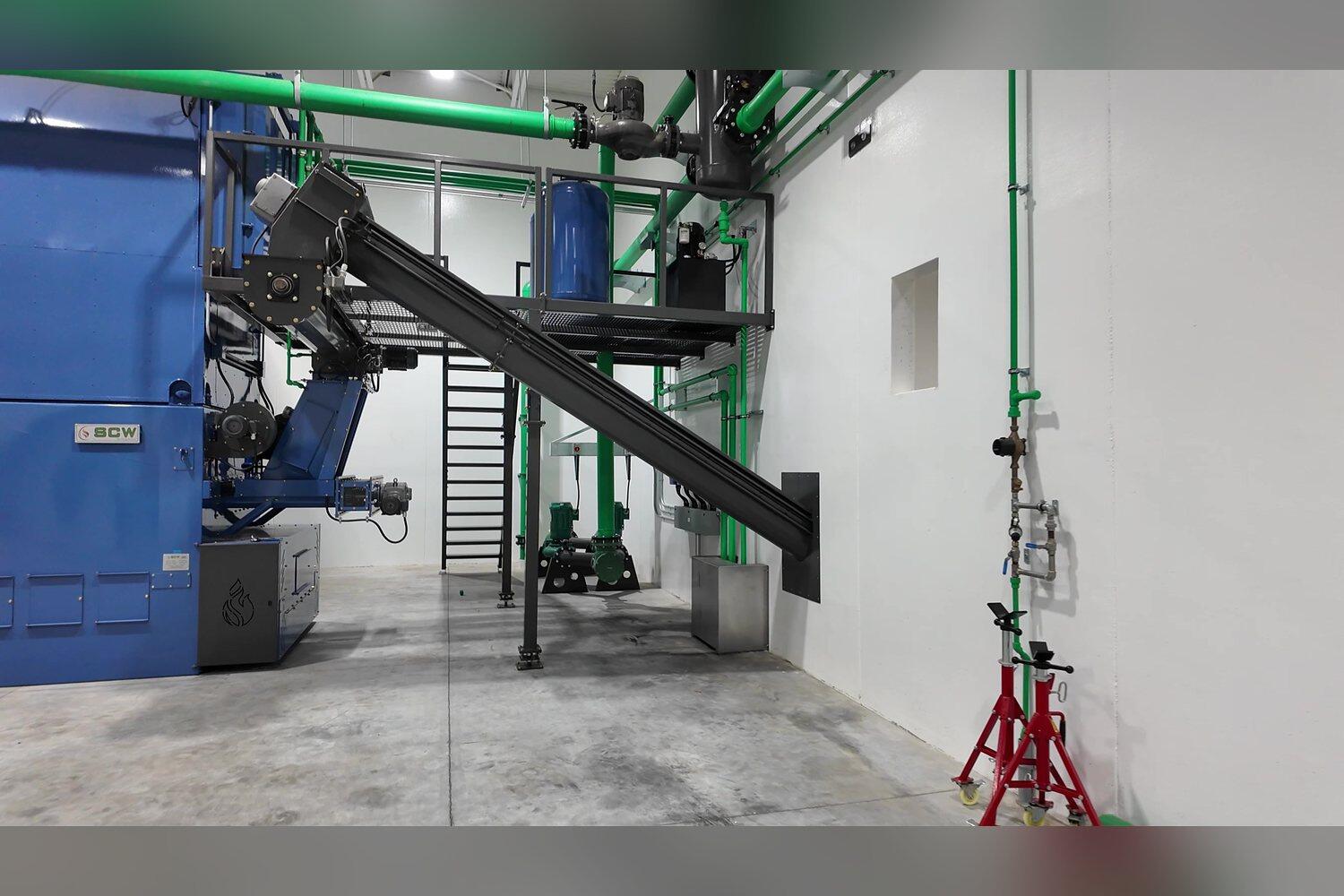
The incline auger carries chips up to the metering bin at the boiler.
Augers and metering bins
Cross augers and incline augers carry the fuel to a metering bin beside the stoker. The metering bin feeds the fire only as fast as the heat is needed.
- ✓Links any storage to the stoker
- ✓Cross, incline and metering augers
- ✓Level switch keeps the bin topped up
- ✓Sold on its own to feed other boilers
BioStore 140: two floors in one bin
Two wings side by side, for sites that burn more. Also built with 3, 4 or 5 wings. Two floor halves, each with its own hydraulic drive, push the fuel to one discharge auger.
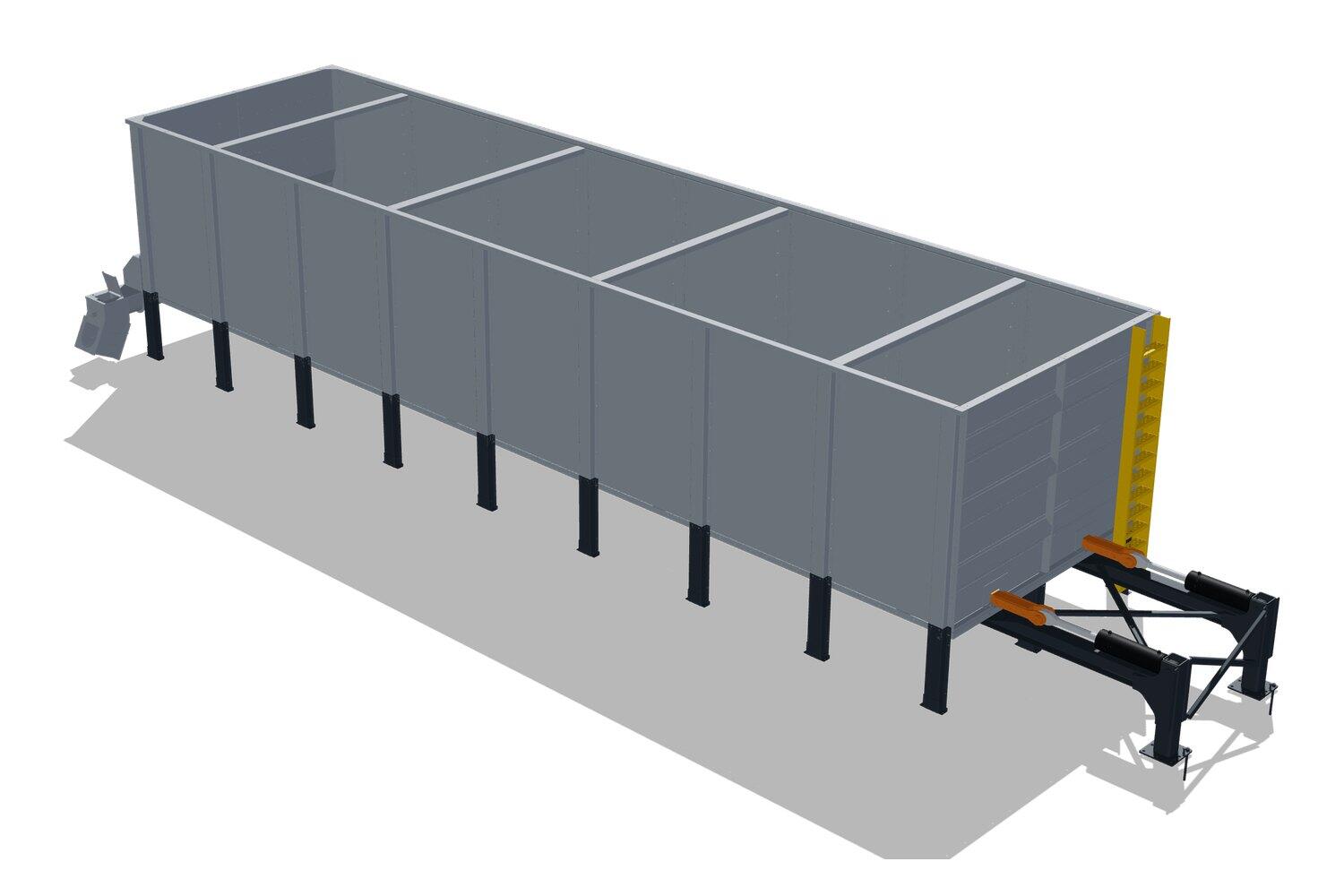
Drive end
Two hydraulic cylinders, one for each floor half.
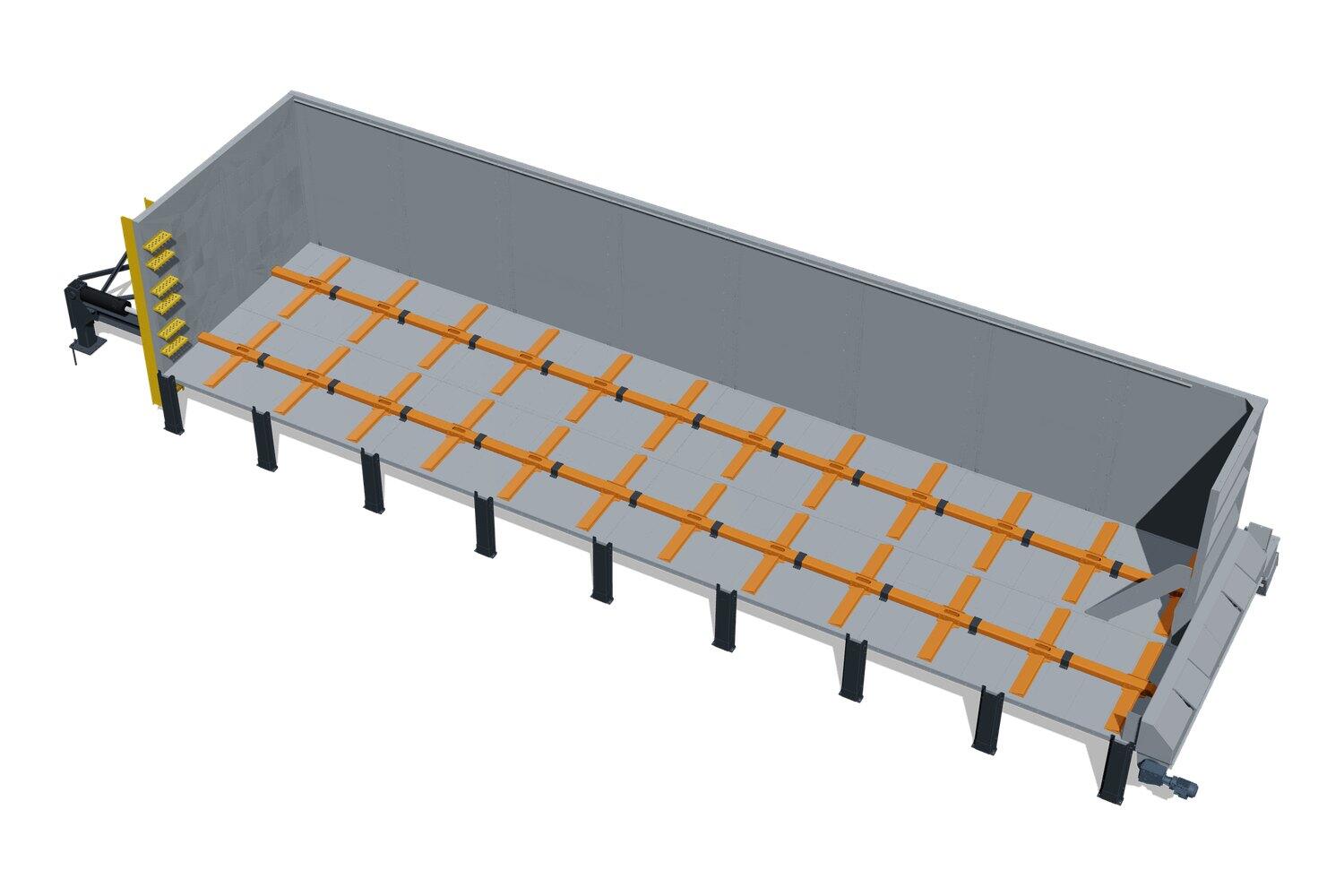
Inside
The floor bars walk the fuel toward the discharge end.
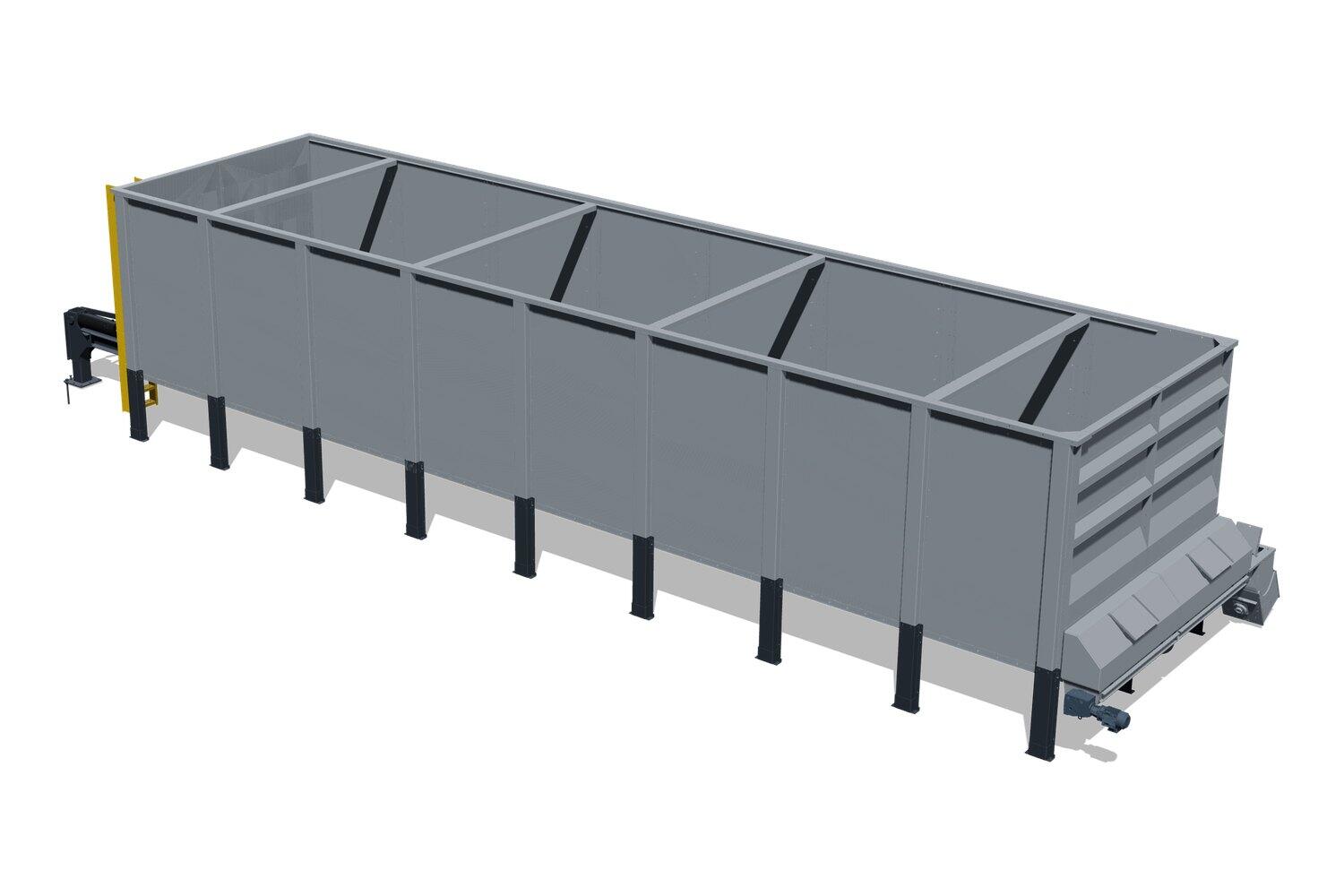
Discharge end
The cross auger carries the fuel out to the boiler feed.
Drawings of the BioStore 140 (2 wings).
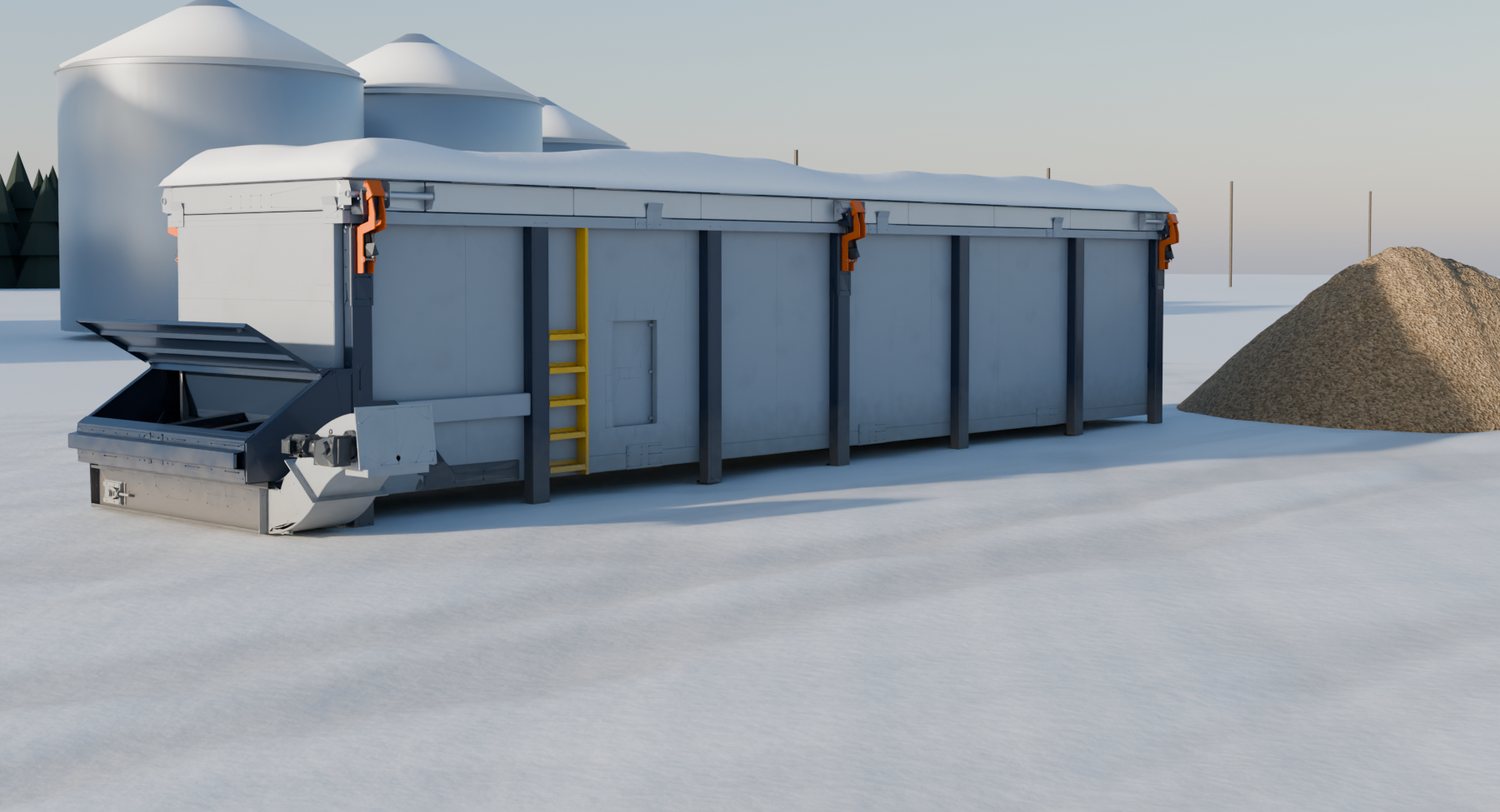
Rendering from our 3D model: the BioStore 60 in a winter yard.
BioStore
No fuel building? Set one down.
Our BioStore portable walking floors come as single-wides in 35, 42 and 45 ft, or open-top with 2 to 5 wings, and hold up to about 350 m³ of chips. The hydraulic flip roof sheds the snow and opens over either side.
BioStore 46BioStore 56BioStore 60BioStore 140 to 350
Need more? The BioStore 140 holds about 140 m³, more than twice a BioStore 60, and its two floor halves run separately. The 3, 4 and 5 wing models go up to about 350 m³.
Metering
The last step: feeding the fire steady
Whatever the storage, the last step is the same: a metering bin beside the stoker. It’s the part that keeps the fire steady.
Buffer tank
A small bin that holds a few minutes of fuel right at the stoker, so the fire never waits on the floor or the silo.
Level switch
A rotary level switch tells the controls when the bin is low. The augers behind it fill it back up.
Metering screws
Several screws in the bottom of the bin push fuel into the stoker. The controls speed them up or slow them down with the heat demand.
Jam clearing
If an auger jams, the controls reverse it to clear it. If it can’t clear, it shuts the feed down safely and sends you a message.
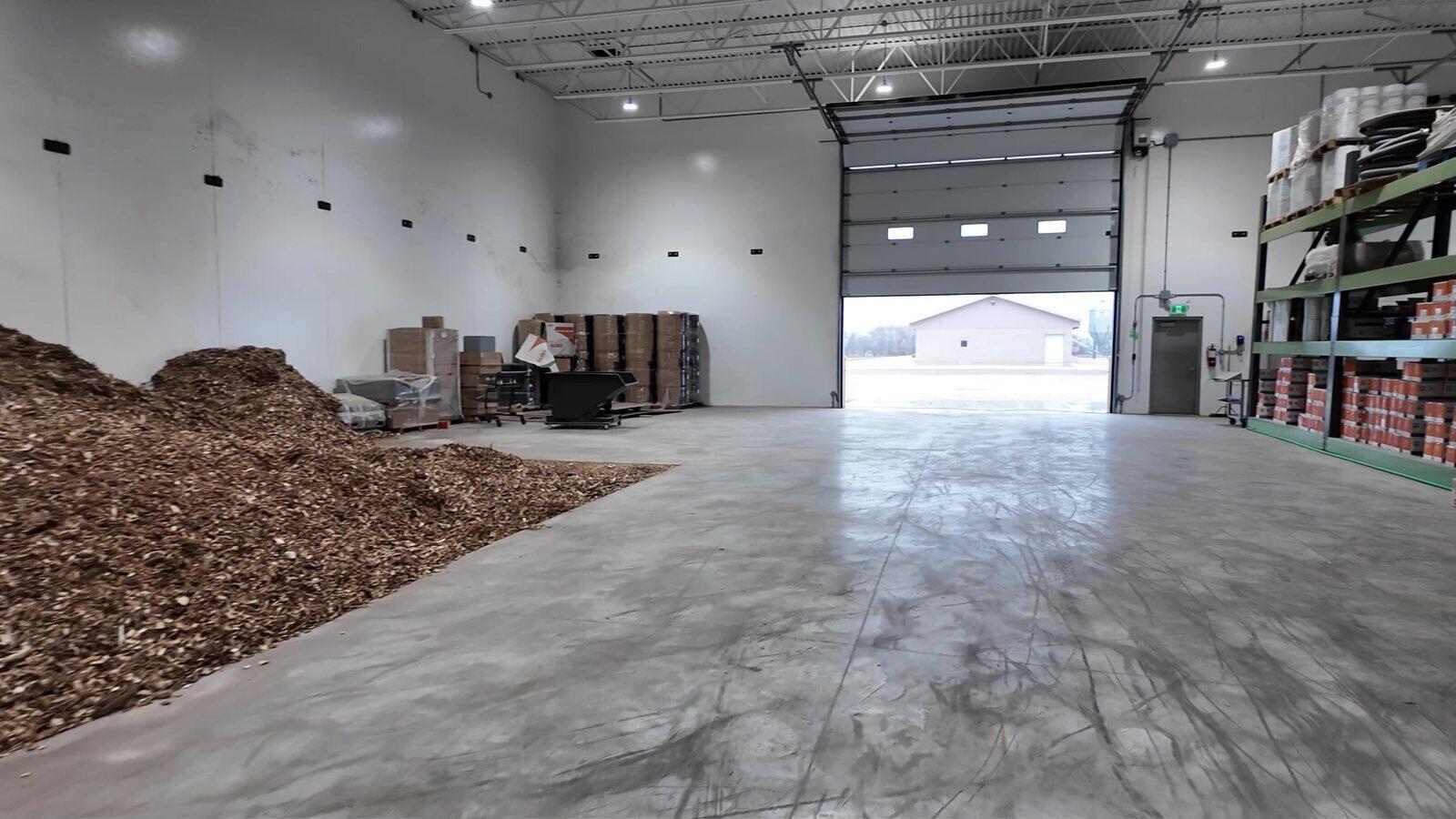
Inside the fuel building at Sturgeon Creek Colony. Trucks back in through the big door and dump inside.
A real system, and it’s our own
Fuel handling at Sturgeon Creek Colony
Sturgeon Creek Colony owns SCW. This is the fuel system that feeds the colony’s 15 million BTU boiler every day.
| Site | Sturgeon Creek Colony, Manitoba |
| Boiler | 15 million BTU hot water |
| Fuel | Wood chips |
| Storage | Indoor fuel building, walking floor in four sections |
| Feed | Cross auger, incline auger, metering bin |
| Room to grow | Laid out for a 2nd boiler off the same floor |
From the truck to the fire
1Delivery. The truck backs into the fuel building and dumps inside, out of the weather.
2Pile. A loader pushes the chips up onto the walking floor.
3Walking floor. Four floor sections move the pile, a little at a time, to the cross auger.
4Cross auger. Runs along the end of the floor and carries the chips to one side.
5Incline auger. Lifts the chips up and over to the boiler.
6Metering bin. Holds a buffer of fuel and feeds the stoker to match the heat demand.
Already have a boiler?
We build fuel handling on its own too: a walking floor, a silo feed or augers and a metering bin to feed the boiler you already run. Send us the boiler make and size and how your fuel arrives.
Fuel guide
Match the storage to the fuel
Each fuel behaves differently in storage. Here’s what usually works:
| Fuel | Flows on its own? | Usual storage |
|---|---|---|
| Green wood chips | No | Walking floor (indoor or portable) |
| Dry wood chips | Not reliably | Walking floor |
| Sawmill waste, bark, mixed | No | Walking floor |
| Sawdust and shavings | Mostly | Walking floor, or a bin with a screw feed |
| Wood pellets | Yes | Silo or hopper bin |
| Oat and sunflower hulls | Yes | Silo or hopper bin |
| Straw and stover bales | No | Bale feeder |
Keep fuel under a roof. Wet fuel makes less heat and is harder on the augers.
Storage
How much fuel storage do you need?
How much storage you need comes down to how fast you burn and how often you can get a delivery.
Rule of thumb: plan storage for at least your longest stretch between deliveries in the coldest week, plus a day or two of spare.
Rule of thumb only: green chips at about 10 million BTU per tonne, boiler at about 75% efficiency, chips at about 320 kg per m³. Dry chips, pellets and hulls pack more heat per tonne. Send us your numbers and we’ll size it for you.
Example: a 10 million BTU boiler on green wood chips
| At full fire, per hour | about 1.3 tonnes |
| At full fire, per day | about 32 tonnes |
| An average winter day | about half that |
| Volume of 32 tonnes of green chips | about 100 m³ |
About half of our systems are sold with a grant or tax credit
Most programs need approval before you order equipment, so ask us early. We’ll tell you which programs fit your province or state.
Sizing and buying
How we lay out your fuel system
We lay it out around your fuel, your deliveries and your site. Here’s what helps us quote it right.
What to send us
- ✓Your boiler size, or a year of fuel bills if you’re replacing propane, gas or oil
- ✓What fuel you’ll burn, and how it’s delivered (dump truck, walking-floor trailer, loader)
- ✓How often you can get a delivery in winter
- ✓The space you have: building size, or a yard sketch with the boiler building
- ✓If it’s for a boiler you already have: its make, size and how it’s fed now
- ✓Photos of the site
From quote to running
Layout and quote
We draw the fuel system around your site and boiler and send a quote.
Grants
If a grant fits, apply now. Most programs need approval before you order.
Built in Headingley
Floors, augers and metering bins are built in our shop. 1 to 3 months, depending on size.
Install
Our crew installs it, or your contractor does with us backing them up.
Start-up
We run fuel through it, set the controls and show your people how it works.
Support
Remote help with your OK, and parts from our shelf in Headingley.
Questions
What people ask us
Something else? Call us at (204) 694-2398. You’ll talk to someone who builds these.
What's a walking floor?
A floor made of long sections that slide back and forth, pushed by hydraulic cylinders. The sections move together one way and come back one at a time, so the pile creeps toward the end of the floor. It moves fuel that won’t flow on its own, like wet or mixed chips.
Indoor or portable walking floor?
Indoor holds the most fuel and lets trucks dump out of the weather. Portable needs no fuel building, is quicker to set up and can move later. If you burn a lot and get big deliveries, indoor usually wins.
Can you feed a boiler you didn't build?
Yes. We sell fuel handling on its own. Send us the boiler make, size and how it’s fed now, and we’ll lay out the feed.
Can I use a silo for wood chips?
Usually not. Most chips bridge and hang up in a silo. Silos work best for pellets, hulls and dry sawdust or shavings.
What happens if an auger jams?
The controls reverse it to clear the jam. If it can’t clear, the feed shuts down safely and you get a message.
What about snow on a portable bin?
Our BioStore 60 (45 ft) has a hydraulic flip roof. It tips first, so the snow slides off to the side where a loader can push it away, then it opens all the way for loading. No shovelling the roof, and no snow in your fuel.
Can I add a second boiler later?
Yes, if we plan for it. The Sturgeon Creek Colony fuel building is laid out to feed a 2nd boiler off the same walking floor.
Are there grants?
Fuel handling is part of the system, so it’s usually covered along with the boiler. Most programs need approval before you order, so ask us early.
Tell us your fuel and how it arrives
Your fuel, your delivery method and your boiler size are enough for us to lay out a fuel system and send a quote.
The marks your engineer will ask for.
Need another mark for your project? We build to it.
Talk to a person who knows the system.
Service, parts and remote monitoring come straight from the people who built it.