
Biomass grain drying
Dry your grain on fuel you can get close to home
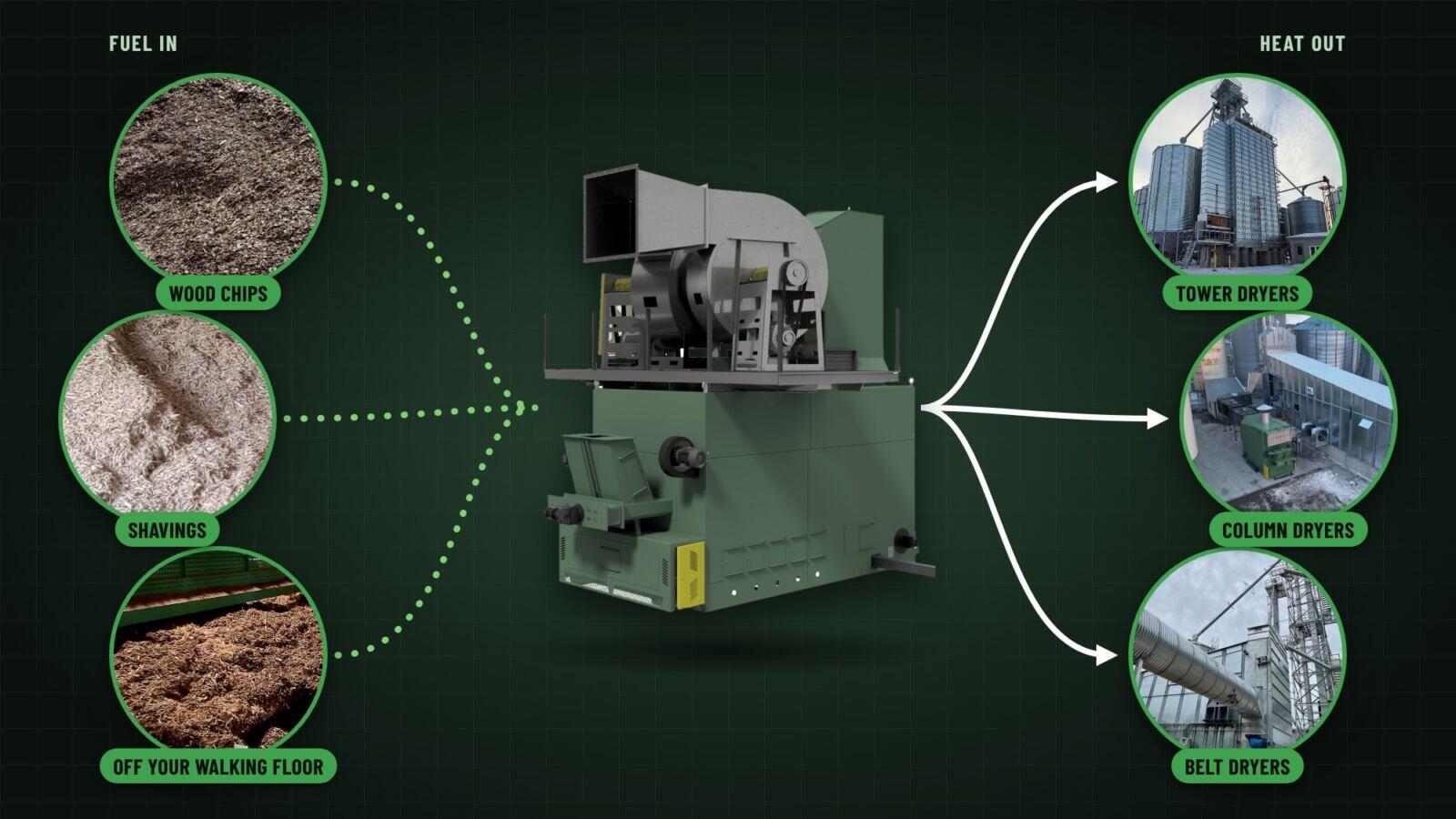
An SCW biomass heat source connects to the grain dryer you already have: tower, mixed-flow, column, belt or batch. 5 to 18 million BTU. Burns wood chips, pellets, straw or hulls.
About half the drying fuel cost of propane. Up to 80%, depending on fuel prices.
200+
biomass systems running across North America
25+ years
building biomass heat, formerly BlueFlame Stokers
500,000 to 27M
BTU, 15 standard models
Headingley, MB
built in our shop, serviced from it
ON THIS PAGE: HOW IT WORKS · HOW IT CONNECTS · BUILT FOR HARVEST · START TO FINISH · A REAL FARM · TWO JOBS · WHO IT FITS · COST PER BUSHEL · SIZING · QUESTIONS
How it works
From the fuel bin to your dryer
This is a real job: a clean-hot-air setup feeding a big grain dryer. Fuel goes in on the right, clean hot air comes out on the left.
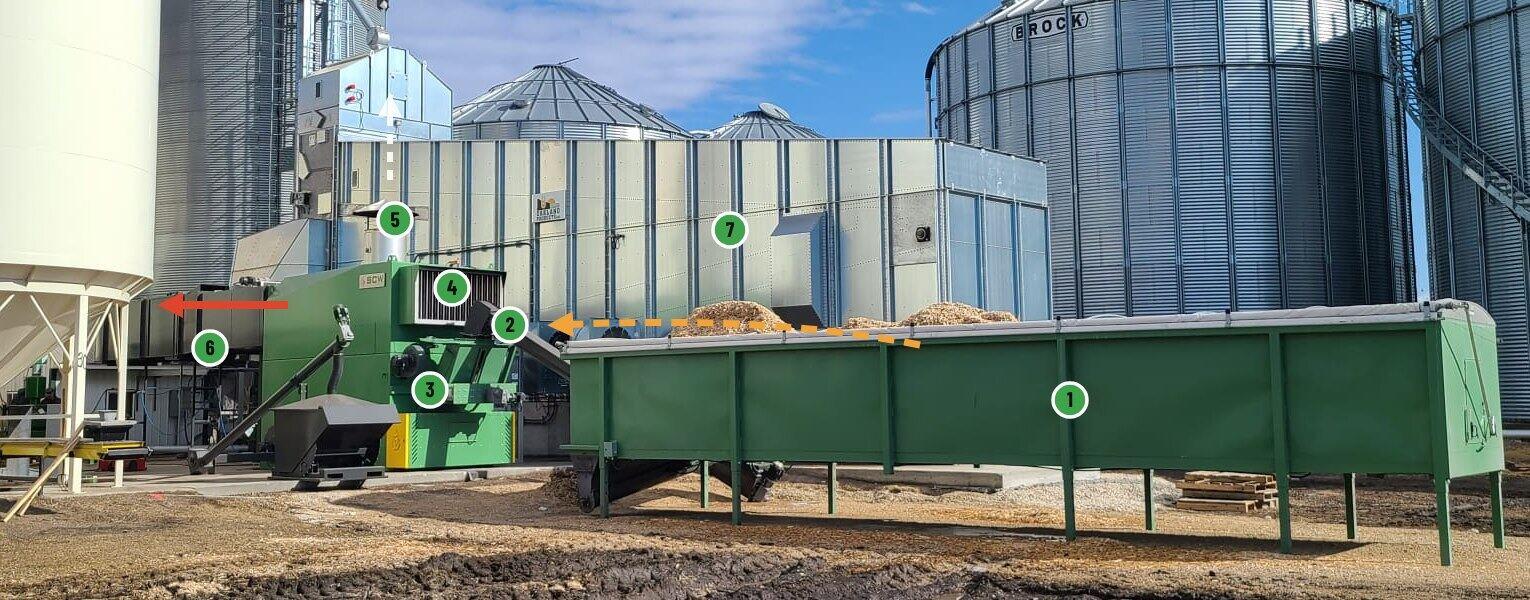
Orange arrow: fuel. Red arrow: clean hot air to the dryer. White arrow: exhaust.
1Fuel bin. Holds the chips or other fuel. An auger under the bin moves it out.
2Fuel feed. Carries the fuel into the stoker, only as fast as the heat is needed.
3Chain grate stoker. Burns the fuel on a slow-moving grate and carries the ash out.
4Heat exchanger. Heats clean outside air. The fire never touches the air that dries your grain.
5Stack. The exhaust goes up and away from the dryer.
6Hot air duct. Carries the clean hot air to your dryer’s burner housing.
7Your grain dryer. Dries the grain the same way it always has, on biomass heat.
How it connects
You keep your dryer
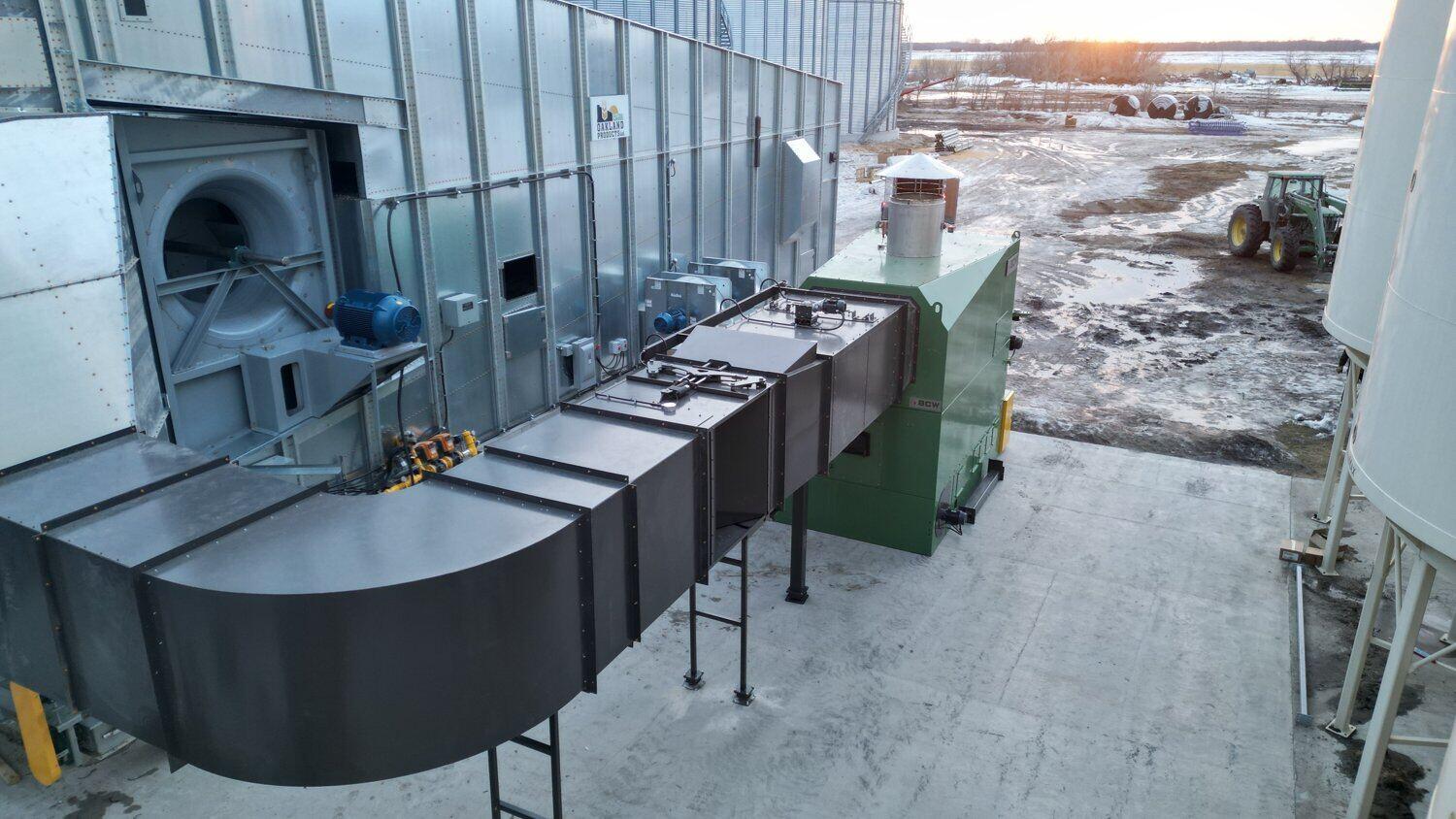
We set our heat source beside it and duct the heat into your existing burner housing. It works with most makes.
Works with
- ✓Tower and mixed-flow dryers
- ✓Column and cross-flow dryers
- ✓Belt dryers
- ✓Batch and bin dryers
- ✓Most makes: we duct into the existing burner housing
Two ways to heat the dryer
Clean hot air
A heat exchanger heats clean outside air, and that air goes to the dryer. The fire never touches the air that dries your grain.
- ✓The fire never touches the grain air
- ✓Clean air, even with wet or mixed fuel
Direct-fired
Hot gases from the fire go through the multi-cyclone to drop the fly ash, then mix with air on the way to the dryer.
- ✓Simpler, with fewer parts
- ✓More of the heat goes into the grain
Which one fits depends on your grain, your dryer and your buyers. We’ll go through it with you at the quote stage.
Built for harvest
Controls that dry the way you do
Harvest doesn’t wait, so the controls are built around how you actually dry.
✓Holds your temperature. Keeps the dryer air within about 5°C of your setpoint.
✓Low fire overnight. Idles at low fire between loads or overnight, so it’s ready when you are.
✓On and off from your phone. Start, stop and watch it from your phone, the same screen as on the unit.
✓Safe shutdown. The e-stop opens the dampers and dumps the heat away from the dryer.
✓Propane stays as backup. Your old burner can stay. Switch back to propane or gas any time.
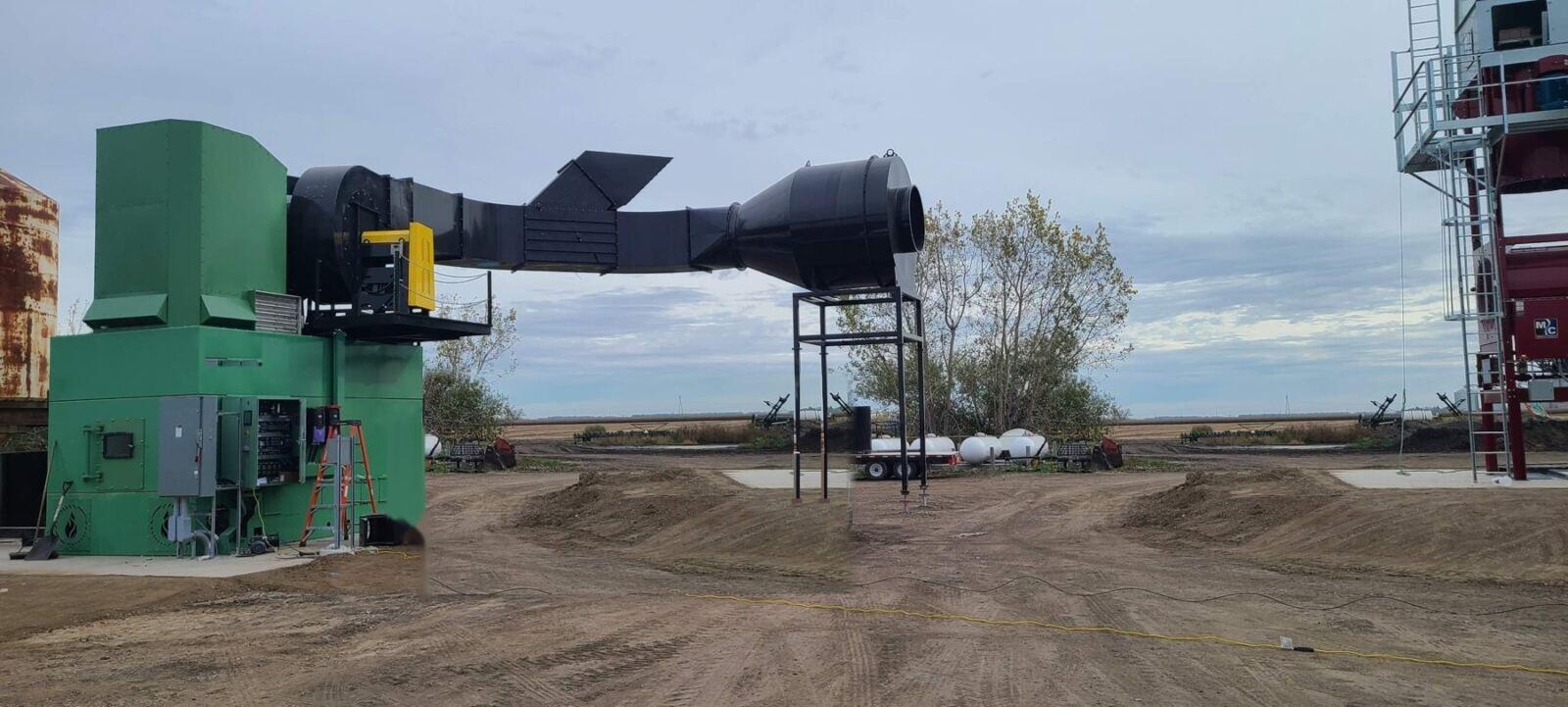
A dryer heat source with its fan and duct, set up beside the grain dryer.
One job, start to finish
From our shop to your harvest
Here’s one grain dryer job from start to finish, from our shop floor to a working harvest.
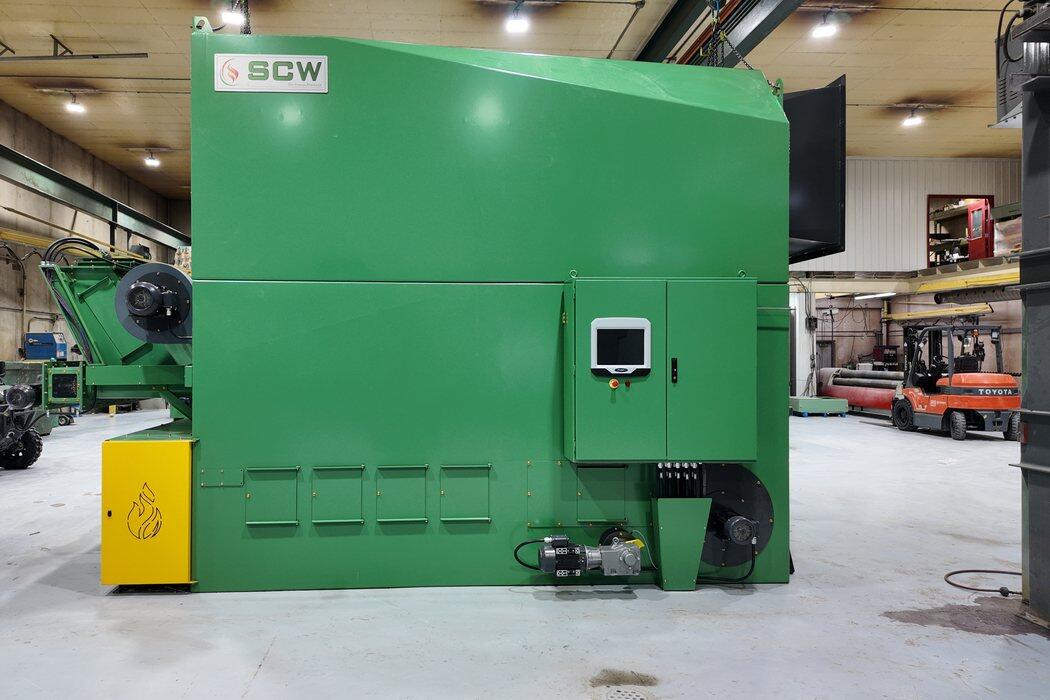
1. Built in our shop
The unit is built and wired in Headingley before it leaves.
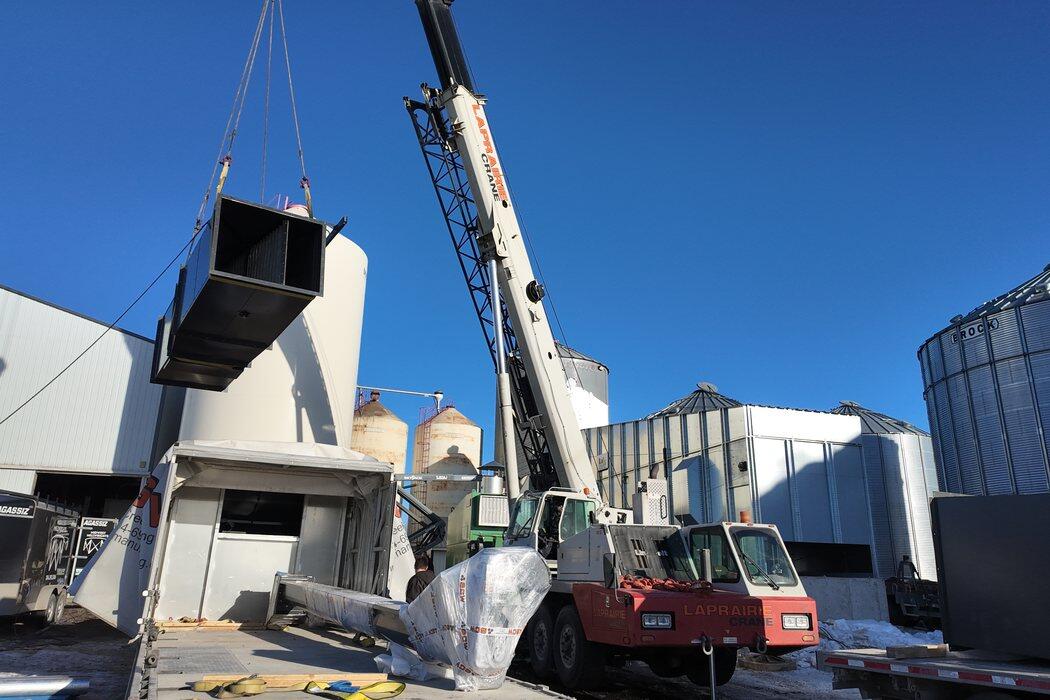
2. Lifted into place
A crane sets the duct sections up to the dryer.
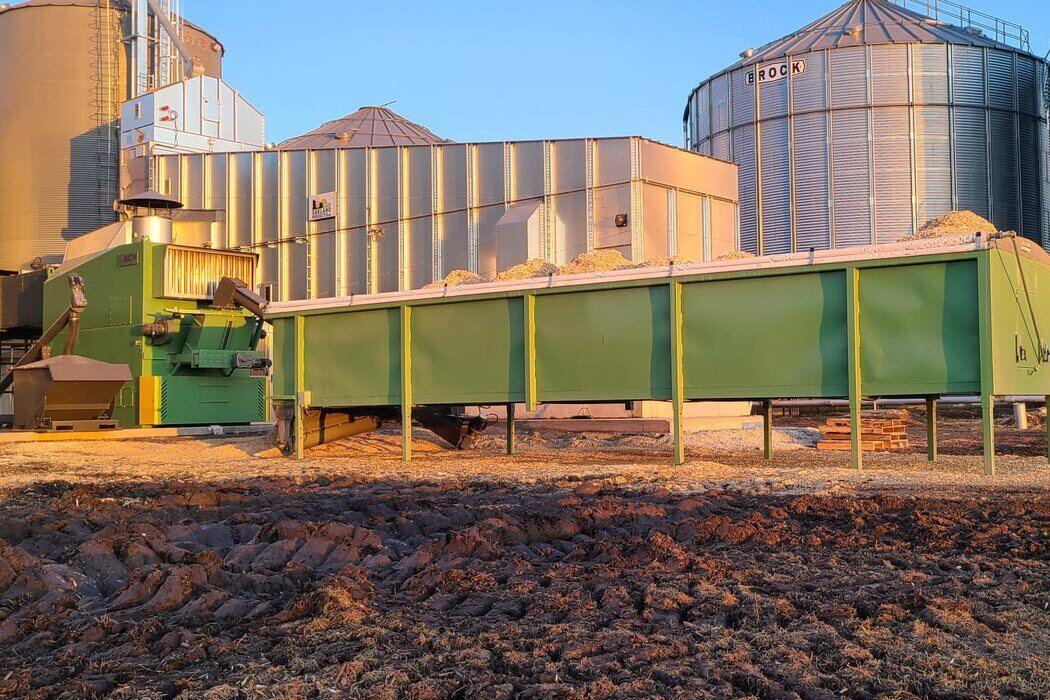
3. Running
The fuel bin and feed keep it going through harvest.
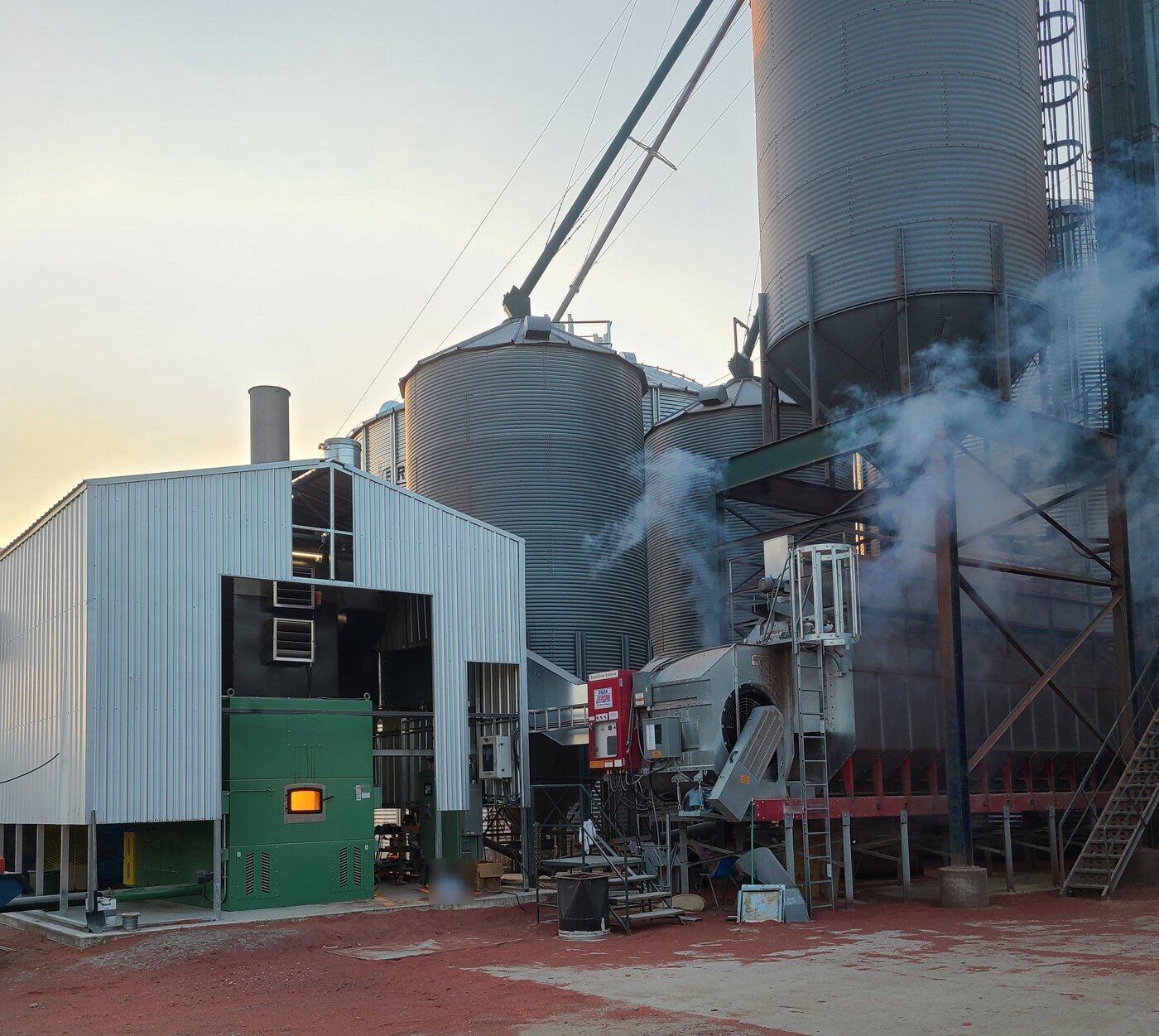
A real farm
A grain farm in Ontario
This farm dries its grain on wood pellets now. The heat is ducted into the dryer it already had.
| Farm | Grain farm, Ontario |
| Size | 10 million BTU |
| Fuel | Wood pellets |
| Replaced | Propane |
| Drying fuel cost | About 50% lower |
| Installed | 2021 |
One fuel floor, two jobs
Barn heat and grain drying from one fuel pile
On this Manitoba colony, one walking floor feeds two SCW units side by side: a hot water boiler that heats the barns, and a heat source for the grain dryer. One fuel pile, one set of deliveries, two jobs.
| Site | A colony in Manitoba |
| Hot water boiler | 13 million BTU, heats the barns |
| Grain dryer heat | 13 million BTU |
| Fuel handling | One walking floor feeds both units |
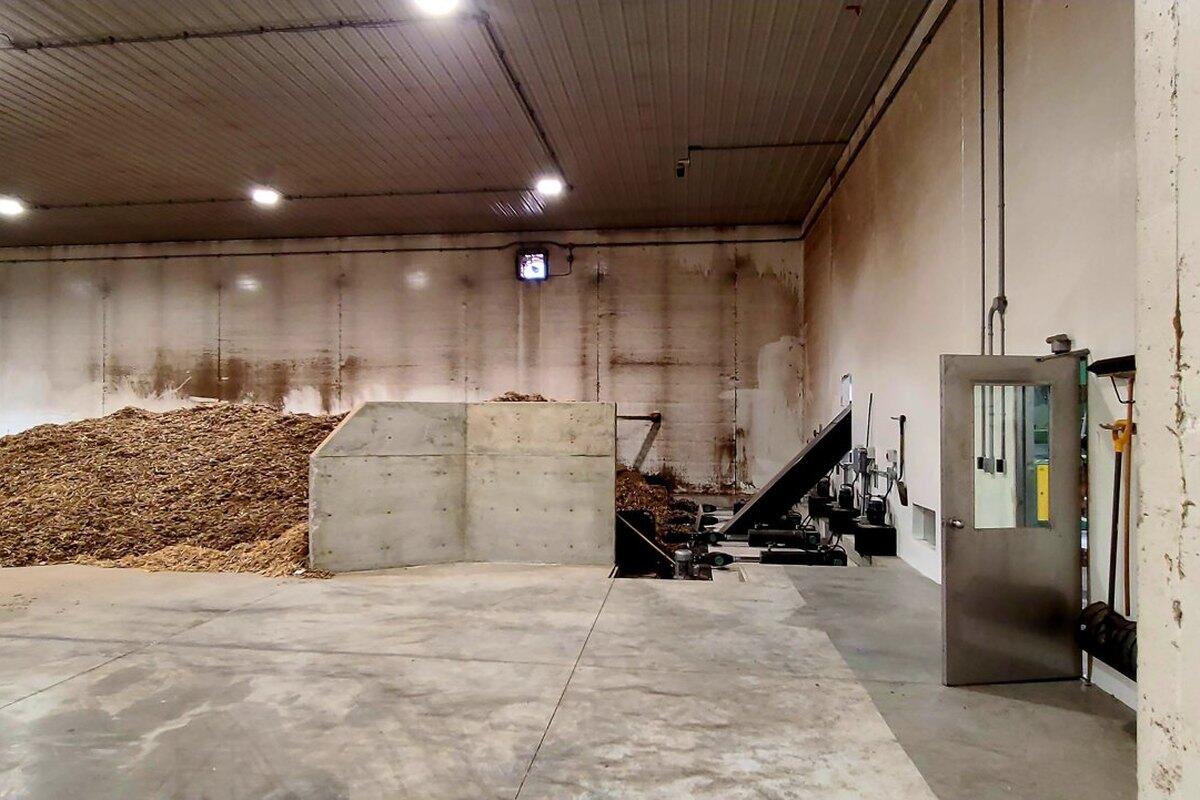
1. The fuel bay: one walking floor feeds both units.
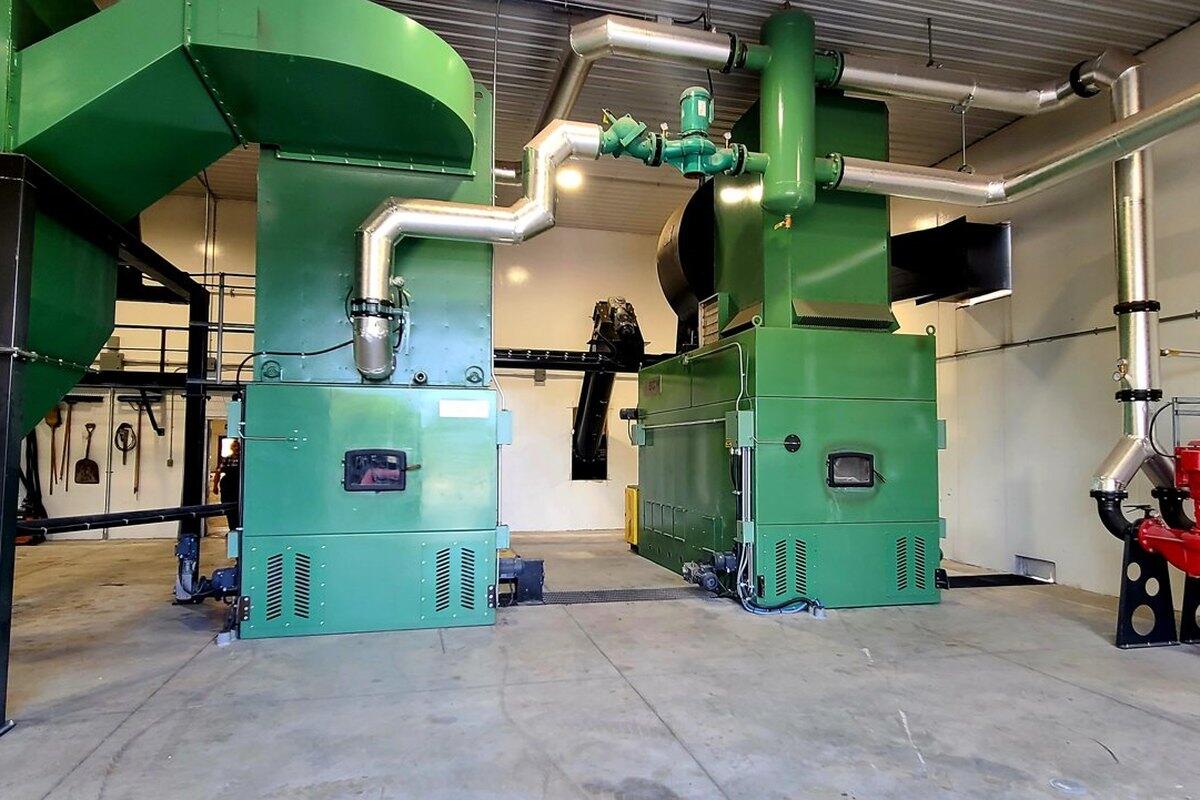
2. Left: the barn boiler. Right: the grain dryer heat.
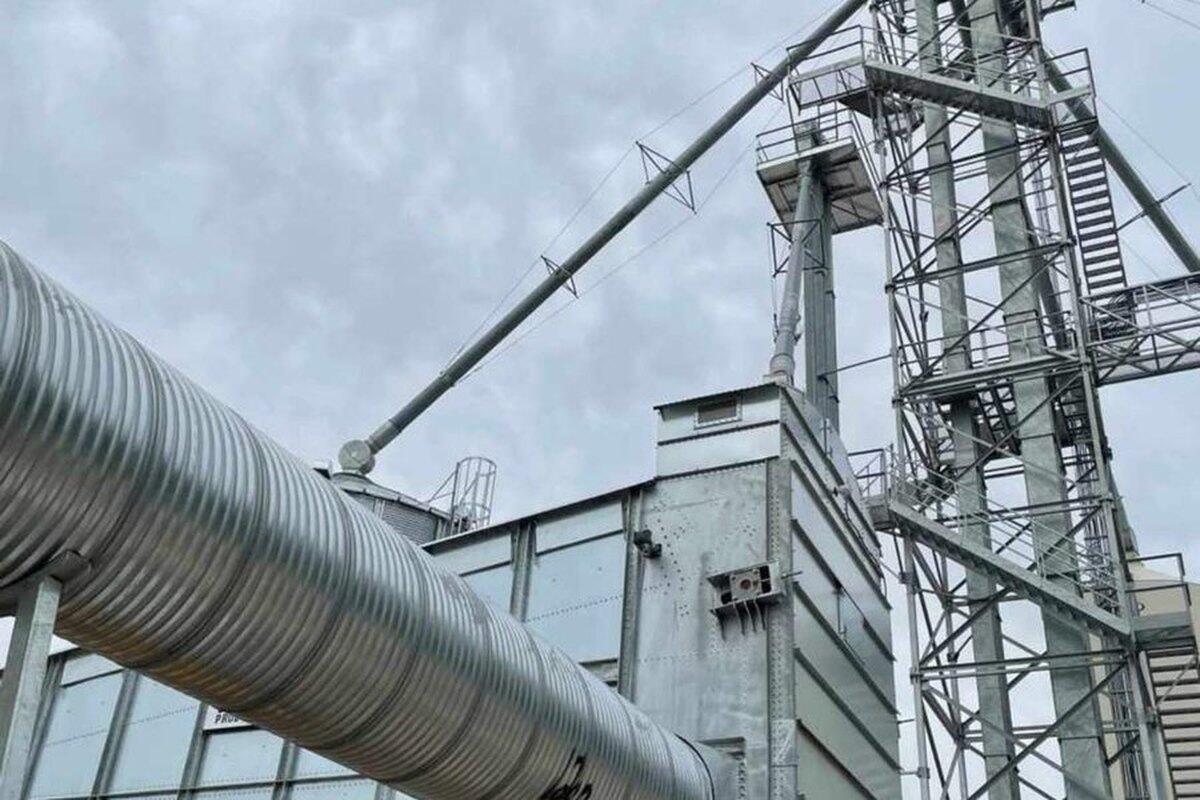
3. The duct carries the heat into the belt dryer.
Who it fits
Is biomass drying right for you?
Usually a good fit
- ✓You dry a lot of bushels every fall.
- ✓You burn a lot of propane or natural gas to do it.
- ✓You can get wood chips, pellets, straw or hulls within about 100 km.
- ✓You have room beside the dryer for the unit and some fuel storage.
- ✓You want to keep your propane burner as backup.
Maybe not the best fit
- –You only dry a few loads in a wet year.
- –There’s no room near the dryer and no way to get fuel trucks in.
- –You can’t get biomass fuel nearby.
Not sure? Send us last fall’s propane bills and your dryer model. We’ll tell you straight whether it makes sense, even if the answer is no.
About half of our systems are sold with a grant or tax credit
Most programs need approval before you order equipment, so ask us early. We’ll tell you which programs fit your province or state.
Fuel and cost
What it costs to dry a bushel
Farmers think in cost per bushel, so here’s the math. A common rule of thumb: drying takes about 0.02 US gallons of propane per bushel for every point of moisture you take off.
To dry 1,000 bushels, taking off 5 points of moisture:
| Fuel | You need | Your cost |
|---|---|---|
| Propane | about 380 L | your price per litre × 380 |
| Wood pellets | about 0.75 tonnes | your price per tonne × 0.75 |
| Green wood chips | about 1.2 tonnes | your price per tonne × 1.2 |
Example: 100,000 bushels at 5 points is about 38,000 L of propane, or about 75 tonnes of pellets, or about 120 tonnes of green chips.
Rule of thumb only. Real use depends on the crop, the weather, your dryer and how many points you take off. Plug in your own fuel prices, or send us last harvest’s bills and we’ll do it for you.
What it burns
Wood pellets
The easiest to store and handle. The Ontario farm on this page burns pellets.
Wood chips
The lowest cost per tonne. Keep them covered.
Straw and stover
Your own crop residue. Needs a bale feeder or grinder.
Oat and sunflower hulls
Dry and light. A good fit near a mill.
Sizing and buying
How we size your unit
We size from your dryer and your real drying season, not a guess.
5 to 18 million BTU
Matched to your dryer’s burner size.
What to send us
- ✓Your dryer make and model, and its burner size in BTU
- ✓Litres of propane (or m³ of gas) you burned last harvest
- ✓About how many bushels you dry, and how many points of moisture you take off
- ✓What fuel you can get, and roughly what it costs
- ✓Photos of the dryer and the space beside it
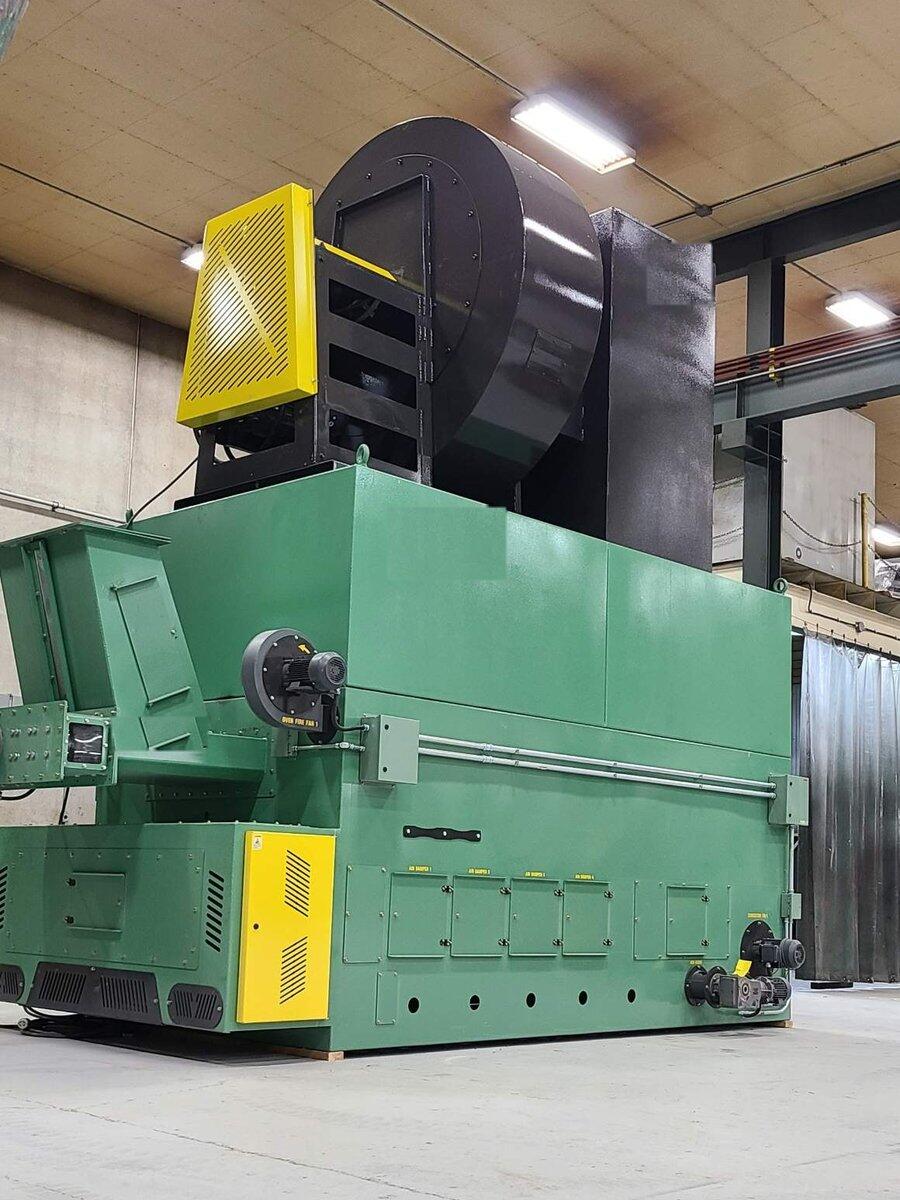
A grain dryer heat source, finished in our shop and ready to ship.
Certified
✓ Intertek-marked stoker
Our chain grate stoker carries the Intertek mark.
✓ Built to your project’s code
Need a specific approval for your site or province? Tell us at the quote stage and we build to it.
From quote to harvest
Quote and layout
We size the unit and send a quote with a layout of how it ducts into your dryer.
Grants
If a grant fits, apply now. Most programs need approval before you order.
Built in Headingley
We build the unit in our shop. Order early: it takes 1 to 3 months before harvest.
Delivery and hookup
We set it beside your dryer and duct it in, or your contractor does with us backing them up.
Start-up and training
We fire it up, tune it to your fuel and dryer, and show you how to run it.
Harvest support
We can watch it remotely with you, and parts come from our shelf in Headingley.
Questions
What farmers ask us
Something else? Call us at (204) 694-2398. You’ll talk to someone who builds these.
Will it work with my dryer?
Most likely. We duct into the existing burner housing on tower, mixed-flow, column, belt and batch dryers from most makes. Send us your make and model and we’ll confirm.
Can I still use propane?
Yes. Your propane burner can stay in place as a backup, and you can switch back any time.
Does the smoke touch my grain?
With a clean-air heat exchanger, no: only clean heated air goes to the dryer. With a direct-fired setup, the hot gases are cleaned by the multi-cyclone first. We’ll go through which one fits your grain.
How steady is the heat?
The controls hold the dryer air within about 5°C of your setpoint and run at low fire between loads.
How much fuel do I need for a harvest?
About 2 tonnes of pellets or 3 tonnes of green chips for every 1,000 litres of propane you burn now. Send us your bills and we’ll work it out.
When should I order?
Most units take 1 to 3 months to build. If you want it running for harvest, talk to us in winter or spring.
Are there grants?
About half of our systems are sold with a grant or tax credit. Most programs need approval before you order, so ask us early.
What happens after it's installed?
We start it up, tune it to your fuel and dryer, and train you. After that, you run it from the screen or your phone, and it texts you if something needs attention. Need help? With your OK, we log in from our shop, or we come out.
Send us your dryer and propane numbers
Your dryer model and last harvest’s fuel bills are enough for us to size a unit and send a quote.
The marks your engineer will ask for.
Need another mark for your project? We build to it.
Talk to a person who knows the system.
Service, parts and remote monitoring come straight from the people who built it.