
How it works
From the fuel pile to hot water. On its own.
An SCW system feeds itself, burns on a moving chain grate, gets rid of its own ash and cleans its own exhaust. Here is the path the fuel takes, one step at a time.
See it running
51 seconds, fuel pile to control screen
Step 01 · Fuel
Start with what you’ve got
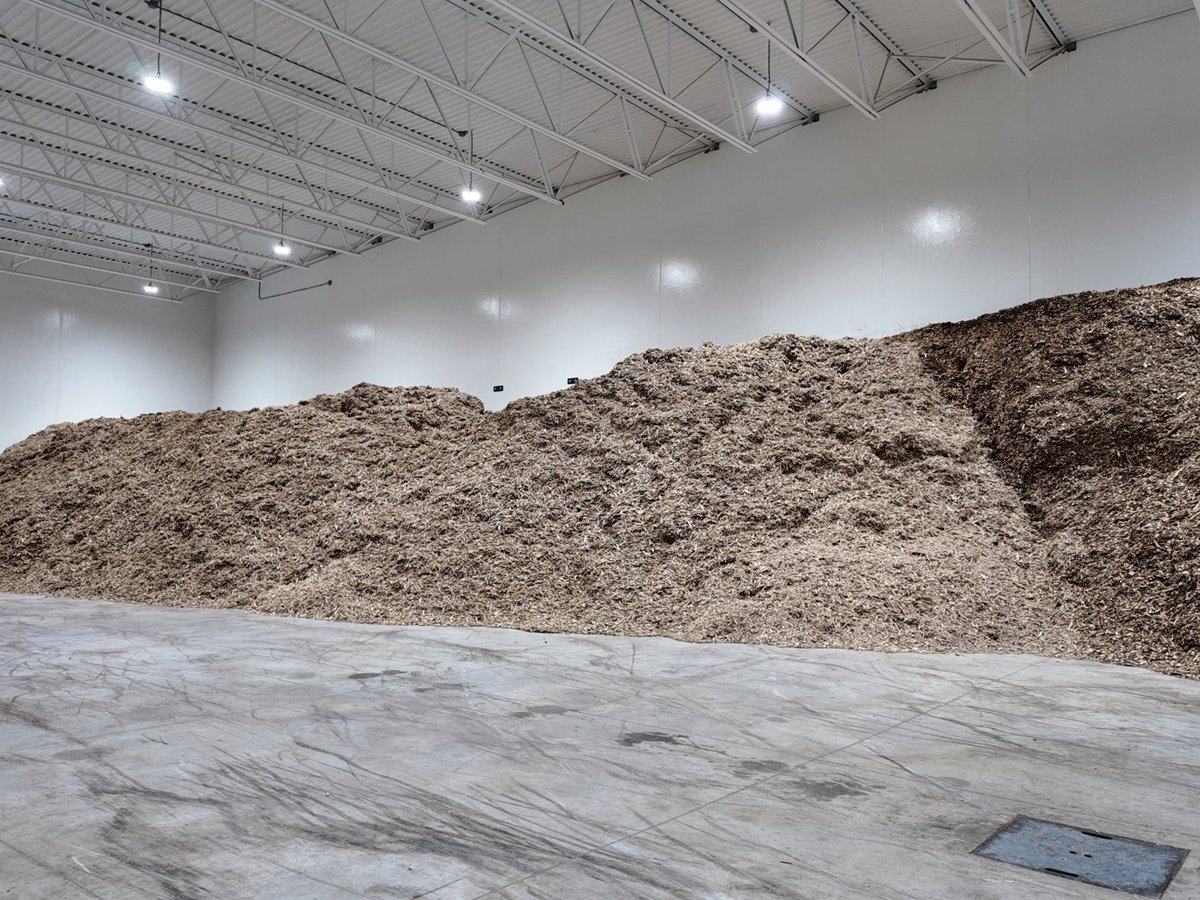
The truck backs into the fuel building and dumps, and a loader pushes it up onto the pile. Wood chips, sawmill waste and bark, straw, corn stover, husks, pellets. Wet or dry, clean or dirty. Most of our customers burn something they already have, or can get close to home.
Step 02 · Storage
The walking floor moves the pile
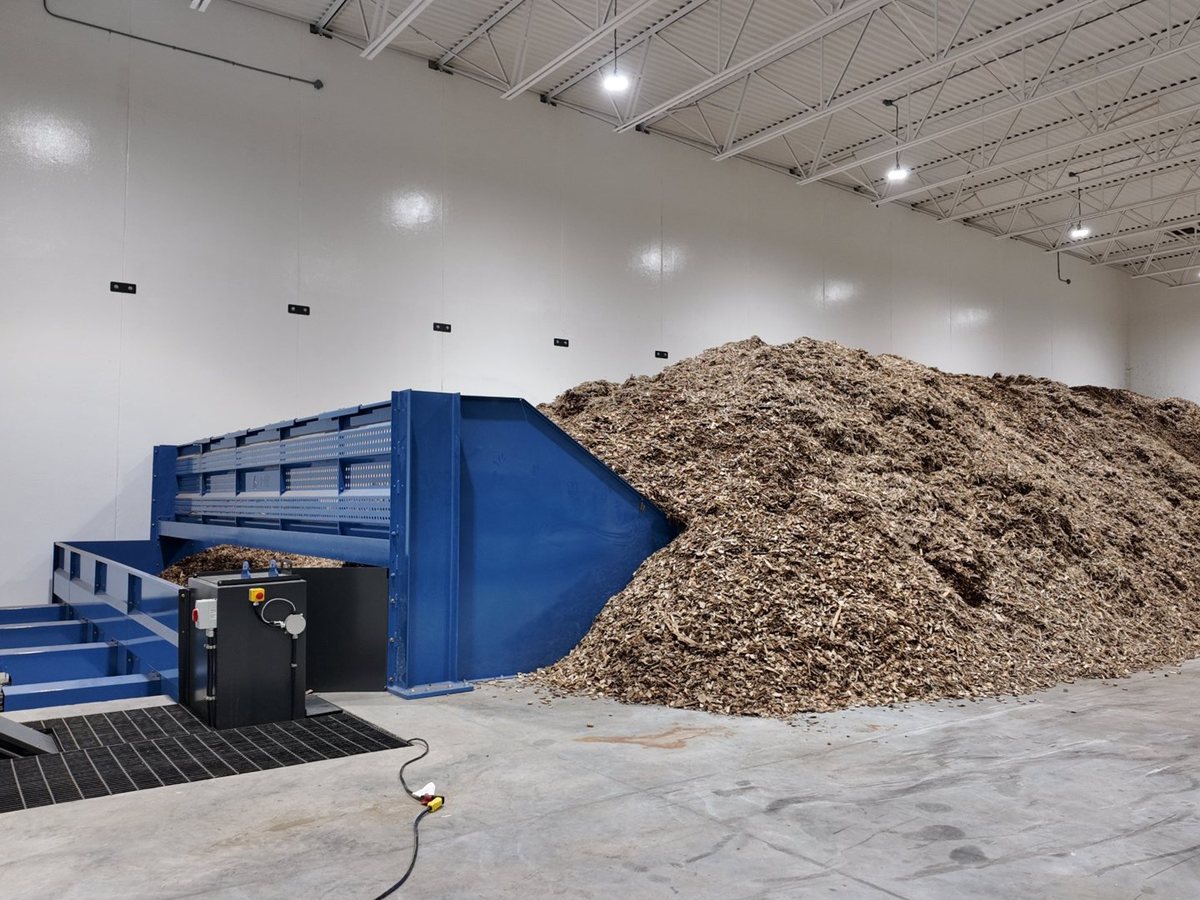
Under the pile, a hydraulic walking floor slides its sections back and forth and creeps the whole pile toward a cross auger. Nobody has to sit on a loader all day. One walking floor can feed two boilers. Smaller systems use a hopper instead.
Step 03 · Feed
Augers carry it to the boiler
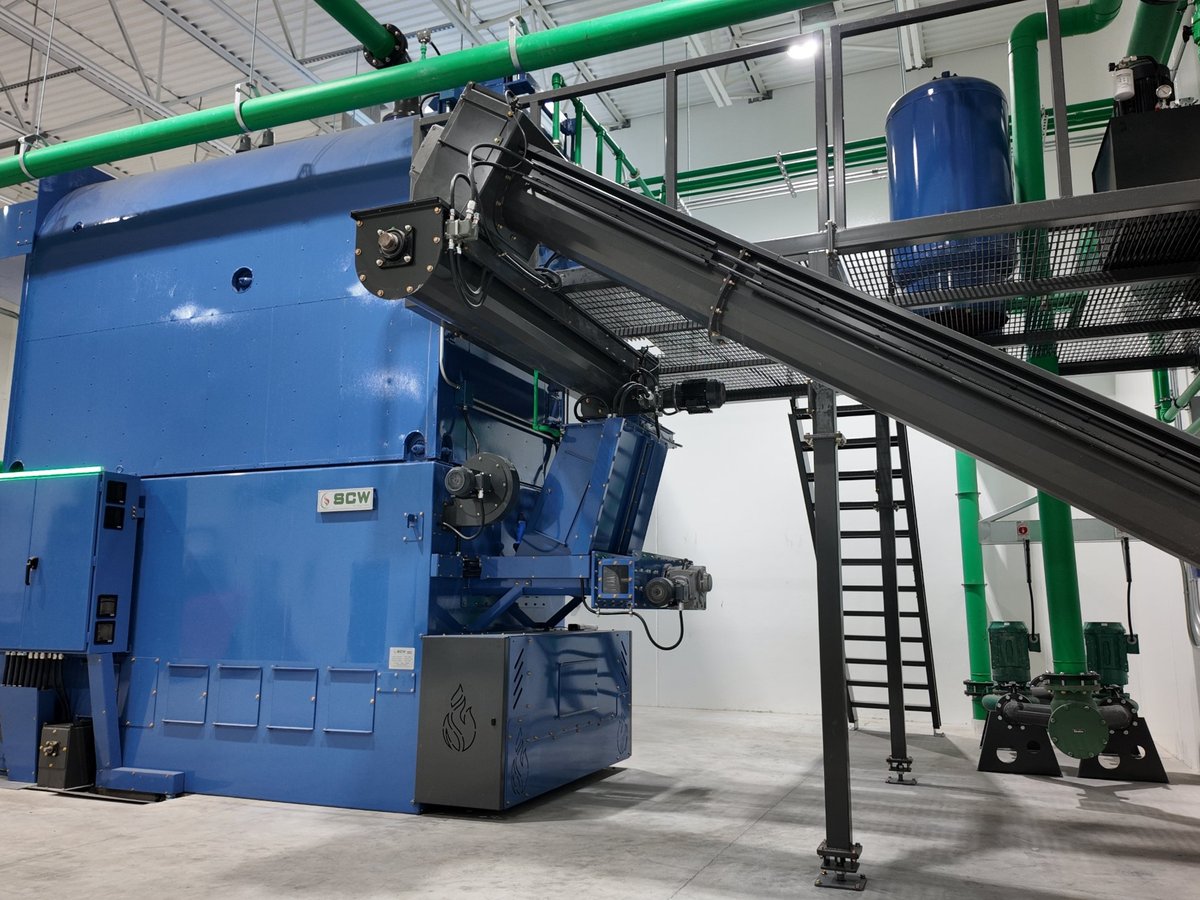
When the boiler calls for fuel, the cross auger hands it to an incline auger that lifts it into the boiler room. At the top, the multiscrew takes over: a buffer tank with a level switch, and six metering augers that spread fuel across the grate to match the heat you need.
Step 04 · Chain grate
The grate burns it, and keeps moving
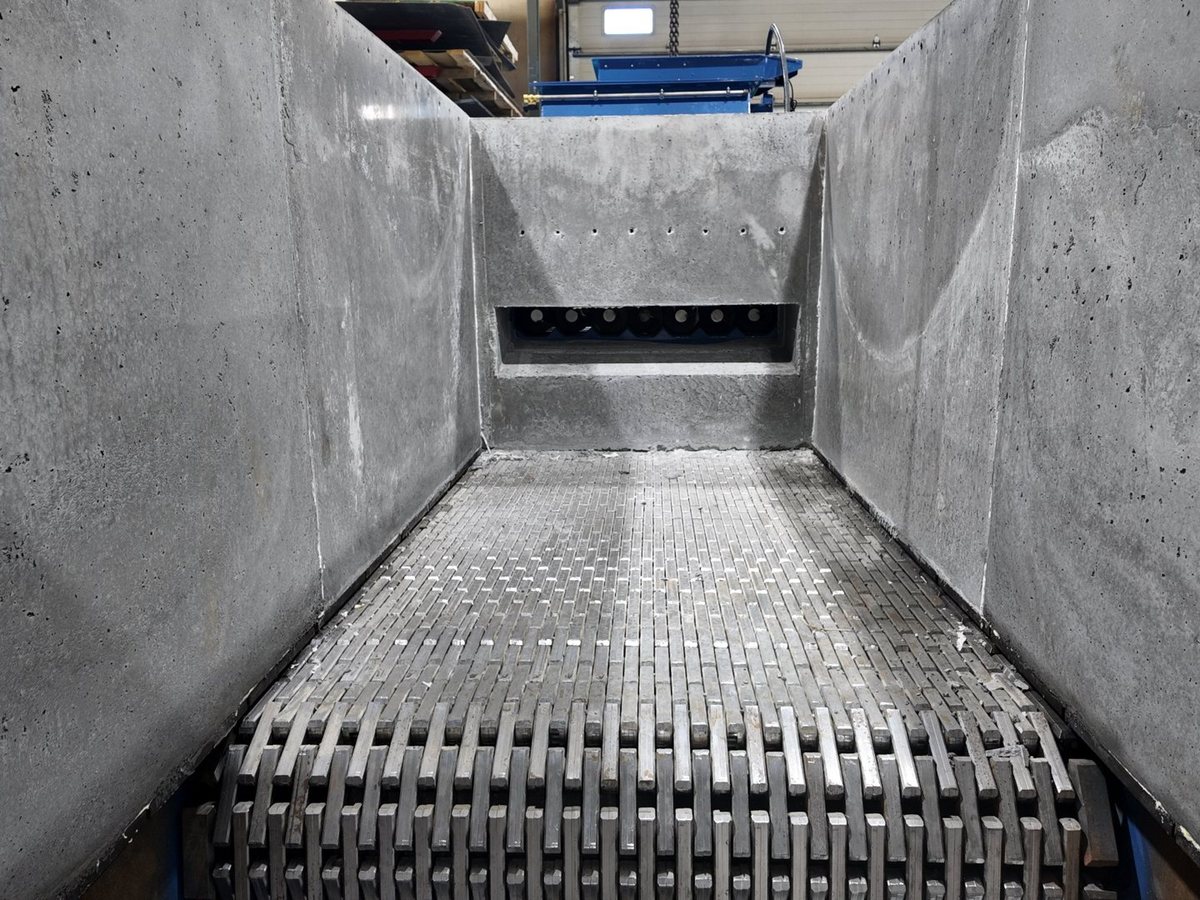
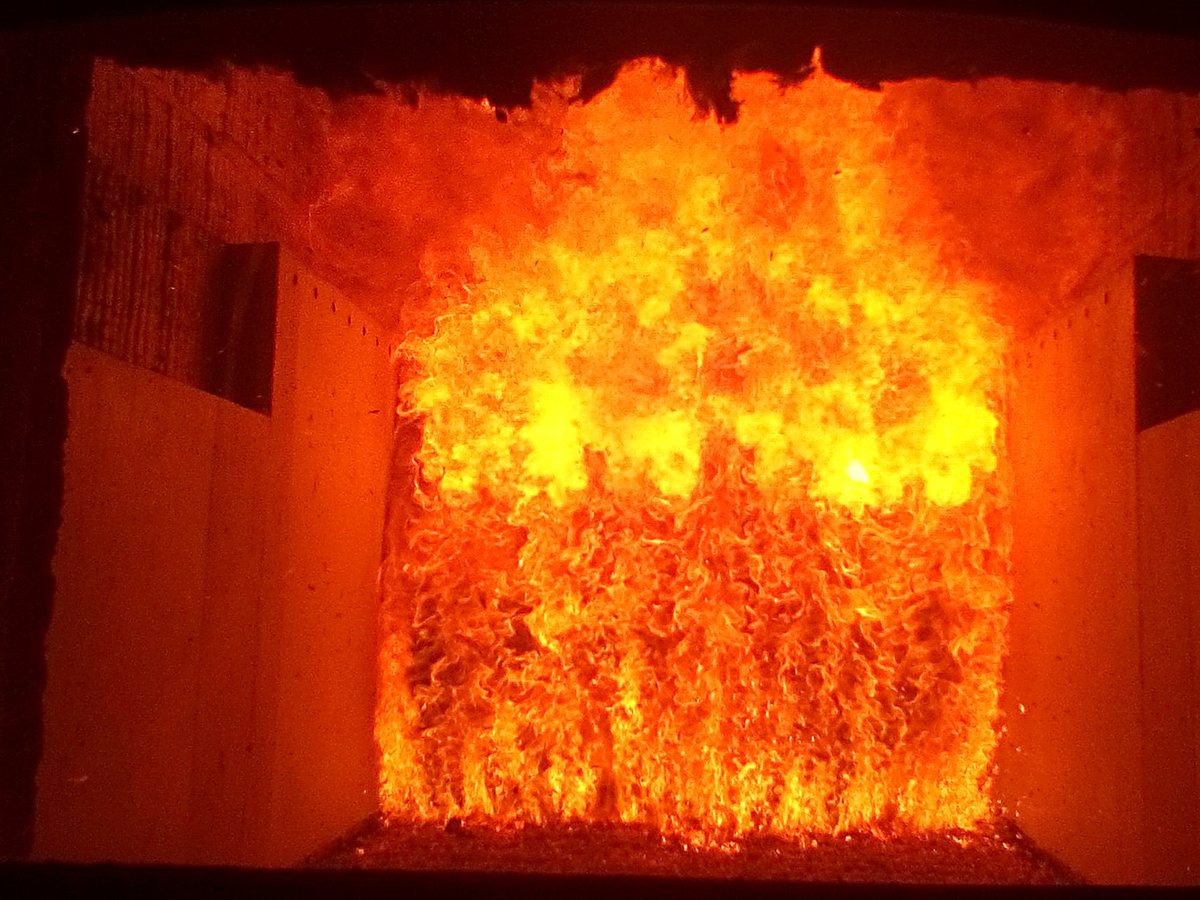
This is the part we’re known for. Fuel lands on a slow-moving grate made of solid 6″ x 1″ x 2″ high-temp steel bars. The whole bed burns, not one hot spot. Because the grate never stops moving, wet or dirty fuel doesn’t pile up and jam.
Step 05 · Air
Air from below and above
Combustion fans push air up through the grate in zones, and an over-fire fan adds air above the fire. The controls auto-tune the fans to hold the oxygen low, so the fuel burns all the way: more heat per load and less smoke.
Step 06 · Heat
Heat goes into water or steam
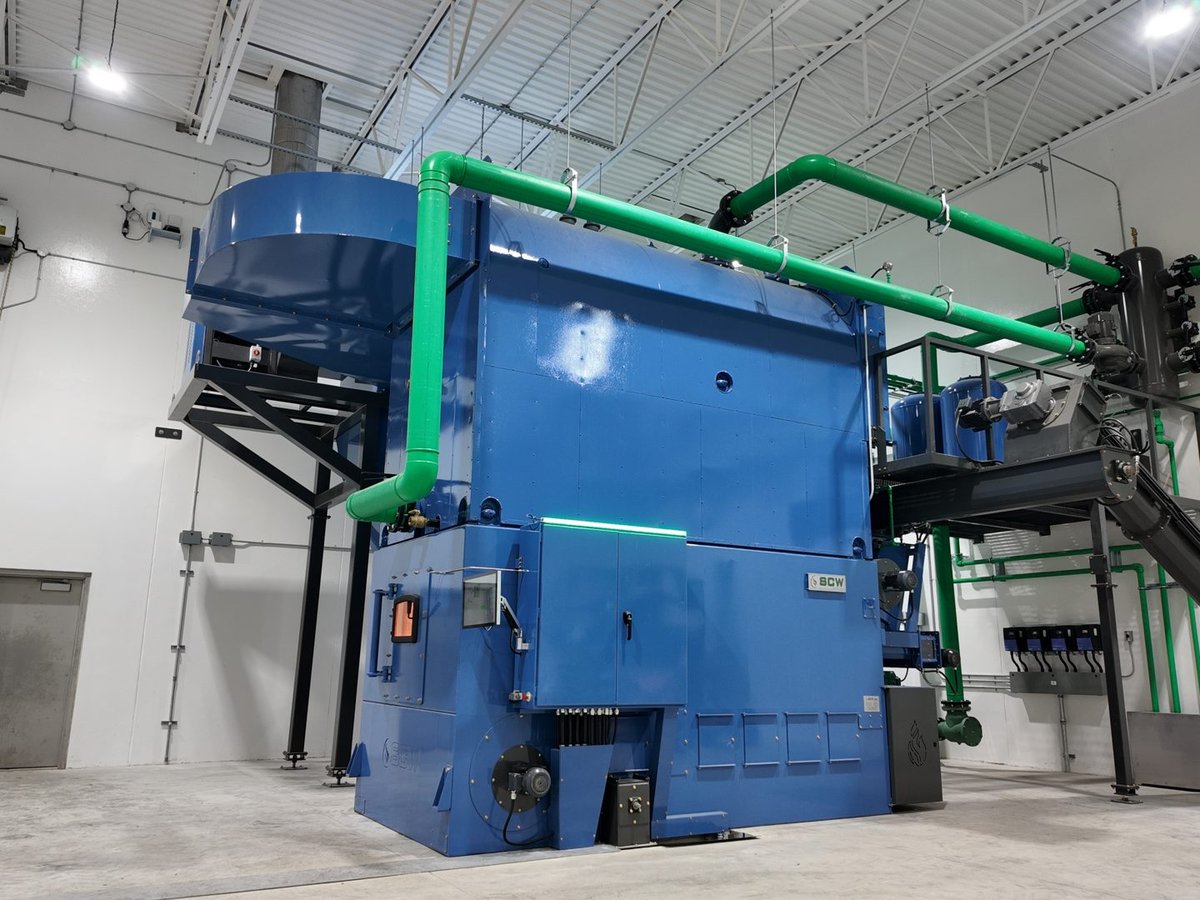
The hot gases pass through a certified boiler vessel and heat your water or make steam. From there it runs into your heating loop, your grain dryer or your process. Automatic soot blowers keep the boiler tubes clean. Systems run from 500,000 to 27 million BTU.
Step 07 · Ash
Ash leaves on its own
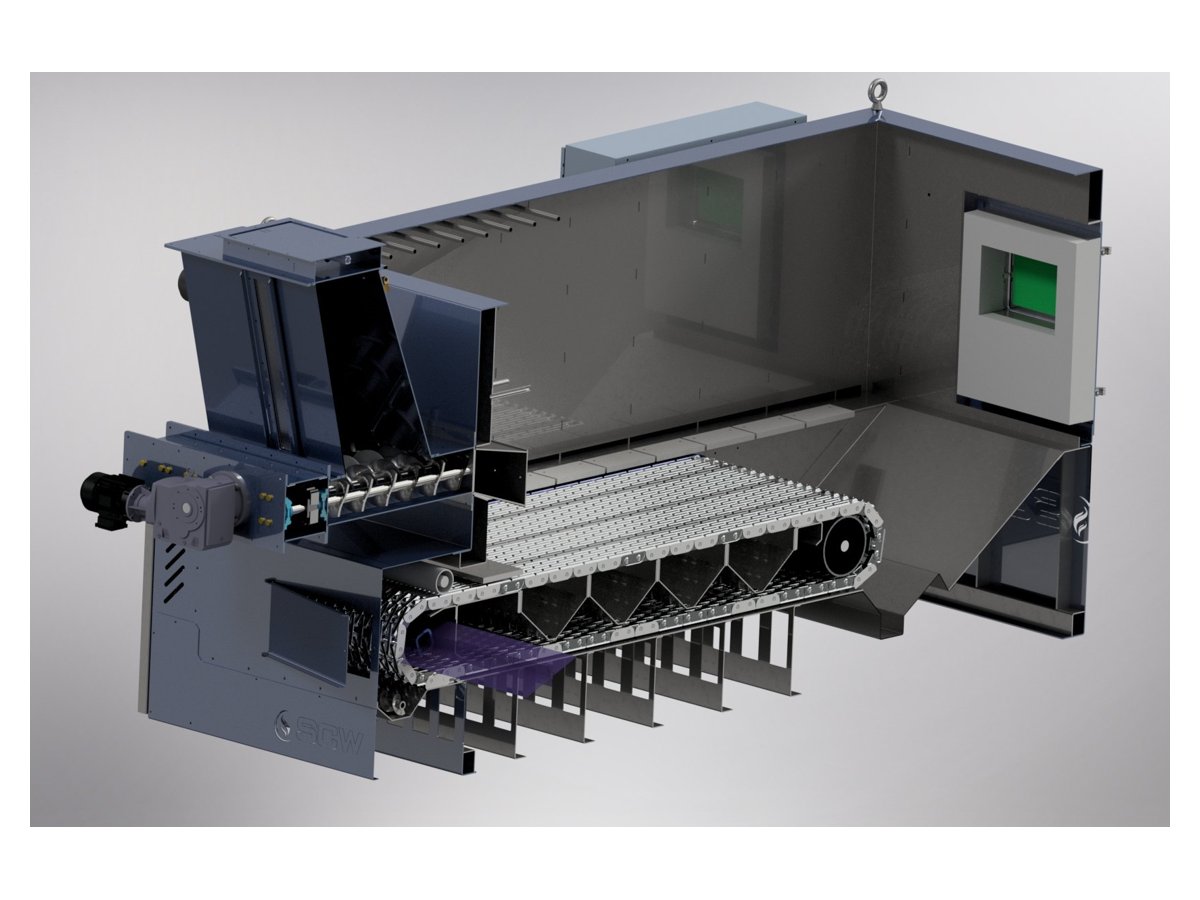
As the grate rolls over the far end, the ash drops into an auger under the stoker. It runs through the floor to a pit, and a second auger carries it outside to the ash bin. No shovelling and no shutting down to clean. The system texts you when the bin is 80% full.
1 Fuel feed · 2 Chain grate · 3 Under-fire air zones · 4 Ash drop
Step 08 · Exhaust
The exhaust gets cleaned
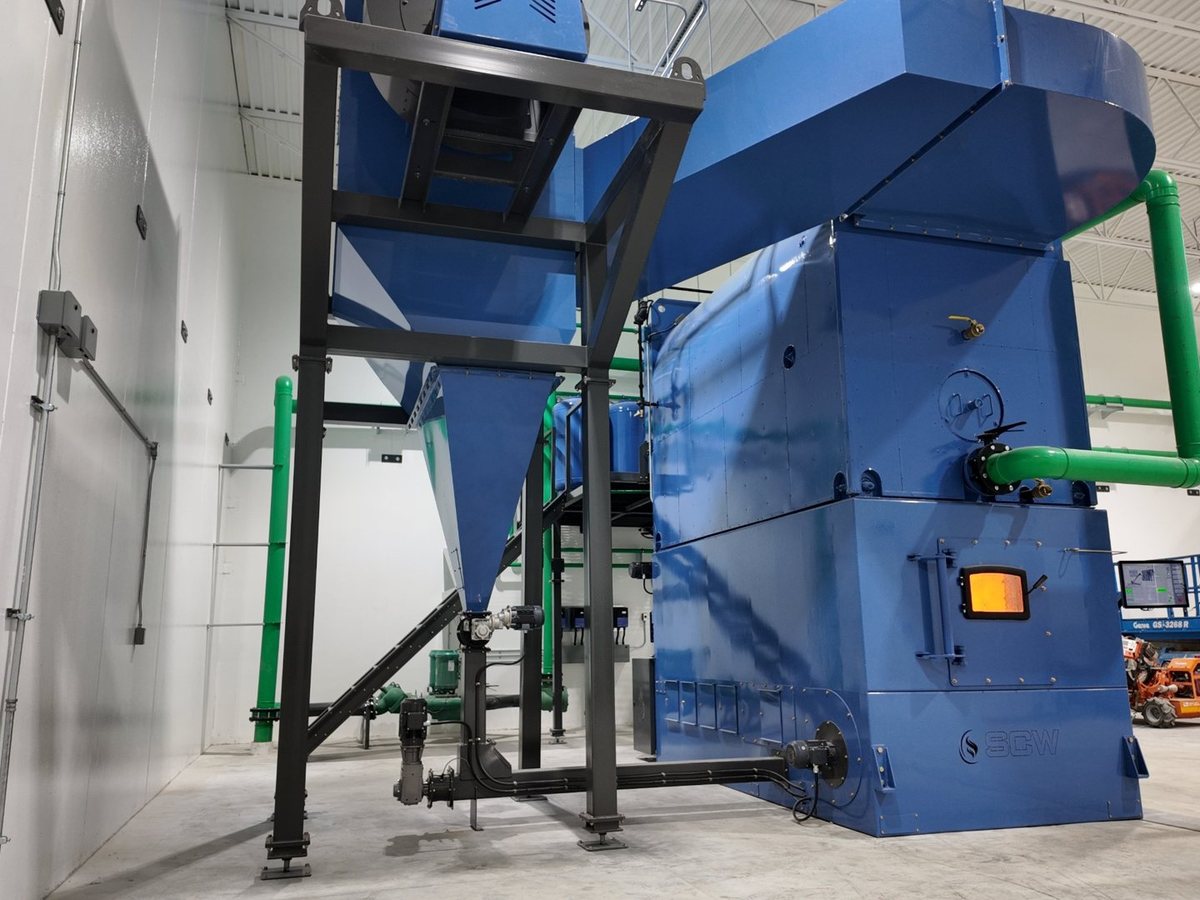
Before the stack, a multi-cyclone dust collector spins the fly ash out of the flue gas, with an airlock to keep it sealed. Cleaner exhaust, less to clean inside the boiler, and it helps you meet emission rules.
Step 09 · Controls
We watch it with you
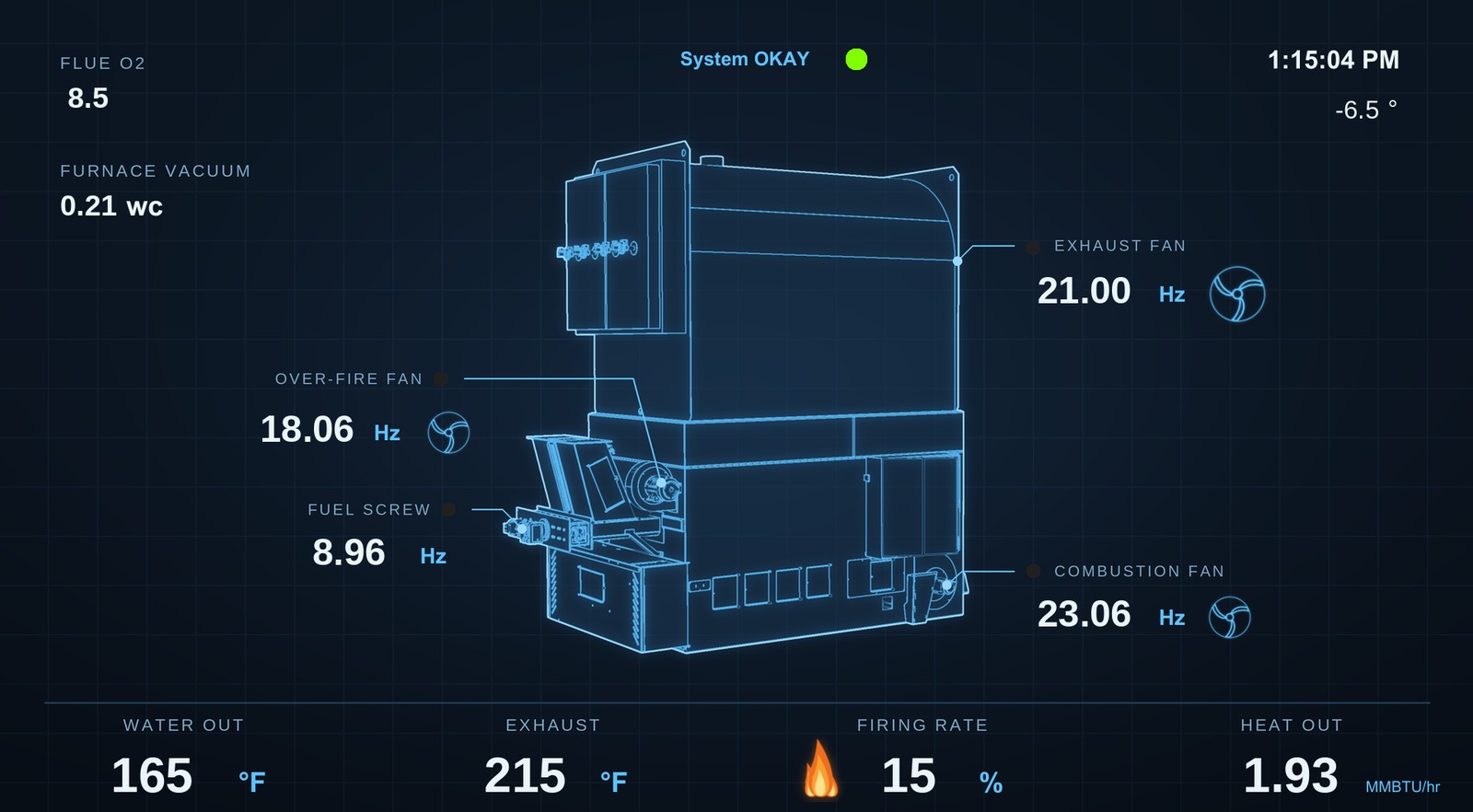
Our panels are built and wired in our own shop in Headingley, and we write the program ourselves. You get a touch screen on the boiler and the same screen on your phone. It texts you alarms and shows what you’re saving against propane. A fire-suppression system watches the fuel feed around the clock. And we can log in from our shop, see what you see, and often sort it out before you call.
No jams
Moving grate handles wet, dirty and mixed fuel
No shovelling
Ash goes out on its own
No guessing
Same screen on your phone, and we can see it too
See what it would burn for you
Tell us what you heat and what fuel you can get. We’ll size a system and send a quote.