
Biomass steam boilers
Steam from fuel you can get close to home
An SCW steam boiler burns wood chips, sawmill waste or your own crop and process waste to make low-pressure heating steam or high-pressure process steam. 50 to 500 boiler horsepower.
Some plants make their steam from their own waste.
200+
biomass systems running across North America
25+ years
building biomass heat, formerly BlueFlame Stokers
500,000 to 27M
BTU, 15 standard models
Headingley, MB
built in our shop, serviced from it
ON THIS PAGE: HOT WATER OR STEAM? · STEAM WORDS · A REAL PLANT · WHO IT FITS · WASTE TO STEAM · SIZING · QUESTIONS
Hot water or steam?
Pick the right system first
Most buildings heat best with hot water. Steam makes sense when your process needs it, or when your building already runs on steam.
Hot water
Heating buildings: barns, greenhouses, shops, schools.
- ✓Simplest system to run
- ✓Heats through in-floor, unit heaters, pipe rails or a heat exchanger
- ✓Up to 27 million BTU
Low-pressure steam
Heating a building that already runs on steam.
- ✓Hospitals, schools and older plants with steam heat
- ✓Feeds your existing steam lines and radiators
- ✓50 to 500 boiler horsepower
High-pressure steam
A process that needs steam: cooking, drying, cleaning, kilns.
- ✓Food and processing plants, dry kilns, greenhouse soil steaming
- ✓Built around a certified high-pressure vessel
- ✓50 to 500 boiler horsepower
Steam words
Steam in plain English
Steam has its own words. Here’s what they mean, in plain English.
Boiler horsepower (BHP)
How steam boilers are sized. One BHP makes about 34.5 pounds of steam an hour, or about 33,500 BTU an hour.
Steam load
How much steam your plant uses, in pounds per hour. Your load sets the size of the boiler.
psi
Pressure, in pounds per square inch. Low-pressure steam is 15 psi and under. Anything above that is high pressure.
Firetube boiler
Hot gases from the fire pass through tubes surrounded by water. Our steam vessels are firetube boilers.
Feedwater
Water pumped into the boiler to replace the steam that leaves.
Condensate
Steam that has cooled back into water. Piping it back to the boiler saves fuel and water.
Blowdown
Draining a little water from the boiler on a schedule to get rid of the minerals that build up.
Water treatment
Softening and chemicals that keep scale and rust out of the vessel. Every steam plant needs it.
Turndown
How low the boiler can run compared with full fire. It matters when your steam use swings.
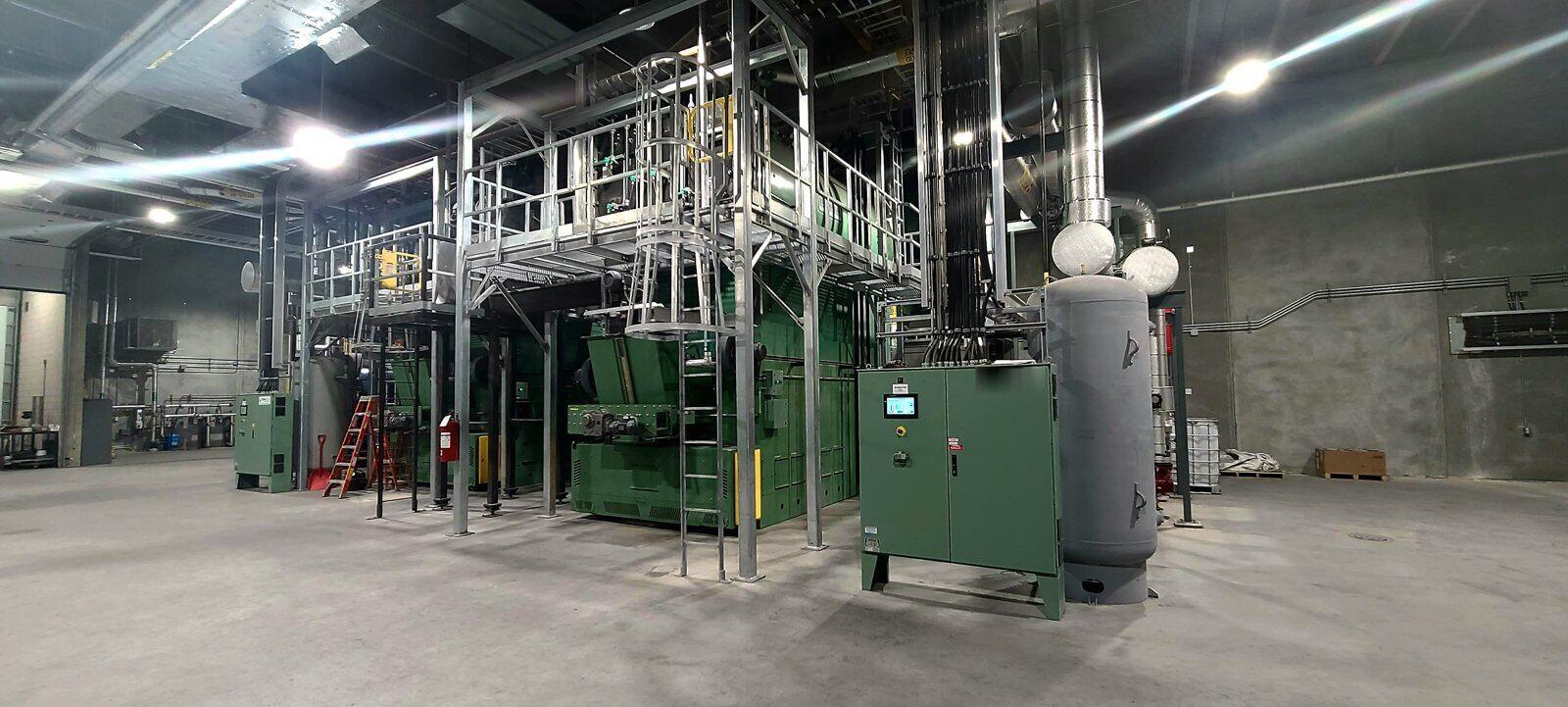
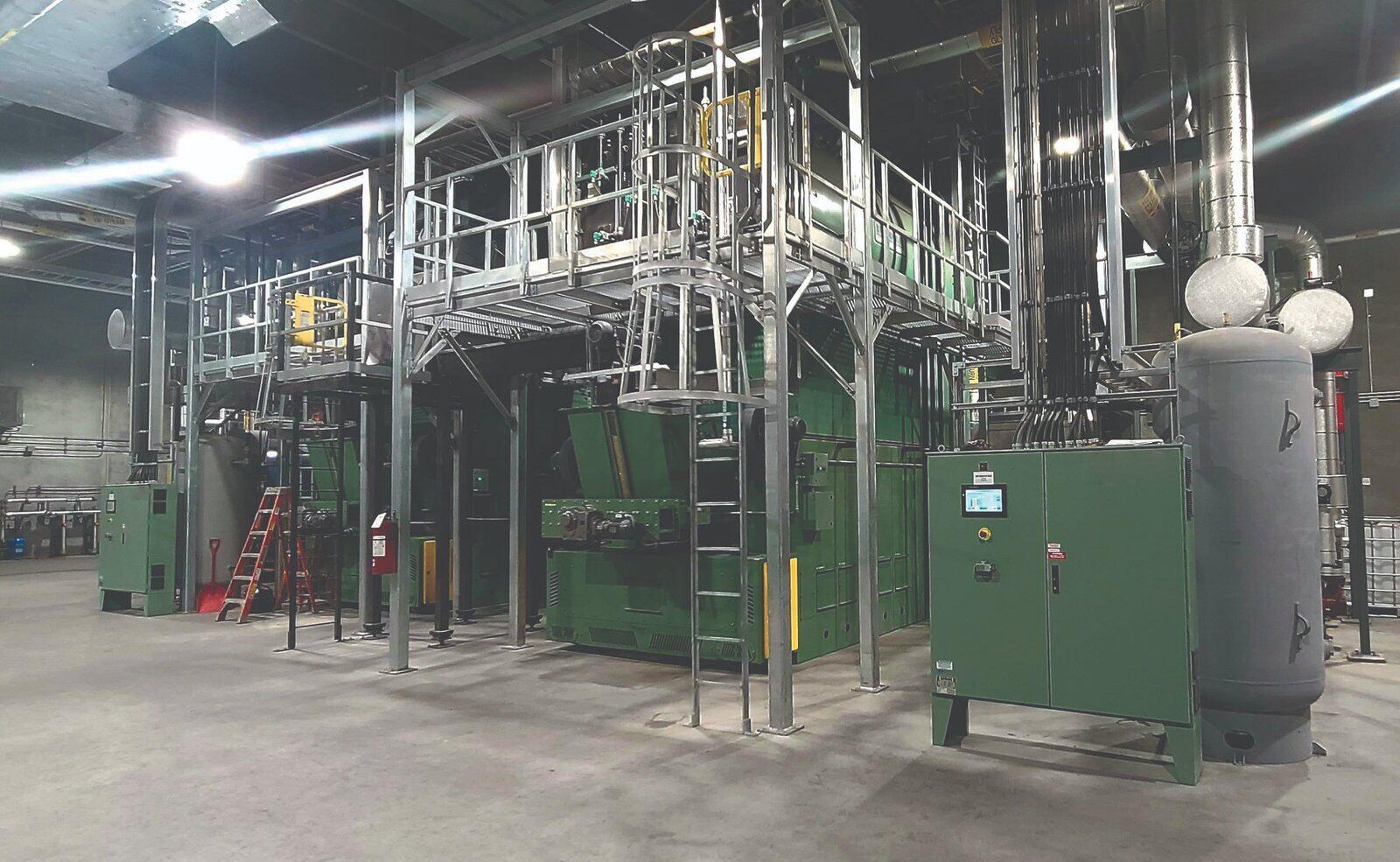
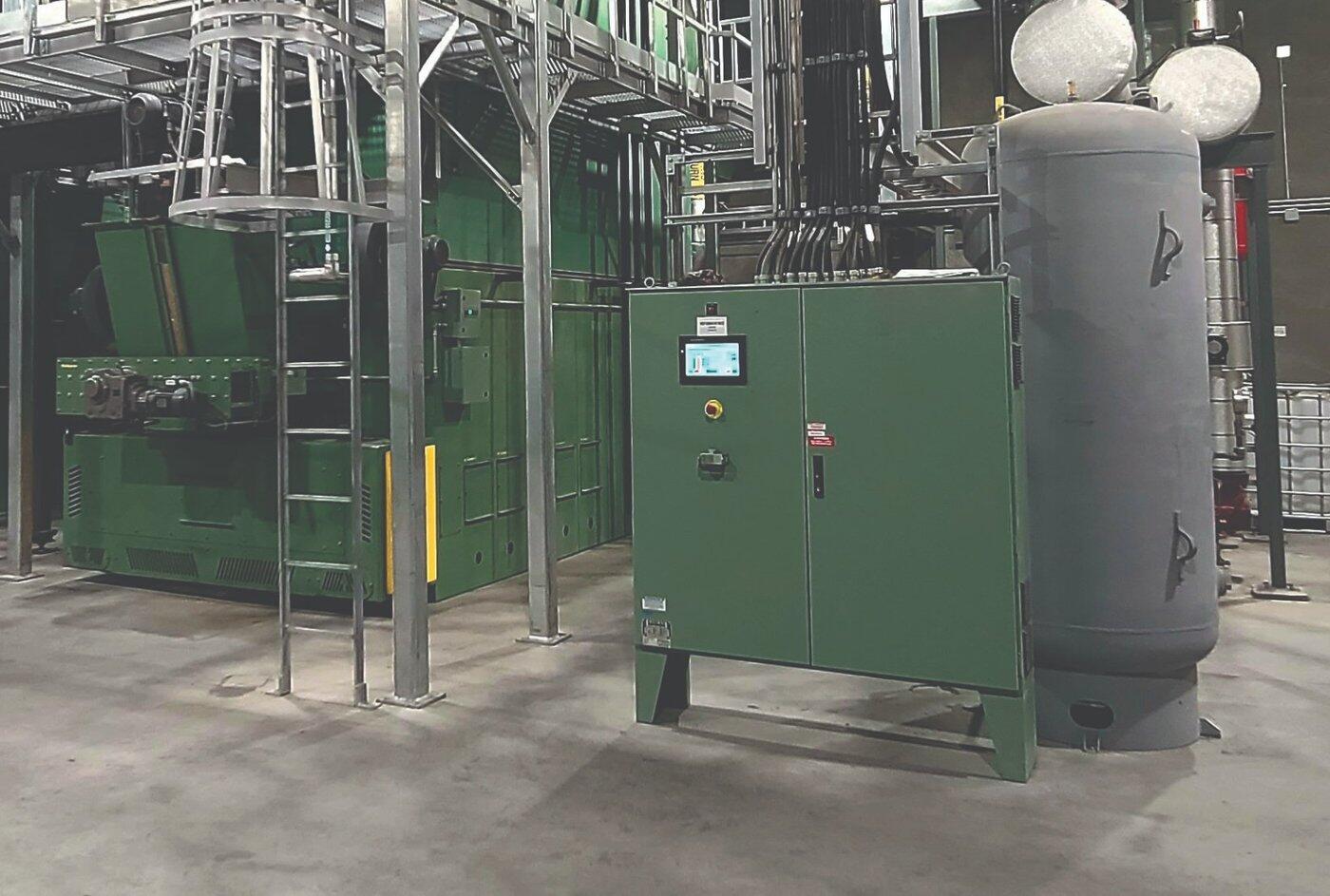
The whole steam plant at the oat mill: stoker, vessel, platforms and controls.
How it fits together
Our fire, a certified vessel
Our chain grate stoker, firebox and controls are built in Headingley and matched to a Canadian-made, certified firetube boiler vessel. You get one system and one company standing behind the fire side.
Chain grate stoker. A slow-moving grate burns wet, dirty or mixed fuel without jamming, and carries the ash out on its own.
Certified vessel. A Canadian-made firetube boiler, built to the pressure your steam needs.
Our controls. Fuel and air follow your steam demand. You see it on the touch screen and on your phone.
Clean exhaust. A multi-cyclone takes the fly ash out before the stack.
A real plant
An oat processing plant in Manitoba
This plant mills oats, and the hulls are its waste. Now the hulls feed the boiler that makes the plant’s process steam.
| Plant | Oat processing, Manitoba |
| Size | 300 to 500 boiler horsepower |
| Steam | High-pressure process steam |
| Fuel | Oat hulls from their own mill |
| Replaced | Natural gas |
| Installed | Between 2019 and 2022 |
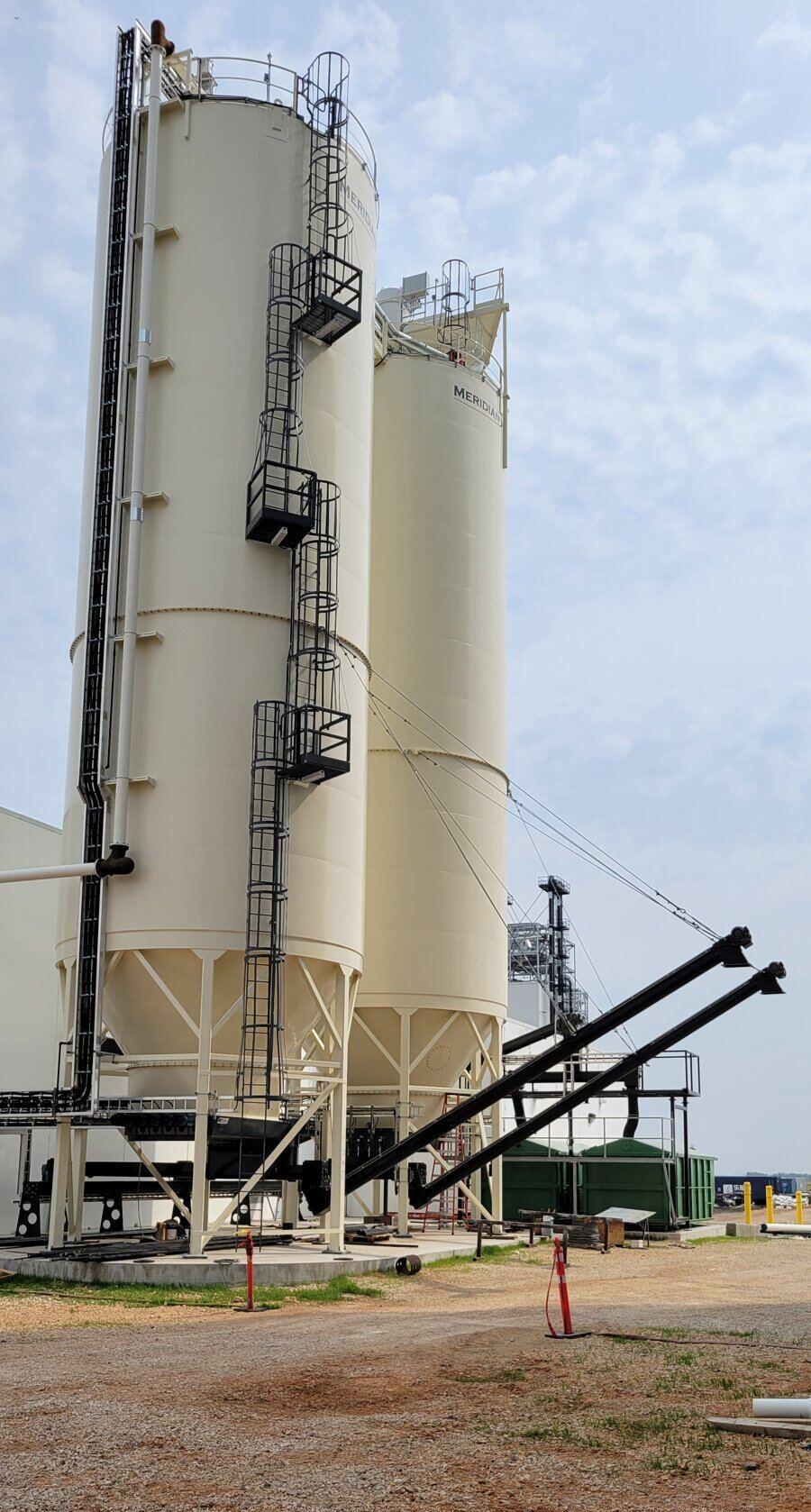
Hull storage
The plant keeps its oat hulls in two tall bins. We built the screw feed system under them that meters the hulls out and carries them to the boiler, so the fuel goes from the mill to the fire without anyone handling it.
Who it fits
Who uses biomass steam
Food and processing plants
Process steam for cooking, drying and cleaning. If your plant makes hulls, husks or shavings, that waste can be your fuel.
Sawmills and dry kilns
Steam for lumber kilns, burning the mill’s own bark, sawdust and shavings.
Greenhouses
Steam for heating and for steaming soil and growing media between crops.
Hospitals and institutions
Low-pressure steam for buildings that already heat with steam.
Usually a good fit
- ✓You use steam most of the year, not just a few weeks.
- ✓You have a waste stream that burns: hulls, husks, shavings, bark, straw.
- ✓Or you can buy wood chips or other biomass within a reasonable haul.
- ✓You pay for natural gas, propane or oil for steam today.
- ✓You have room for a boiler room and fuel storage.
Maybe not the best fit
- –Your steam load is small or only runs a few hours a week.
- –You have no room for fuel storage and no way to get a truck to it.
- –There’s nobody on site to keep an eye on the plant.
Not sure? Send us a year of fuel bills for your current boiler. We’ll tell you straight whether biomass makes sense, even if the answer is no.
About half of our systems are sold with a grant or tax credit
Most programs need approval before you order equipment, so ask us early. We’ll tell you which programs fit your province or state.
Fuel
Your waste, as steam
If your plant makes a waste stream that burns, start there: it’s often the cheapest fuel you’ll ever buy. Here’s roughly how much steam a tonne of each fuel makes. Drier fuel makes more steam per tonne.
| Fuel | Moisture | Steam per tonne* | Good to know |
|---|---|---|---|
| Oat and sunflower hulls | ~10% | about 11,000 to 12,000 lb | Light and dry. The oat plant on this page burns its own. |
| Wood pellets | under 10% | about 12,000 to 13,000 lb | The most consistent fuel. Costs the most. |
| Sawdust and shavings | 10–50% | about 7,000 to 12,000 lb | Dry shavings burn hot. Wet sawdust makes less steam. |
| Straw and corn stover | 10–20% | about 10,000 lb | Needs a bale feeder or grinder. High ash. |
| Wood chips, dried | 20–30% | about 9,000 to 10,500 lb | Easier to store than green chips. |
| Wood chips, green | 40–50% | about 6,000 to 7,500 lb | Lowest cost per tonne. Keep covered. |
| Bark and hog fuel | 40–55% | about 6,000 to 7,000 lb | Very low cost. More ash. |
* Pounds of steam per metric tonne of fuel as delivered. Rule of thumb: about 75% boiler efficiency and about 1,000 BTU per pound of steam. Real numbers depend on your fuel, pressure and feedwater. A fuel test tells you exactly.
Example: a 300 BHP boiler at full fire makes about 10,350 lb of steam an hour. On oat hulls, that’s a bit under one tonne of hulls an hour.
Sizing and buying
How we size a steam boiler
Steam boilers are sized in boiler horsepower (BHP). One BHP is about 34.5 pounds of steam per hour, or about 33,500 BTU per hour. We size from your real steam use, the pressure you need and the hours you run.
What to send us
- ✓12 months of fuel bills for your current boiler (natural gas, propane or oil)
- ✓The pressure you need, and what the steam is used for
- ✓Your current boiler size, or your steam use in pounds per hour
- ✓Hours per day and months per year you run
- ✓What waste or fuel you have, and roughly how much
Our range: 50 to 500 BHP
50 BHP
about 1,725 lb/hr of steam
about 1.7 million BTU/hr
150 BHP
about 5,175 lb/hr
about 5 million BTU/hr
300 BHP
about 10,350 lb/hr
about 10 million BTU/hr
500 BHP
about 17,250 lb/hr
about 16.7 million BTU/hr
From your gas bill to a boiler size
You can get a rough idea of your boiler size from a gas bill. Here’s an example with one winter month of natural gas:
| 1Gas used | 60,000 m³ in the month |
| 2Heat in the gas | × about 35,400 BTU per m³ = about 2,100 million BTU |
| 3Heat that made steam | an older gas boiler runs about 80% = about 1,700 million BTU |
| 4Steam made | ÷ about 1,000 BTU per pound = about 1.7 million lb of steam |
| 5Average per hour | running around the clock, about 720 hours = about 2,400 lb/hr, or about 70 BHP |
| 6Size for the peaks | your busiest hours run above average, so a plant like this usually needs about 100 to 150 BHP |
| 7Fuel to replace the gas | about 150 tonnes of oat hulls a month, or about 5 tonnes a day |
Rule-of-thumb numbers only. We size your boiler from your real bills, your peak steam use and your fuel. Send them and we’ll do the math for you.
Certified
✓ Certified boiler vessel
Every boiler vessel is fully certified.
✓ Intertek-marked stoker
Our chain grate stoker carries the Intertek mark.
✓ Built to your project’s code
Need a specific approval for your site or province? Tell us at the quote stage and we build to it.
From quote to steam
Quote and layout
We size the system and send a quote with a layout drawing.
Grants
If a grant fits, apply now. Most programs need approval before you order.
Built in Headingley
We build the stoker, firebox and controls in our shop and match them to the certified vessel.
Delivery and install
Our crew installs it, or your local contractor does with us backing them up.
Start-up and training
We fire it up, tune it to your fuel and show your people how to run it.
Monitoring and service
We can watch it remotely with you, and parts come from our shelf in Headingley.
Questions
What people ask us
Something else? Call us at (204) 694-2398. You’ll talk to someone who builds these.
Hot water or steam: which do I need?
If you’re only heating buildings, hot water is simpler and usually the better choice. Choose steam when a process needs it, or when your building already runs on steam heat.
Can it burn the waste from my plant?
Often, yes. Oat hulls, sawdust, shavings, bark and straw all burn on a chain grate. Send us a sample and we’ll tell you what to expect.
Can my gas boiler stay as a backup?
Usually, yes. Many plants keep the old boiler piped in for backup or peak demand.
Do I need a licensed operator?
It depends on the size, the pressure and your province or state. We’ll tell you what applies to your plant at the quote stage.
What about emissions permits?
A multi-cyclone dust collector cleans the exhaust before the stack, and the controls trim the air to keep the burn clean. We supply the documents you need for a permit.
Are there grants?
About half of our systems are sold with a grant or tax credit. Most programs need approval before you order, so ask us early.
What happens after it's installed?
We start it up, tune it to your fuel and train your people. After that, you run it from the touch screen or your phone, and it texts you if something needs attention. Need help? With your OK, we log in from our shop, or we come out. Parts are on our shelf in Headingley.
Send us your steam numbers
Your fuel bills, the pressure you need and the hours you run are enough for us to size a system and send a quote.
The marks your engineer will ask for.
Need another mark for your project? We build to it.
Talk to a person who knows the system.
Service, parts and remote monitoring come straight from the people who built it.