
Multi-cyclone dust collectors
Multi-cyclone fly ash collectors
Catch the ash before it leaves the stack
The exhaust from a biomass fire carries fine ash. Our multi-cyclone spins it out before the exhaust fan and the stack. Built in Headingley for our boilers, or to fit the boiler you already run.
200+
biomass systems running across North America
25+ years
building biomass heat, formerly BlueFlame Stokers
500,000 to 27M
BTU, 15 standard models
Headingley, MB
built in our shop, serviced from it
ON THIS PAGE: HOW IT WORKS · WHY IT MATTERS · RULES AND NUMBERS · ASH OUT · A REAL SYSTEM · BUILT IN OUR SHOP · SIZING · QUESTIONS
How it works
Spin the ash out of the exhaust
A cyclone is a cone that makes the exhaust spin. The ash is heavier than the gas, so it gets thrown to the wall and slides down. A multi-cyclone uses a row of small cyclones instead of one big one. Small cyclones spin tighter, so they catch finer ash.
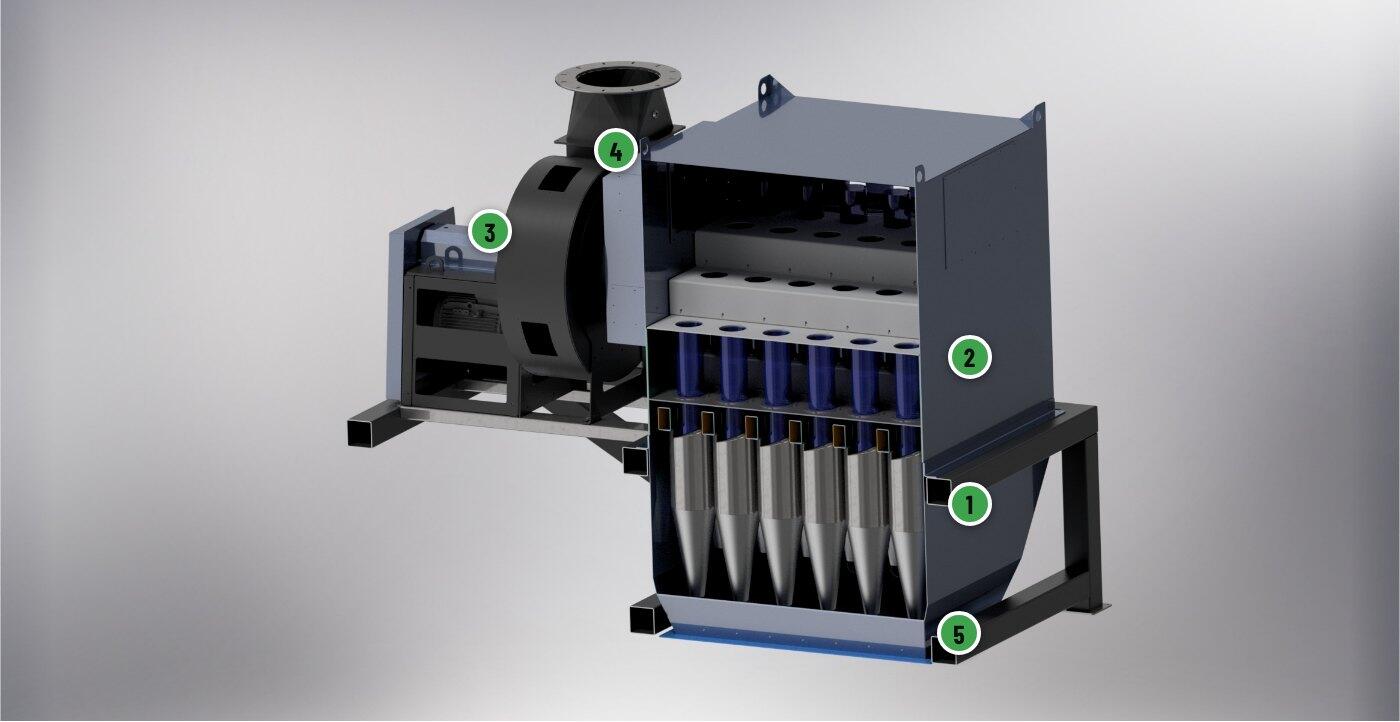
Drawing: SCW multi-cyclone with its exhaust fan, cut open to show the cyclone tubes.
1Cyclone tubes. The exhaust from the boiler is split between a row of small cyclones. Each one spins the gas fast.
2Ash drops out. The ash hits the wall of the cone and falls out the bottom. The cleaned gas turns and goes up the centre tube.
3Exhaust fan. Pulls the gas through the boiler and the collector. It handles clean gas, so it stays clean too.
4To the stack. The cleaned exhaust goes out the fan and up the stack.
5Ash hopper. The ash from every cone collects in the hopper at the bottom, ready to go out.
Why it matters
What a multi-cyclone does for you
A cleaner stack
Less ash coming out the top, and less of it landing on roofs, vehicles and greenhouse glass.
Good neighbours
It matters most near homes, barns, schools and anywhere people notice what comes out of a chimney.
Protects the fan
The exhaust fan sits after the collector, so it moves clean gas instead of sanding itself down with ash.
Nothing to replace
No filter bags or cartridges to change. The cyclones have no moving parts. Only the airlock under the hopper turns.
Built for your rules
Emission rules change by province and state. We size the collector for your boiler and your site’s rules.
Rules and numbers
By the numbers
Typical numbers for multi-cyclones on biomass boilers, from industry and government sources. Real results depend on the fuel and how the boiler is run.
80 to 95%
of the fly ash caught, by weight, depending on the size of the ash particles.
Over 5 µm
Cyclones work best on coarse fly ash. The finest smoke particles, under 1 µm, mostly pass through.
Under 75 mg/m³
Typical dust left in the exhaust after a multi-cyclone. A single cyclone gets to about 150.
5 to 20 mbar
Typical pressure drop across the collector (about 2 to 8 inches of water). The exhaust fan is sized for it.
The rules for dust
Particulate (dust) limits for wood-fired boilers depend on where you are and how big the boiler is. Here are the main ones our customers run into. Your permit or local rules have the final say.
| Where | Applies to | Dust limit |
|---|---|---|
| Canada: CCME guidance (2021) | Boilers 150 kW to 1 MW output (about 0.5 to 3.4 million BTU/h) | 150 mg/m³ at the base tier. Tighter tiers: 75 and 60 mg/m³. |
| Canada: CCME guidance (2021) | Boilers over 1 MW output (over about 3.4 million BTU/h) | 60 mg/m³ at the base tier. Tighter tiers: 40 and 20 mg/m³. |
| Quebec: Clean Air Regulation, s. 55 | New wood or wood-waste boilers under 10 MW | 150 mg/m³R of dry gas |
| Quebec: Clean Air Regulation, s. 55 | New wood or wood-waste boilers 10 MW and up | 70 mg/m³R of dry gas |
| US: EPA area-source boiler rule (40 CFR 63, Subpart JJJJJJ) | New biomass boilers 10 to 30 million BTU/h heat input | 0.07 lb per million BTU of heat input |
| US: EPA area-source boiler rule | New biomass boilers 30 million BTU/h heat input and up | 0.03 lb per million BTU |
| US: EPA area-source boiler rule | Biomass boilers under 10 million BTU/h heat input | No federal dust limit. A tune-up every 2 years, or every 5 with an oxygen trim system. |
What this means: a multi-cyclone usually meets the base limits, like the CCME base tier for package boilers and Quebec’s 150 mg/m³. The tightest limits usually need a second stage after it, like a baghouse or an electrostatic precipitator. Tell us where the boiler is going and we’ll tell you at the quote stage what your site needs.
Quick conversions: 1 MW is about 3.4 million BTU/h, so 3 MW is about 10.2 million BTU/h. mg/m³ = milligrams of dust per cubic metre of exhaust, at the reference conditions each rule sets.
Sources: CCME, Guidance Manual on Managing Air Emissions from Small Solid Biomass Combustors (2021) · Quebec Clean Air Regulation, chapter Q-2, r. 4.1 · US EPA, area-source boiler rule fast facts (40 CFR 63, Subpart JJJJJJ). Checked November 2026.
Ash out
Where the ash goes
The ash the collector catches goes to the same place as the ash off the grate. One bin, one job.
✓Airlock. A rotary valve under the hopper lets the ash out without letting air in, so the collector keeps working.
✓Ash auger. Carries the fly ash to the same ash bin as the ash from the chain grate.
✓Ash bin. One bin outside the boiler room. At Sturgeon Creek Colony it goes about 3 months between empties at about 30% firing.
✓On the screen. The controls run the airlock and augers on their own and send you a text when the ash bin is about 80% full.
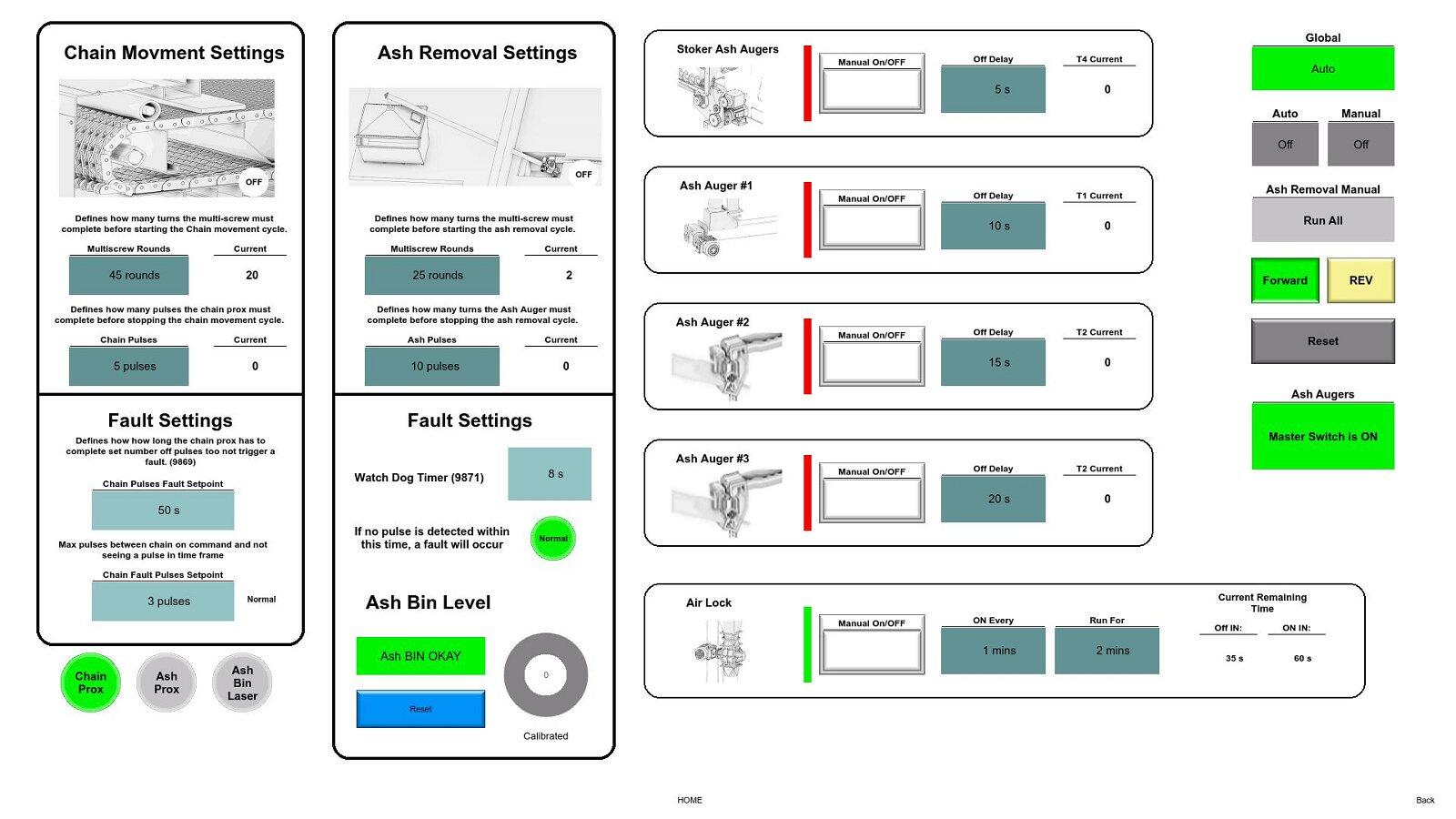
The ash removal screen: grate augers, ash augers, airlock and the ash bin level, all in one place.
A real system, and it’s our own
The multi-cyclone at Sturgeon Creek Colony
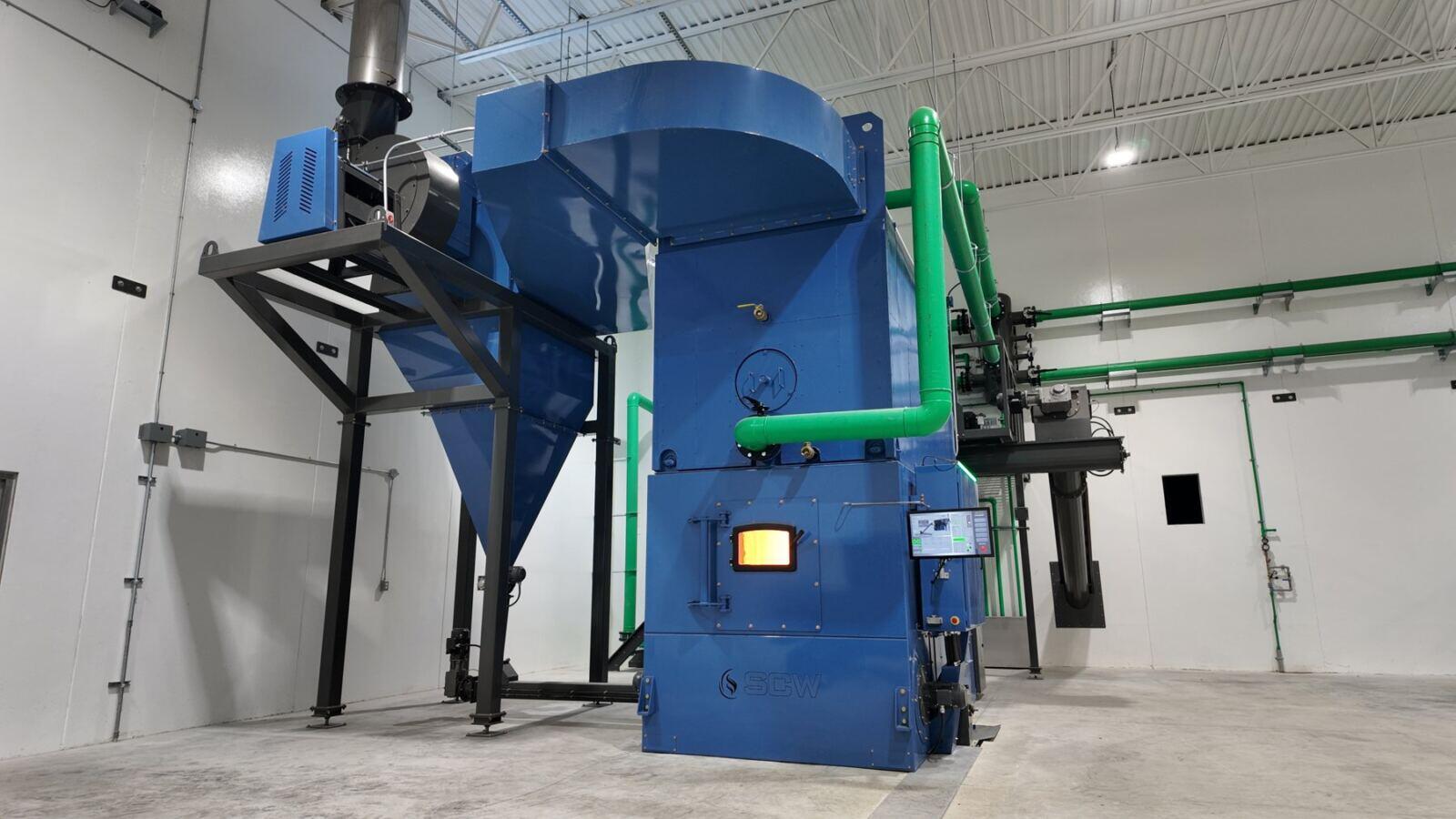
Sturgeon Creek Colony owns SCW. Its 15 million BTU boiler runs on wood chips, with a multi-cyclone, airlock and exhaust fan on a stand beside the boiler.
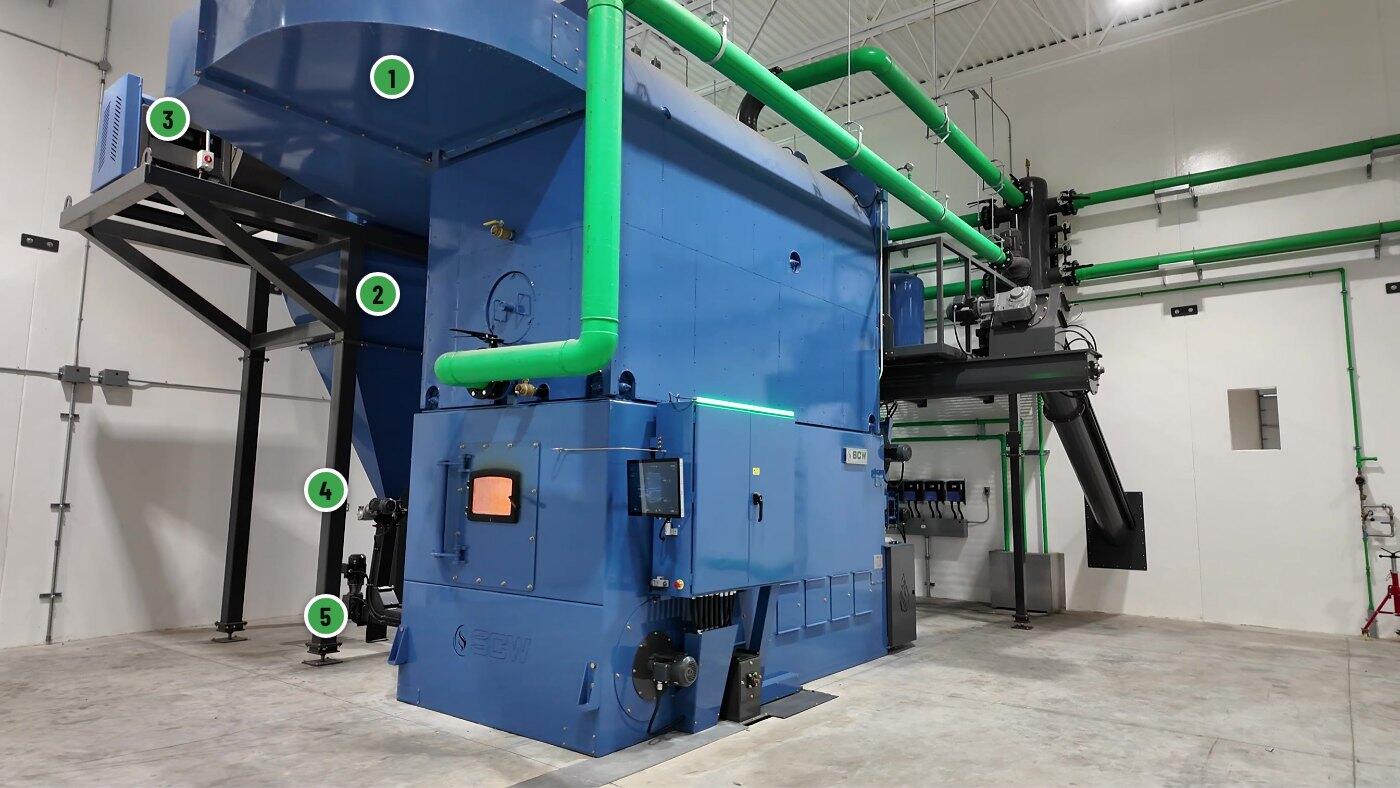
1From the boiler. The exhaust leaves the boiler and comes over to the collector.
2Multi-cyclone. Spins the ash out of the gas.
3Exhaust fan. Pulls the clean gas through and sends it up the stack.
4Airlock. Lets the ash out of the hopper.
5Ash auger. Carries the ash to the ash bin.
| Site | Sturgeon Creek Colony, Manitoba |
| Boiler | 15 million BTU hot water |
| Fuel | Wood chips |
| Collector | SCW multi-cyclone on its own stand |
| Ash | Airlock and auger to the same bin as the grate ash |
| Emptying | About every 3 months at about 30% firing |
Already have a boiler?
We build multi-cyclones on their own too, sized to fit the boiler you already run. Send us the boiler make and size, the fuel you burn and a few photos of the boiler room.
Built in our shop
Built in Headingley, ready to set
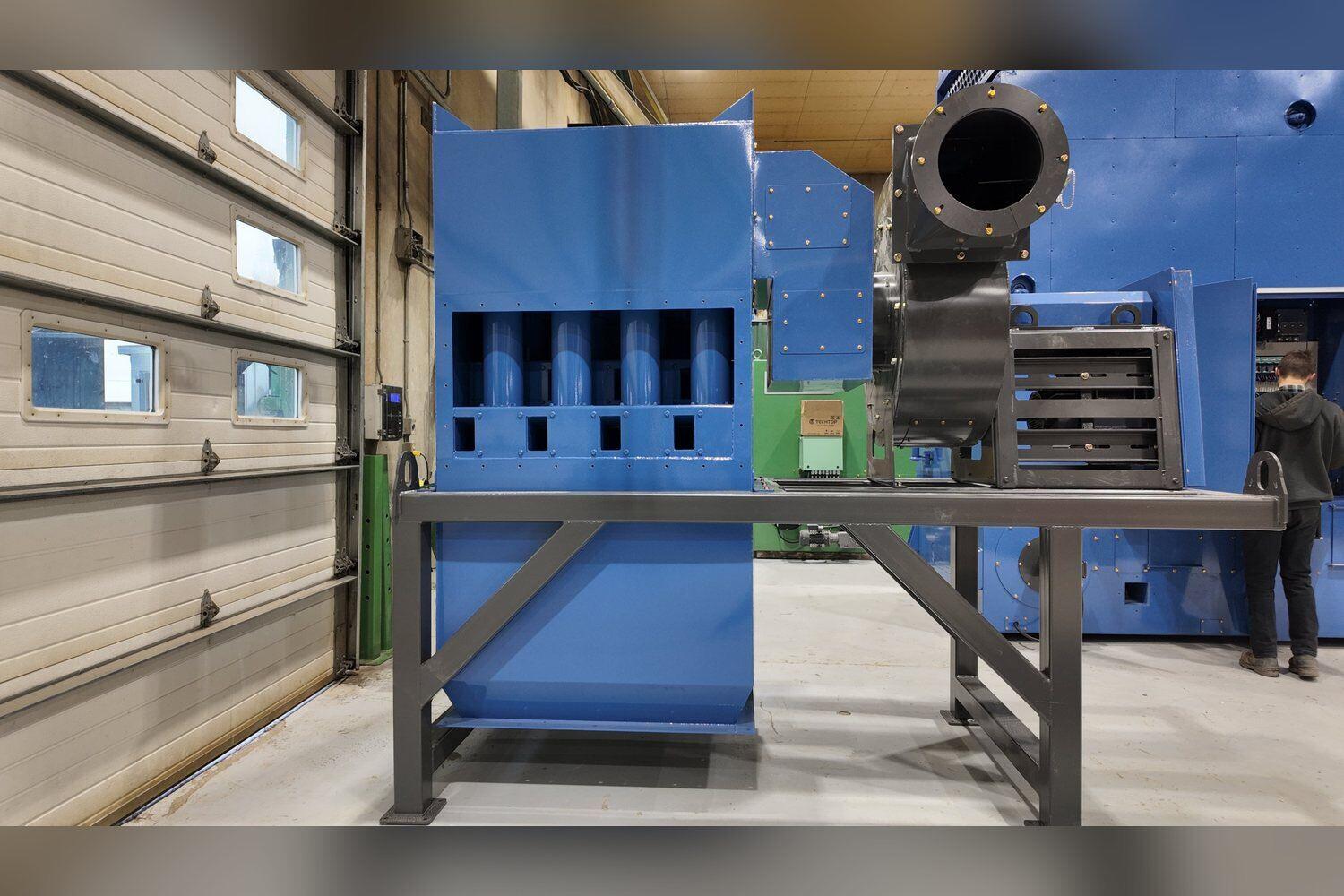
Built in our shop
A multi-cyclone and exhaust fan on their stand, finished in Headingley.
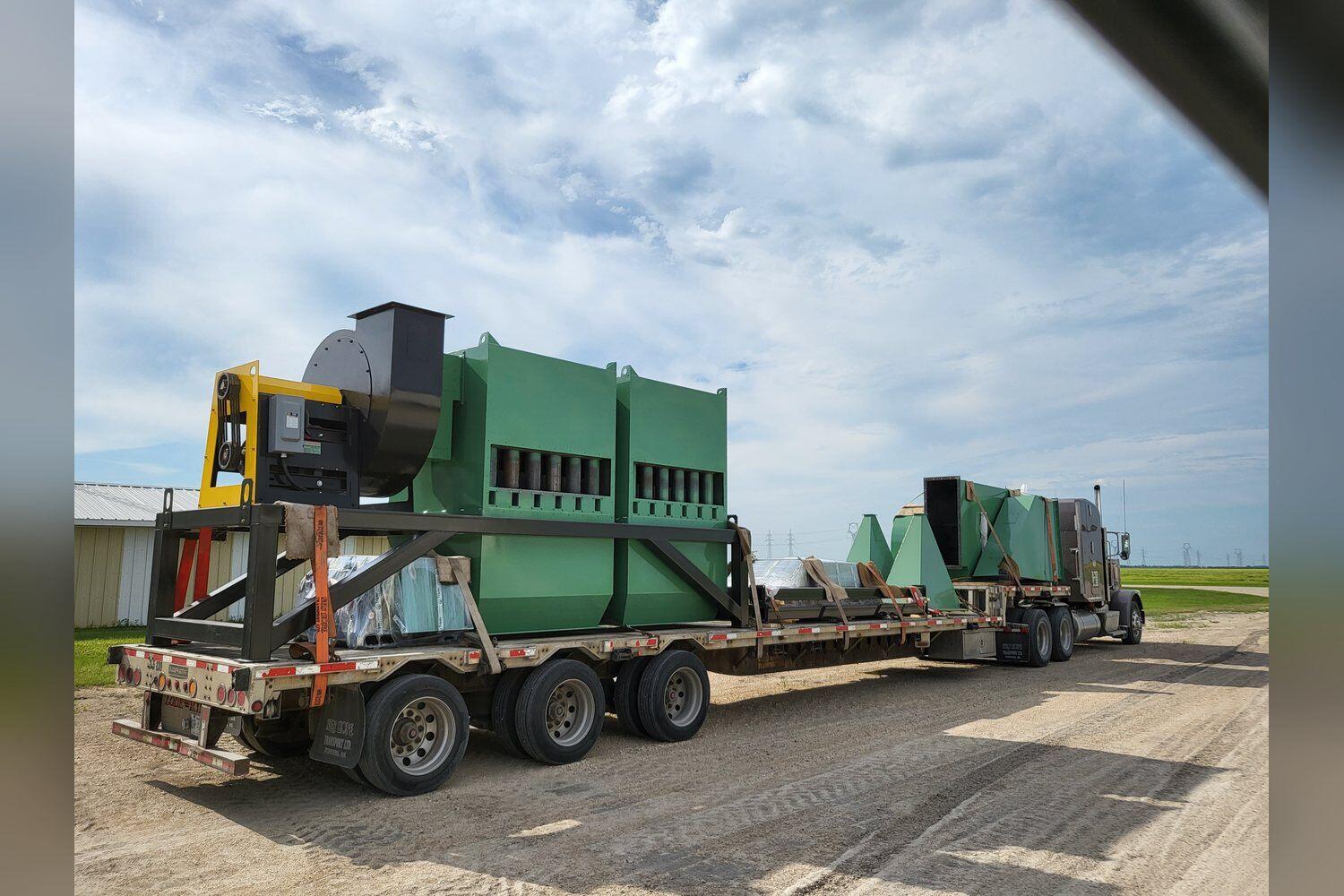
Ready to ship
A twin multi-cyclone and fan, strapped down and heading to a job.
When it matters most
- ✓You burn bark, sawmill waste or mixed fuel that makes more ash.
- ✓There are homes, barns, a school or greenhouse glass close by.
- ✓Your province, state or town has emission rules for wood boilers.
- ✓You want to protect your exhaust fan and keep the stack clean.
Most of the systems we build go out with a multi-cyclone. Ask us if your site needs anything more.
About half of our systems are sold with a grant or tax credit
Most programs need approval before you order equipment, so ask us early. We’ll tell you which programs fit your province or state.
Sizing and buying
How we size your collector
The collector and fan are sized to the exhaust your boiler makes, which depends on its size and the fuel. Here’s what helps us quote it right.
What to send us
- ✓Your boiler size, or a year of fuel bills if you’re replacing propane, gas or oil
- ✓What fuel you’ll burn
- ✓If it’s for a boiler you already have: its make, size and photos of the boiler room and stack
- ✓Room in the boiler room, or where it could go outside
- ✓Any emission rules or permits you already know about
From quote to running
Size and quote
We size the collector and fan for your boiler and fuel, and send a quote with a layout.
Grants
If a grant fits, apply now. Most programs need approval before you order.
Built in Headingley
The collector, fan and stand are built in our shop. 2 to 4 weeks, depending on size.
Install
Our crew sets it and ducts it in, or your contractor does with us backing them up.
Start-up
We set the fan and the airlock in the controls and show your people how it works.
Support
Remote help with your OK, and parts like airlocks and fan motors from our shelf.
Questions
What people ask us
Something else? Call us at (204) 694-2398. You’ll talk to someone who builds these.
What is fly ash?
The fine ash the fire lifts off the grate and carries up with the exhaust. The heavier ash stays on the grate and goes out with the chain.
How is a multi-cyclone different from one big cyclone?
Small cyclones spin the gas tighter, so they catch finer ash. A multi-cyclone puts a row of small ones side by side so it can handle all of the exhaust.
Do I need a baghouse instead?
Usually not. A multi-cyclone typically leaves under 75 mg/m³ of dust in the exhaust, which meets the base limits in Canada’s CCME guidance and Quebec’s regulation for boilers under 10 MW. The tightest limits need a second stage, like a baghouse or electrostatic precipitator, after the multi-cyclone. We’ll tell you at the quote stage which one your site needs.
Can you fit one to a boiler you didn't build?
Yes. Send us the boiler make and size, the fuel and photos of the boiler room, and we’ll size one for it.
How often do I empty the ash?
It depends on the fuel and how hard the boiler works. At Sturgeon Creek Colony, the one ash bin goes about 3 months at about 30% firing. The controls text you when it’s about 80% full.
What maintenance does it need?
Not much. Check the airlock and the fan, and look inside the collector once a year. The cyclones have no moving parts.
Are there grants?
The collector is part of the system, so it’s usually covered along with the boiler. Most programs need approval before you order, so ask us early.
Tell us your boiler and your fuel
Your boiler size, your fuel and a few photos are enough for us to size a collector and send a quote.
The marks your engineer will ask for.
Need another mark for your project? We build to it.
Talk to a person who knows the system.
Service, parts and remote monitoring come straight from the people who built it.